Frontpage News
Einaudi Students Learn in Global Communities
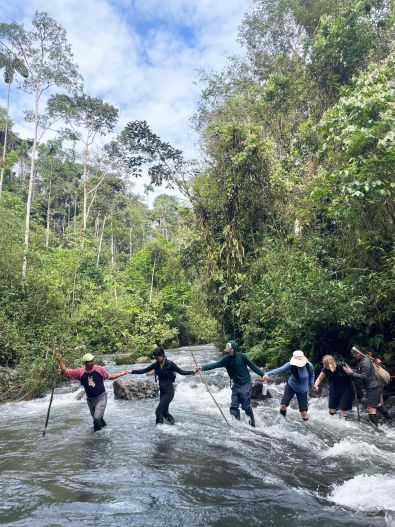
Laidlaw Scholars in Ecuador and Global Intern at Singapore Hub
We sent Cornell students abroad last summer to benefit from learning communities.
Additional Information
Einaudi Kicks Off Yearlong Conversation on Foreign Aid
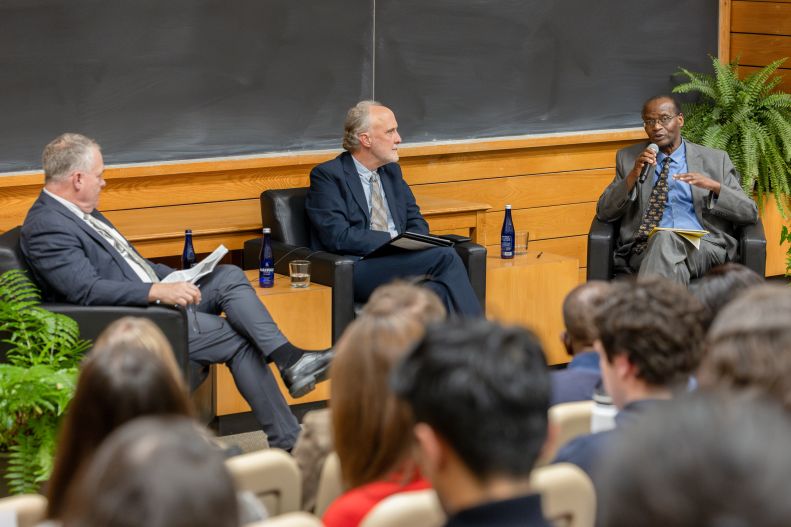
Lund Debate 2025
Undergraduate Global Scholars joined debaters to discuss “Is (Cutting) International Aid Good?”
For decades, international aid mainly flew under the radar of public opinion. Politicians from across the ideological spectrum lauded programs that saved lives, nurtured democracy, and promoted American values and interests. Except during wars and natural disasters, aid was rarely in the news.
That changed on January 20, 2025, when President Donald J. Trump issued an Inauguration Day executive order freezing all U.S. foreign assistance. Within weeks, Secretary of State Marco Rubio closed the headquarters of the U.S. Agency for International Development (USAID) and canceled 83% of the agency’s programs. Suddenly, foreign aid was at the center of an intense debate over national priorities and America’s place in the world.
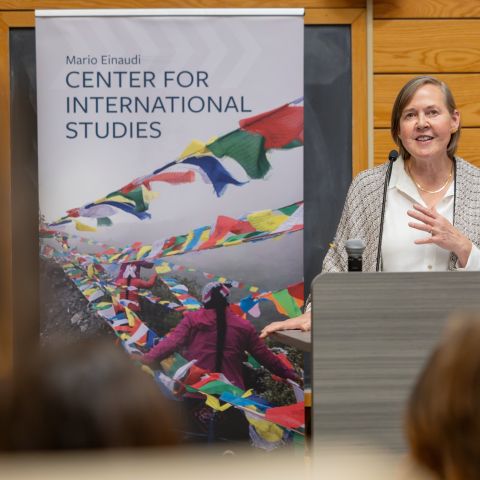
January 20 was also the day that political scientist Ellen Lust arrived at Cornell to direct the Mario Einaudi Center for International Studies as the John S. Knight Professor of International Studies. One of her first actions was selecting a theme to guide the center’s programming and provide a focus for its Undergraduate Global Scholars for the 2025–26 academic year.
Lust, who is also a professor in the Cornell Jeb E. Brooks School of Public Policy and the Department of Government in the College of Arts and Sciences, chose “Is (Cutting) International Aid Good?” She said she meant the simple, yes-or-no question to be provocative at a university where “everyone understands how complex these issues really are.”
“We have faculty, students, and staff engaged in food security, agriculture, development, public health, nutrition, education, economics, international relations, area studies, and so many other fields,” Lust said. “My hope was that this could provide an opportunity for us all to put our heads together and think about what can be done in the future.”
Lust recruited international development specialist Paul Kaiser to lead the conversation as the Einaudi Center’s practitioner in residence. Kaiser has worked on public policy and education reform in sub-Saharan Africa, South and Southeast Asia, and the Pacific Islands, with agencies including USAID, the Millennium Challenge Corporation, and the World Bank.
“There have always been legitimate questions about aid dependency and corruption and the effectiveness of aid, but we’re facing a much more existential question, which is should there be any aid at all?”
“For me, aid starts off as a moral issue, but it's also an economic issue, it's a political issue, it's a social issue,” Kaiser said. “There have always been legitimate questions about aid dependency and corruption and the effectiveness of aid, but we’re facing a much more existential question, which is should there be any aid at all?”
That question was on the table at Einaudi’s Lund Critical Debate, which Kaiser moderated on October 22 in a packed Lewis Auditorium in Goldwin Smith Hall. The debaters were Cornell faculty members Chris Barrett, an agricultural economist and food policy expert, and Muna Ndulo, an expert in international law and governance.
“We need more, not less aid,” argued Barrett, the Stephen B. and Janice G. Ashley Professor of Applied Economics and Management in the Dyson School of Applied Economics and Management and a professor in the Cornell Brooks School of Public Policy. “We need it for moral reasons, for security reasons, and for economic reasons. But it needs to be fundamentally different than it has been in the past.”
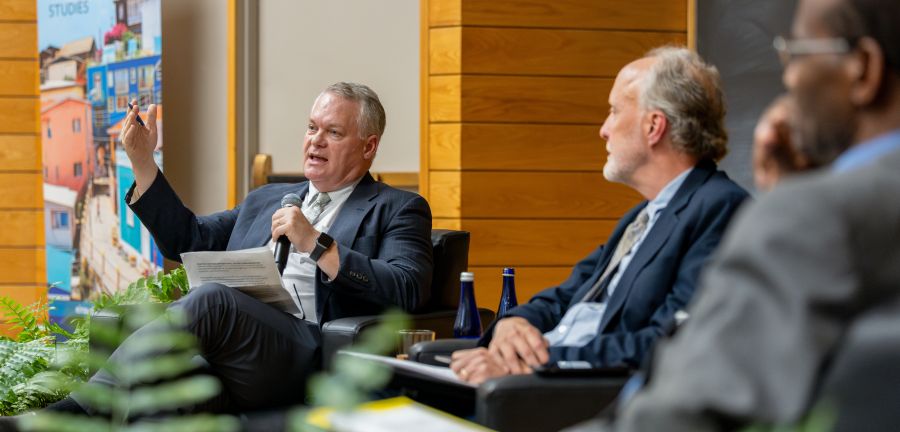
Specifically, he said, “we need less bilateral aid—that is, government-to-government aid to support country-specific things—and we need far more aid for what some of us term ‘international public goods’—for things that cut across the global community.”
“We need more, not less aid. We need it for moral reasons, for security reasons, and for economic reasons. But it needs to be fundamentally different than it has been in the past.”
Those include agricultural and biomedical research, infectious disease monitoring and prevention, emergency response, and climate change mitigation. “These are things that we underinvest in massively” despite their high long-term economic returns, Barrett said. Most are better delivered by multilateral agencies and organizations than by individual governments, he said.
Ndulo, the William Nelson Cromwell Professor of International and Comparative Law at Cornell Law School, agreed that aid can be helpful and sometimes essential, but he said it can also do damage. “A constant feature in the field of development is the firm belief that low-income countries will always be poor and desperately in need of foreign assistance,” he said. “This mentality shapes the sorts of solutions that get fostered in those countries.”
Ndulo and Barrett both observed that aid often prioritizes donor countries’ interests over those of the recipients. Increasingly, Ndulo said, donors are conditioning aid on recipients’ willingness to support their foreign policy objectives. Overall, Ndulo said, aid has less impact than international trade, foreign direct investment, or remittances from people working abroad.
“If we focus more on fairer ways of trading,” he said, “we might not need as much aid.”
The Future of Aid
Rethinking the future of aid is the assignment for the 15 Undergraduate Global Scholars selected by the Einaudi Center in October. Over the course of the year, they will meet with experts, conduct research, and take part in discussions and events.
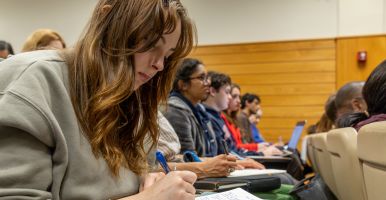
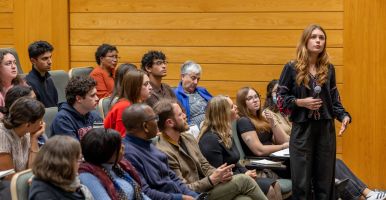
“For me, it’s personal,” said Sarvesh Prabhu ’28, who studies entomology and environmental sustainability in the College of Agriculture and Life Sciences. As a teenager, Prabhu worked at an international agricultural research center in his native India. He could see how important agriculture was to the nation’s development, but he also saw how aid could undermine the country’s sense of self-determination.
Ariela Asllani ’26 also feels a personal connection. A public policy major in the Brooks School, she grew up in Albania with parents who housed war refugees from Kosovo in the 1990s. She said Kosovars were grateful for U.S. aid, even erecting a statue of President Bill Clinton after the war ended. But many of the programs the Americans started collapsed after they left, and she has witnessed how aid can fuel corruption and crime. “My interest is the intersection of military, intelligence, law enforcement, and humanitarian aid actors,” she said.
“I’ve noticed a change in the conversation around aid,” said Iskander Khan ’26, a government major in the College of Arts and Sciences. “People will talk about it in a humanitarian sense, then when they’re pushed, they justify it as a security issue. I thought these were two very different things. But the discussions we’ve been having make me realize that they’re a lot more intertwined than I realized.”
The Einaudi Center’s Lund Critical Debate Series is made possible by the generosity of Judith Lund Biggs ’57. Watch the video of the debate below. The future of aid will also be the subject of Einaudi’s 2026 Bartels World Affairs Lecture, to be delivered by former USAID administrator Samantha Power in April.
Story by Jonathan Miller. All photos by Simon Wheeler.
Additional Information
Research at Risk: Cultural and Language Fluency
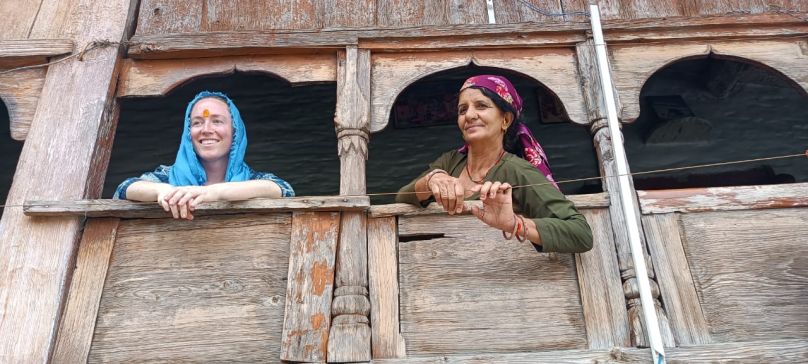
SEAP and SAP lose funding, seek solutions
The federal government has announced the end of National Resource Center and FLAS funding, which have supported area studies training for decades.
Additional Information
Einaudi Welcomes SWANA Program
Four New Program Directors
We welcome the Einaudi Center's new Southwest Asia and North Africa Program and four new program directors this fall.
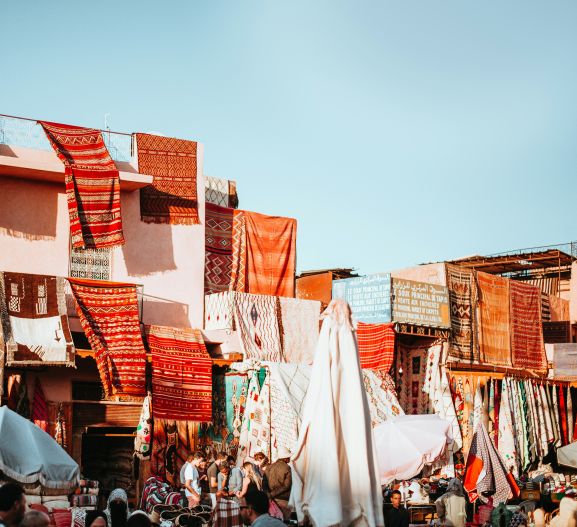
We're excited to introduce the Southwest Asia and North Africa Program! SWANA is Einaudi's new hub for research, learning, and engagement with the cultures and peoples of the vast geographical region stretching from Morocco in the west to Iran in the east.

SWANA gathers expertise and perspectives from across Cornell's colleges and schools under the leadership of the program's inaugural director, Seema Golestaneh. Golestaneh is an associate professor of Near Eastern studies in the College of Arts and Sciences (A&S). Her research focuses on contemporary Islamic thought in the Persian-speaking world.
“We approach the Middle East as a region of complex engagements, shifting boundaries, and shared histories.”
Golestaneh looks forward to partnering with communities in the SWANA region and scholars around the world, she said, noting plans this year to “further develop our burgeoning relationship with the American University in Cairo.”
Extending beyond the Middle East, Southwest Asia and North Africa is a place-based description that highlights geographical and cultural inclusion. Golestaneh hopes SWANA will embody that spirit on campus by serving as a social and intellectual home for Cornell's diverse community of researchers and students.
“This year we'll host interdisciplinary scholars whose work represents the cutting edge of the field,” she said. “We are particularly excited about the graduate student conference we have scheduled for spring 2026.”
SWANA premiered as an initiative through a cosponsored speaker series last spring. Don't miss its first event as an Einaudi program: a lecture by Islamic art historian Margaret Graves on September 25.
New Program Directors
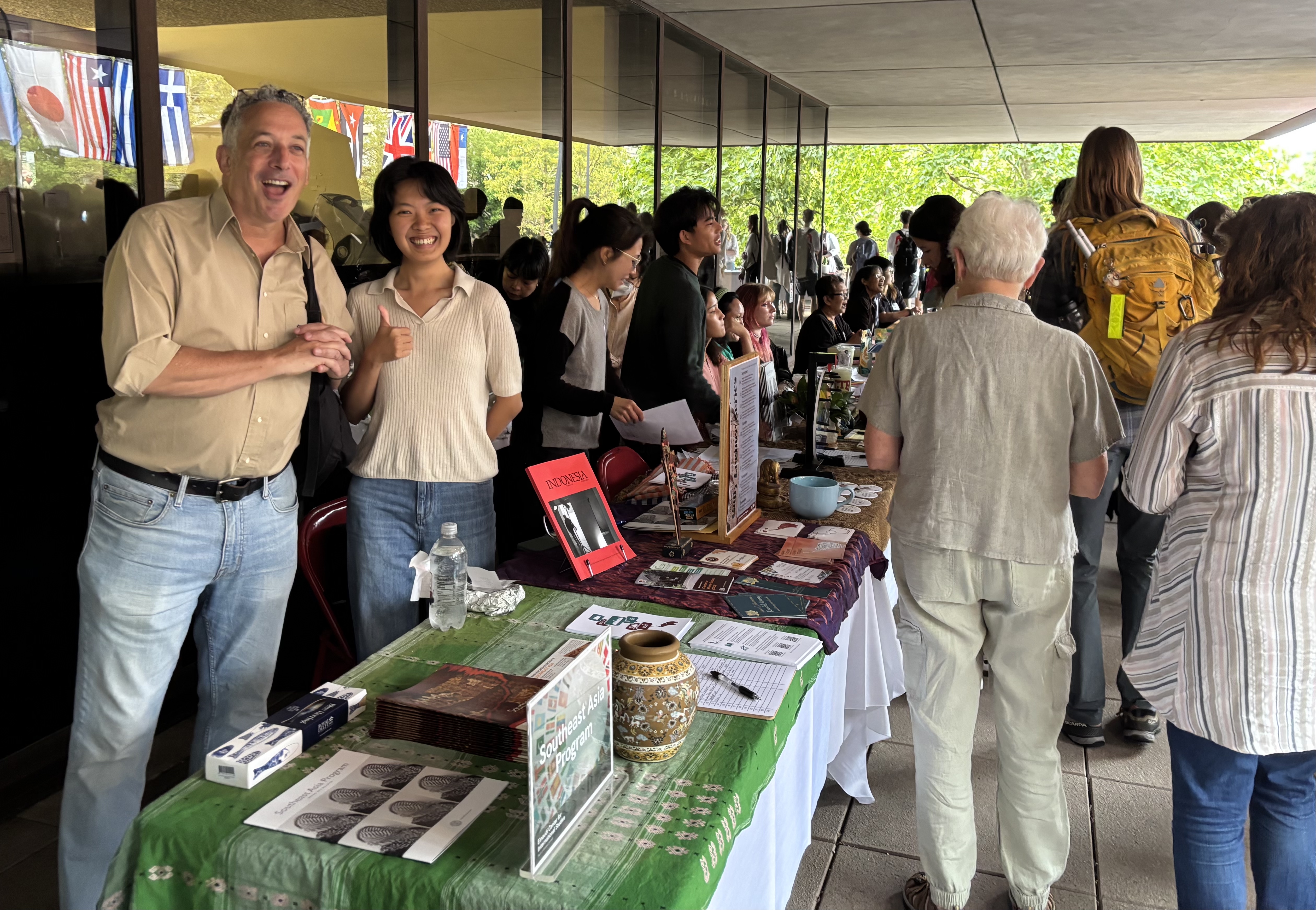
Joining SWANA's Seema Golestaneh are new program directors in the East Asia Program, Latin American and Caribbean Studies Program, and Southeast Asia Program.
EAP: Nick Admussen
Nick Admussen is an associate professor in the Department of Asian Studies (A&S). His research on contemporary Chinese poetry focuses on inventing and refining methods of interpretation through which people separated by linguistic or political distance can come to understand one another.
LACS: Alex Nading
Alex Nading is a medical and environmental anthropologist (A&S). His research—mostly focused on Nicaragua—has examined transnational campaigns against dengue fever, bacterial disease, and chronic kidney disease, as well as grassroots movements to address these issues.
SEAP: Eric Tagliacozzo
Eric Tagliacozzo is the John Stambaugh Professor of History in A&S. His research centers on the history of people, ideas, and material in motion in and around Southeast Asia, especially in the colonial age.
Additional Information
18 Cornellians Receive Fulbright Awards

With Support from Einaudi
They will conduct research, study, and teach English in Canada, France, Honduras, India, Jamaica, the Netherlands, Norway, and Taiwan.
Most will be on site by October.
The Fulbright program is the U.S. government's flagship international educational exchange program. The Einaudi Center administers the Fulbright program at Cornell, providing all the resources students and alumni need to apply for Fulbright funding for international experiences.
Cornell consistently ranks as a “top producer” among universities with the highest number of candidates selected for the Fulbright U.S. Student Program. With this year's Fulbrighters, we are celebrating over 600 awards since the 1940s!
We're excited to congratulate conservationist Kyrin Pollock, one of this year's five Fulbright–National Geographic Award recipients—and the first Cornellian ever to receive the prestigious award. Kyrin will spend the year working with the Olokhaktomiut Hunters and Trappers Committee in Ulukhaktok, Canada, to document how industrial noise is transforming Arctic waters. Watch for more news about her journey from National Geographic and Einaudi.
The next cycle of Fulbright U.S. Student Program is open now. The Einaudi Center encourages Cornell undergraduate students, graduate students, and recent alumni to explore the opportunity and apply.
Meet the Fulbrighters
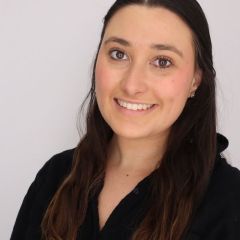
Alexis Anderson '23
Honduras
Research: Impacts of Coastal Pollution on Stony Coral Tissue Loss Disease in Roatán, Honduras
“Improving the knowledge base on how SCTLD spreads is critical to help stop further global expansion of the disease.”
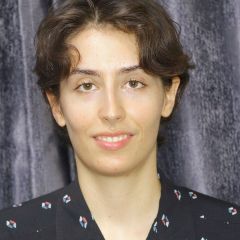
Erin Connolly '22
Norway
Research: Phorid Fly Biodiversity Across the Latitudinal Gradient of Norway
“Early months of my work in Trondheim will be based in the laboratory …, while the later months of the award will be dedicated to … a diurnal sampling scheme fieldwork project.”
Isabella Culotta '22
Netherlands
Master of Design: Probing Our Perceptions of Waste at the Design Academy of Eindhoven
“Our aversion to speaking and even thinking about our waste constrains our discovery and implementation of innovative waste management systems.”
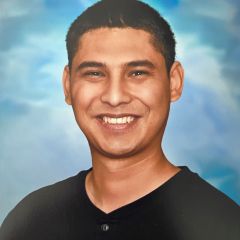
Gabriel Godines '23
Taiwan
English Teaching Assistant
“My experience in the U.S. Navy sparked my interest in East Asia, particularly in fostering understanding between the U.S. and China.”
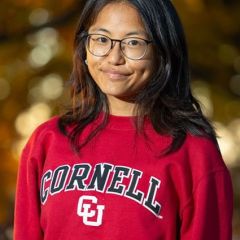
Tenzin Kunsang '25
India
Research: Reconceptualizing Education in Exile: Transnationalism in the Tibetan Children's Village
“These findings will help … to promote domestic language and cultural preservation among Tibetan-American students amid the politicization of schools in Tibet.”

Michelle Lee '25
France
English Teaching Assistant
“Due to the COVID-19 pandemic in 2020, I missed an opportunity to study abroad in France. This setback has motivated me to regain the chance to experience the country firsthand.”
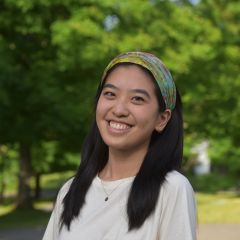
Tiffany Liu '22
Taiwan
English Teaching Assistant
“I … hope to observe the various technological initiatives currently pioneered by the Ministry of Education in Taiwan, including the movement to integrate AI.”
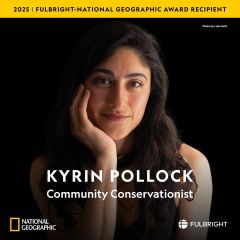
Kyrin Pollock, MEng '19
Fulbright–National Geographic Award Recipient (Canada)
Research: Arctic Echoes: Exploring Inuvialuit Knowledge and Marine Soundscapes in Conservation
“My work will address a gap in Arctic marine bioacoustics research … with documentation of Indigenous knowledge and an audio sample of the changing Arctic Ocean soundscape.”
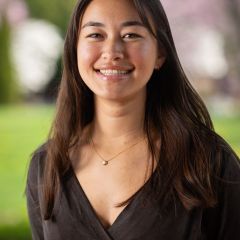
Caitlyn Sams '25
Jamaica
Research: Herbal Medicine in Oncology: Safety of Psilocybin and Cancer Therapy Co-Medication
“This project will … spark conversations about herbal medicine use and promote avenues for holistic cancer care.”
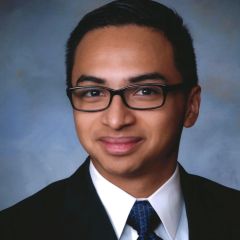
Miguel Soto Tapia '20
Taiwan
English Teaching Assistant
“I want to undertake an English teaching assistantship in Taiwan because I love language, teaching, and mentoring.”
Apply for Fulbright
The Einaudi Center supports you throughout the entire process of applying. The Fulbright U.S. Student Program is open to undergraduate students, graduate students, and recent Cornell alumni.
Additional Information
They Fled Afghanistan Together—and Now They’re Graduating

With Support from Global Cornell
After escaping the Taliban, nine women arrived at Cornell. The first to complete their degrees are part of the Class of 2025.
Additional Information
Protecting National Defense from Cyberattacks

Research at Risk
A DoD stop-work order put on hold a team’s plans to map and stress-test semiconductor supply chains. The research is led by Sarah Kreps (PACS).
Additional Information
New TodoSomos Archive

Venezuelan Migrant Testimonies Available to Researchers at Cornell
A campus symposium brings together stakeholders and launches the new collection, with support from LACS and Migrations.
Additional Information
Democracy’s Decline

Roadmap for Fighting Back
A global study of democratic backsliding from Einaudi's Democratic Threats team offers ways to resist authoritarian attacks.
Additional Information
PACS Team Hosted United Nations Panel
Nuclear Disarmament Education
The Reppy Institute for Peace and Conflict Studies (PACS) organized the event with support from an Einaudi seed grant.
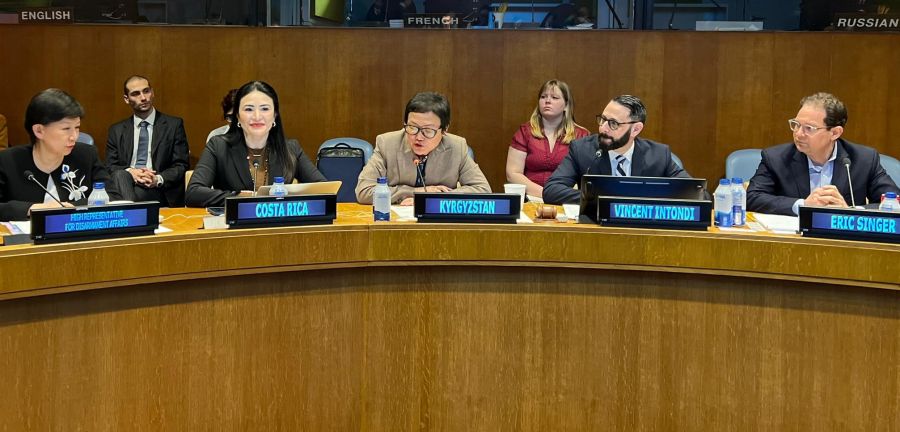
“The History, Success, and Challenges of Nuclear Disarmament Education” was held at United Nations headquarters in New York City on March 5. Cosponsored by the UN Office for Disarmament Affairs and Permanent Mission of the Kyrgyz Republic, the event commemorated International Day for Disarmament and Non-Proliferation Awareness.
PACS domestic affiliate Vincent Intondi moderated the roundtable, featuring four speakers and 28 nuclear disarmament experts and educators. Participants strategized ways to inspire and educate students—especially in schools with less access to disarmament education—and addressed the breakdown between those who create educational resources and teachers and administrators responsible for curriculum decisions. Participants also discussed how siloing the physical sciences and humanities makes comprehensive disarmament education more challenging.
“The UN event is one step in Reppy's long-term disarmament education project,” said Intondi. “We're encouraged by the reception of those attending and the number of UN member states that participated. The event clearly showed a need.” Read UN coverage.
Working Group on Nuclear Disarmament Education
PACS director Rebecca Slayton received a 2024 Einaudi Center seed grant to work toward establishing an international network on nuclear disarmament education—including scholars, policymakers, and civil society representatives—based at the Reppy Institute for Peace and Conflict Studies, part of the Einaudi Center at Cornell.
Slayton and co-investigator Agnieszka Nimark, PACS visiting scholar since 2014, got the project off the ground last summer by launching a working group. The group pulls together PACS researchers like Intondi and more than 30 nuclear disarmament experts and educators from around the world. Group members are currently benchmarking existing initiatives in the field and identifying education stakeholders as the groundwork for an assessment report. An important aim is amplifying the voices of communities affected by nuclear weapons.
“The working group plans submit our independent report with recommendations on disarmament education to the UN secretary-general in 2026,” said Nimark.
PACS continues to build its nuclear disarmament education network. Nimark invites researchers, educators, and other stakeholders to email to share information on disarmament educational resources and initiatives or to discuss working group activities.