
Minor
Peace Studies and Peace Science Graduate Minor

The minor graduate field of peace studies and peace science allows graduate students to deepen their knowledge of international security, the structure and function of multinational systems, and the general areas of conflict analysis, conflict management, and conflict resolution.
The peace studies concentration emphasizes historical, institutional, and policy-oriented approaches, while the peace science concentration emphasizes mathematical modeling and game-theoretic models.
The minor concentrations are intended to complement basic study in such fields as government, history, anthropology, public affairs, industrial and labor relations, agricultural economics, city and regional planning, civil and environmental engineering, economics, operations research, psychology, sociology, and science and technology studies.
Additional Information
European Studies Minor

Through an interdisciplinary curriculum that you can mold to your interests, students in the minor have the opportunity to explore Europe’s past, present, and future and demonstrate a knowledge of European languages, culture, history, politics, and international relations.
The minor offers students across colleges the opportunity to take courses across disciplines on subjects that shape their understanding of a globalizing world, while also providing you with an area of expertise. You will gain critical thinking skills, language abilities, and helpful frameworks for assessing today’s most pressing issues in Europe and around the world.
The requirements for the minor range from five to seven courses depending on the level of language proficiency already achieved.
A list of potential courses for the minor can be found here. *This list is not comprehensive. Students may petition for the acceptance of courses that meet the requirements listed below.
- Completion of a core course – One of several courses can be selected to serve as the core course for the minor. These courses have a Europe-wide focus, and provide a general survey of European history, society, politics, or culture. Examples of core courses that are routinely offered are: Inside Europe (GOVT 2553), The Making of Modern Europe, from 1500 to the Present (HIST 1511), Politics of the European Union (GOVT 3437), Nineteenth and Twentieth Century European Thought (PHIL 2240), The History of Science in Europe: Newton to Darwin; Darwin to Einstein (STS 1942).
- Competency in a European Language – Competence can be demonstrated by completing a third-semester course (even if you have tested out of the first two), successfully passing a competency exam, or by being a native speaker of a European language. Students who pass the competency exam or are native speakers will have to substitute one additional course to reach the minimum five-course requirement.
- Languages taught at Cornell that meet the IES requirement include Ancient Greek, Bosnian-Croatian-Serbian, Czech, Dutch, Finnish, French, German, Hungarian, Italian, Latin, Polish, Portuguese, Russian, Spanish, Swedish, Turkish, Ukrainian, and Yiddish.
- Completion of 3 elective courses – These electives are courses on more narrowly defined Europe-related topics in disciplines including: History, Government, Sociology, Anthropology, Comparative Literature, English, Architecture, History of Art and Visual Studies, Classics, Music, Philosophy, Industrial and Labor Relations, Science and Technology Studies. We encourage students to use their electives to explore Europe-related interests that go beyond their chosen major field of study.
Undergraduates in the College of Arts and Sciences can major in European studies through the independent major or the College Scholar Program.
Already completed the requirements of the minor? Let us know at ies@cornell.edu.
Additional Information
Caribbean Studies Minor

The Caribbean studies minor helps you understand the region and its diaspora through an interdisciplinary program of study.
Grounded in the Department of History, the Caribbean studies minor will equip you to better understand the sociocultural, economic, and political forces—indigenous dispossession, slavery, capitalism—that shape the region and how those forces resonate globally.
Requirements
- 15 credits in approved coursework (see below)
- At least one of the courses should be offered by the Department of History
- Students must earn a B or higher in all courses counted toward the minor
While students may earn both the Latin American studies and Caribbean studies minors, no more than two elective courses may count toward both.
Approved Coursework
Fall 2025:
| Course Number | Title | Credits | Instructor(s) |
|---|---|---|---|
| AMST 3679 | Diasporas, Disasters, and Dissent: Re-Thinking Puerto Rican Studies in the 20th and 21st Centuries (Combined with ENGL 3678, LSP 3678, SPAN 3675) | 3 | Hey-Colon |
Spring 2025:
| Course Number | Title | Credits | Instructor(s) |
|---|---|---|---|
| COML4334 | Caribbean Worlds: Landscape, Labor and Climate Imaginaries (Combined with LATA4334ENGL3934; ROMS4334; FREN4334) | 3 | Melas |
| HIST 1976 | Recreating the Caribbean: Migration and Identity in Contemporary Caribbean History (ASRC1976) | 3 | Byfield |
| HIST2307 | Histories of the African Diaspora (Combined with ASRC2317, LATA 2307) | 3 | Byfield |
| HIST2381 | Corruption, Collusion, and Commerce in Early America and the Caribbean (Combined with LATA2381) | 4 | Schmitt |
| LSP4577 | Desbordando: Reading Caribbean Waters in Latinx Studies (Combined with SPAN4577, ENGL4577) | 3 | Hey-Colon |
| MUSIC 2361 | Arranging Nationhood - Reclaiming Identity: Caribbean Folk Albums in the USA | 3 | Cerin |
How to Apply
Please click the “apply” button below. Fill out the online application form as fully as possible, even if you haven't completed all required coursework.
If you have questions, reach out to lacs@cornell.edu to set up an appointment.
Additional Information
Latin American Studies Graduate Minor

The Latin American studies minor is open to graduate students in all fields of study who are interested in studying and conducting research in Latin America.
Graduate Requirements
You can earn a graduate minor in Latin American studies by completing the following simple requirements:
- Select a member of the graduate field in Latin American studies to serve on your special committee.
- Comply with the graduate school's Code of Legislation.
- Complete the graduate concentration application form. Contact LACS to obtain the form.
While we don't require any specific courses for the graduate minor, we suggest you participate in at least one semester of our seminar course (LATA 6000).
Undergraduate?
Interested in an undergraduate minor? Learn more about the Latin American studies minor and Caribbean studies minor.
Additional Information
Asian Studies Minors

The Department of Asian Studies in the College of Arts and Sciences offers three area studies minors—all linked with corresponding Einaudi area studies programs—along with a minor in Sanskrit studies.
Students from any college or discipline may apply. All Asian studies minors are encouraged to participate in the activities of the Einaudi Center's East Asia Program, South Asia Program, and Southeast Asia Program.
Find detailed information and the application process for each minor:
- Minor in East Asian Studies
- Minor in South Asian Studies
- Minor in Southeast Asian Studies
- Minor in Sanskrit Studies
Learn more about the Einaudi Center's minors for undergraduate and graduate students.
Additional Information
Minor in South Asian Studies
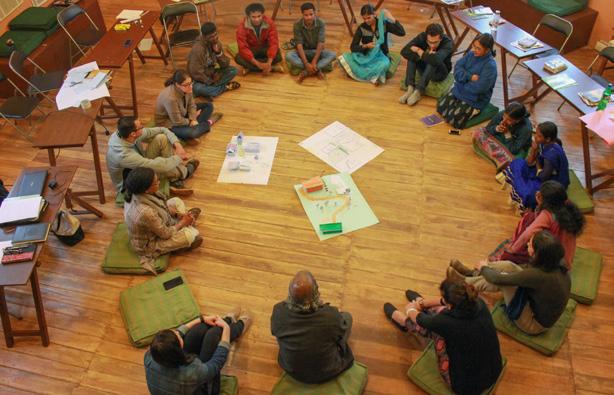
Learn more about South Asian cultures, languages, and people by participating in the undergraduate South Asian studies minor.
A candidate for the Bachelor of Arts or the Bachelor of Science degree at Cornell may earn the minor by completing at least 18 units of course work (typically five courses) in South Asian studies.
Students must be admitted to the minor no later than the first semester of the graduating year. Get information about the South Asian studies minor and its requirements from the Department of Asian Studies, which administers the Asian studies minors.
Additional Information
Minor in Sanskrit Studies

The undergraduate minor in Sanskrit Studies is intended for Cornell students who wish to broaden and deepen their competence in the Sanskrit language and traditional Indian religious, literary, and philosophical culture.
A candidate for the Bachelor of Arts or the Bachelor of Science degree at Cornell may achieve the minor by completing at least 18 units of course work (typically five courses) in Sanskrit Studies. Admission to the minor shall be declared no later than the first semester of the graduating year.
More details about the Sanskrit Studies Minor and all of its requirements are available from the Department of Asian Studies, which administers the Asian Studies minors.
Additional Information
Latin American Studies Undergraduate Minor

LACS welcomes Cornell undergraduates in all fields of study who are interested in studying and conducting research in Latin America to apply for the Latin American studies minor.
Language Requirement
Proficiency in Spanish or Portuguese can be demonstrated in one of two ways:
- By passing a Romance Studies Department CASE language proficiency test at a Q++ level. Language proficiency tests are only available at the beginning of each semester, so please plan accordingly. Before taking the CASE exam, you need to take the COLLT (Cornell On-Line Language Test) for Spanish. Questions? Email Sam Lupowitz.
-OR- - Successfully completing SPAN 2095 (or one Spanish course at a higher level if you tested out of 2095) or PORT 2010 or 2020 language course. (FLAC courses count towards the 15 elective credits below but not the minor's language requirement.)
Elective Courses
In addition to the language requirement, minor candidates must complete a minimum of 15 credits in approved Latin American studies elective courses (listed as LATA in the Cornell course catalog). Students must earn a B or higher in these courses.
- Selected courses must represent at least two different departments. LATA 4000 does not count toward this requirement.
- Students must complete at least one advanced level course in Latin American studies (3000-4000 level). LATA 4000 does not count toward this requirement.
- We don't require, but highly recommend, at least one semester of participation in the LATA 4000 (LACS Seminar Series).
If you would like to petition for a course or a study abroad semester to count towards the minor, please contact LACS to share the course syllabus.
While students may earn both the Latin American studies minor and Caribbean studies minor, no more than two overlapping elective courses may count toward both. Learn more about our Caribbean studies undergraduate minor and Latin American studies graduate minor.
How to Apply
If you wish to start working towards your minor or have already completed the requirements, please click the “apply” button below. Fill out the online application form as fully as possible, even if you haven't completed all required coursework.
If you have questions, reach out to lacs@cornell.edu to set up an appointment.
Additional Information
Migration Studies Minor

In the Einaudi Center’s migration studies minor, you explore the factors that influence migrants’ decisions to migrate and drive their departure, arrival, and integration into new societies. The minor is open to all Cornell undergraduates and includes courses from across the university.
About the Minor
The migration studies minor is a university-wide, interdisciplinary undergraduate minor focused on the historical and contemporary contexts and factors that drive international migration and shape migrant experiences around the globe.
You’ll have the opportunity to investigate the complex global issue of migration from multiple perspectives and disciplinary lenses and participate in migration-themed events and opportunities at the Einaudi Center and across campus.
Class Spotlight: Refugee Pathways & Resettlement Policy
Course Requirements
You must complete five courses (15 credits minimum) and attend at least five migration-related campus events. An introductory course introduces you to international migration and provides an interdisciplinary foundation for understanding migration flows and migrant experiences. Your other courses will be electives of your choosing from across the university. All courses for the minor must be taken for a letter grade and completed with a letter grade of C or higher.
See the Registrar's full description of requirements and courses that qualify for the minor.
Required Introductory Course
ILRLR 2810/LSP 2810/SOC 2810—Migrations: Histories, Controversies, and Perspectives
Four Elective Courses
- Three courses must be taken at the advanced (3000–4000) level.
- Courses must be taken in at least two different departments.
- At least one course must include substantial focus on migration outside the United States.
Migration-Related Events
You must attend at least five migration-themed events on campus to complete the minor. Please report your attendance during the semester in which the event takes place. You must complete all email fields to receive attendance credit.
Office Hours
To meet with the migration studies minor administrative coordinator, please stop by 163 Uris Hall during the following hours:
- Monday and Tuesday, 10:00 a.m. - 3:00 p.m.
How to Apply
Please submit a declaration of intent form (below) to enroll in the migration studies minor.
You may complete the form as early as your sophomore year, but you must declare your intent to participate by the end of your sixth semester in order to qualify. There is no GPA requirement for admission to the minor, but you must be in good academic standing.
Contact the administrative coordinator if you have further questions.
Additional Information
International Relations Minor

In the Einaudi Center’s international relations minor (IRM), you study the politics, economics, history, languages, and cultures of the world and gain a fresh perspective on your major field of study. The minor is open to all Cornell undergraduates and includes courses from across the university.
About the Minor

IRM is an interdisciplinary undergraduate minor—not a major or a department—open to students enrolled in any of Cornell’s undergraduate colleges. In addition to your regular degree courses, you have the flexibility to take a range of courses across colleges and departments.
Your opportunities as an international relations minor extend beyond the Ithaca campus. If you study abroad for a semester or year, you can complete some of the minor’s requirements, including the language requirement.
IRM graduates have gone on to higher education in disciplines such as political science and anthropology, as well as to successful careers in international law, economics, agriculture, trade, finance, journalism, public policy, and government service.
Cornell Chronicle: International Relations Minor Sets Graduates on Global Paths
Course Requirements
Your courses will reach across the university, concentrated in four groups. Courses within these groups are designated as core or elective. You must complete six courses selected from the four groups, including one core course in each group. You may select among two tracks in the minor (see below). All courses for the minor must be taken for a letter grade.
See the Registrar's full description of requirements and core and elective courses.
Core Courses
Minor Tracks
Choose your focus: 1) base track, or 2) regional specialization. Select your courses to support one of the tracks.
Regional Track: Language Requirement
Students on the regional track must complete additional language study beyond the College of Arts and Sciences degree requirement of "proficiency." For most languages, proficiency is attained by completing a course at the 2000 level, covering basic grammar and structure of the language.
The language requirement can be fulfilled in two ways:
- Demonstrated facility in one foreign language (proficiency plus one course that uses the language to explore some aspect of a foreign culture, such as literature or film)
- Demonstrated proficiency in two foreign languages
One or both of your languages should be commonly used in your area of regional specialization. All language courses must be taken for a letter grade.
Study Abroad
All international relations minors are strongly encouraged to study abroad. Your international experience will bring a practical dimension to your expertise in international issues. To learn more about programs available for study abroad, consult Education Abroad, part of the Office of Global Learning.
Office Hours
To meet with the IRM administrative coordinator, please stop by 163 Uris Hall during the following hours:
- TBD — please check back in the fall for updated hours
How to Apply
Please submit the form (below) to enroll in the international relations minor.
Contact the administrative coordinator (IRM@einaudi.cornell.edu) if you have further questions or to schedule an appointment. Faculty advisor Alexandra Blackman is an additional resource for international relations minors.
Additional Information
Academic Type
- Minor