
Anthropology Colloquium: Elizabeth F.S. Roberts
October 3, 2025
3:00 pm
120 Mary Ann Wood Drive, B21
Towards A Cosmopolitics of Chemical Exposure
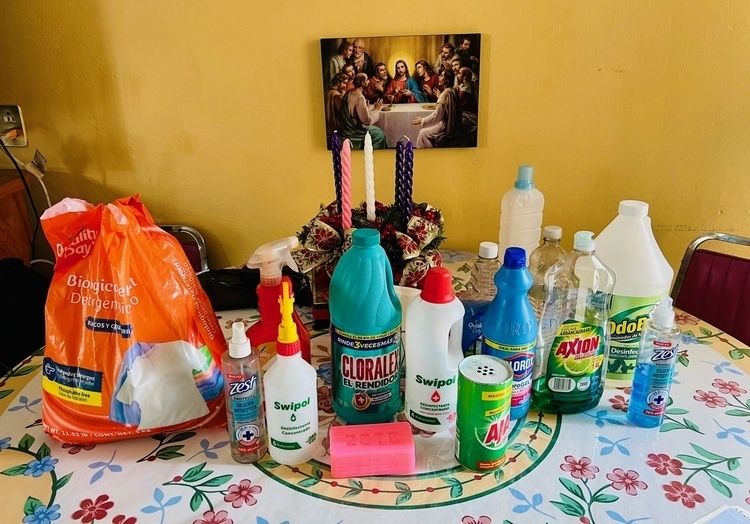
Chemicals can be hard to see. Same with gods, spirits and saints. Both kinds of entities are lively and ambiguous forces, more-than-human others. In this talk, I reflect on over a decade of ethnographic and collaborative research with exposure scientists and their working-class study participants in Mexico City, to argue for a cosmopolitics of chemical exposure. The exposure scientists and their research subjects in Mexico City, tend to have very different modes of relating to unseen forces. The scientists ignore spirits and saints while insisting on a nature separate from human concerns, allowing them to position humans as separable from chemicals. Their research subjects, on the other hand, grapple with the permeating powers of both chemicals and saints. For instance, they constantly assess whether their exposure to lead-glazed ceramics, which makes food sweeter, and to Santa Muerte, a saint reviled by the Catholic Church, disconnects them or binds them more closely with others. In effect, their grappling raises the question of whether these entities are worthy of devotion. My collaboration with the scientists now involves grappling together with more of the relations that constitute exposure, but I omit the saints and spirits from our considerations. I wonder though, if by extirpating those forces from our grapplings I have made it less urgent for the scientists to apprehend the unseen entities that might better hold us together.
Elizabeth F.S. Roberts is a professor of anthropology at the University of Michigan, who investigates scientific and public health knowledge production and its embodied effects in Latin America, where she focuses on a range of dynamic bodily processes, including chronic disease, chemical exposure, addiction and reproduction. Dr. Roberts currently collaborates with engineers environmental health scientists and economists to trace the looping social, economic, biological, and technical processes that shape everyday life, health, and inequality in working class neighborhoods in Mexico City. One of the key aims of Professor Roberts’ current work is the development of bioethnography, a method that combines social and life sciences approaches in order to make better knowledge about health and inequality. Dr. Roberts is the author of In Praise of Addiction: Or How We Can Learn to Love Dependency in a Damaged World (Princeton University Press, 2026) and God’s Laboratory: Assisted Reproduction in the Andes (U.C. California Press 2012).
Co-sponsored by Latin American and Caribbean Studies, STS, and Cornell Atkinson Center for Sustainability. Thank you.
Additional Information
Program
Latin American and Caribbean Studies