
Civilian Self-Protection in an Era of Escalating Harm and Uncertainty
March 12, 2026
12:00 pm
Uris Hall, G08
Civilians have long developed strategies to protect themselves and others in the face of violence. Over the past two decades, research on civilian self-protection (CSP) has documented these practices across diverse conflict settings, challenging the assumption that protection is primarily delivered by states or international actors. Today, this insight has taken on renewed urgency. Civilian casualties, displacement, and violations of international humanitarian law have surged, while international assistance has become increasingly fragmented and unreliable. In this context, civilian self-protection is not peripheral but central to how civilians navigate insecurity and survive.
In this talk, I examine what the current moment reveals about CSP and its limits. Drawing on my recent work on civilian protective agency, the risks of international engagement, and the role of digital technologies, I synthesize key insights from the CSP literature and assess why international efforts to recognize or support these practices—often framed through the language of localization—have remained partial, contested, and fraught with risk. I then analyze how information and communication technologies are reshaping civilian agency by amplifying coordination and visibility while simultaneously producing new forms of exposure and vulnerability. Taken together, the talk asks how civilian self-protection reshapes conflict dynamics, redistributes risk, and complicates prevailing assumptions about responsibility, authority, and protection itself.
About the speaker
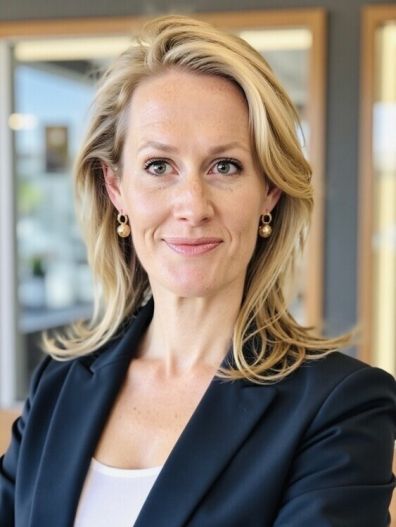
Emily Paddon Rhoads is Associate Professor of Political Science at Swarthmore College, where she teaches courses in international relations, comparative politics, and peace and conflict studies. Her research examines how protection, legitimacy, and trust are constructed when formal institutions are strained or contested, and how communities, local and global, organize safety and cooperation under conditions of violence, crisis, and political fragmentation.
Host
The Reppy Institute for Peace and Conflict Studies, part of the Einaudi Center for International Studies
Co-sponsor
The Gender and Security Sector Lab
Additional Information
Program
Einaudi Center for International Studies
Reppy Institute for Peace and Conflict Studies