
Cornell Classical Chinese Colloquium: Peach Spring Grotto: Vernacular Rituals of the Plum Mountain Region, Hunan
November 21, 2025
3:30 pm
Rockefeller Hall, Room 374
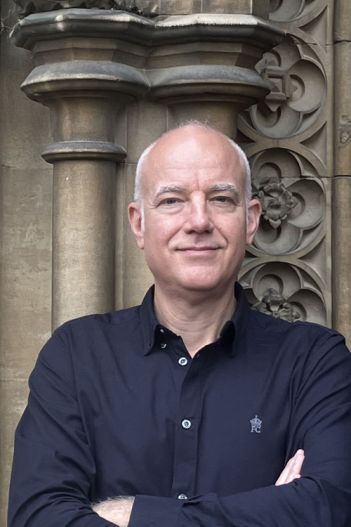
Speaker: Mark Meulenbeld, Associate Professor, School of Chinese, The University of Hong Kong
Description:
Daoist priests in central and northern Hunan Province (PRC), an area known as Plum Mountain (Meishan 梅山), are the custodians of many local traditions. Among them is an ancient and elaborate ritual dedicated to a sacred site famous since medieval times: Peach Blossom Spring (Taohuayuan 桃花源), or Peach Spring Grotto (Taoyuandong 桃源洞), locally also referred to as Immortals’ Precinct of Peach Spring (Taoyuan Xianjing 桃源仙境). More specifically, in addition to a written iteration by the poet Tao Qian 陶潛, the site’s miraculous efficacy is ritually channelled into households of the region, consecrated on domestic altars, and its transcendent beings embodied by domestic spirit-mediums. A variety of these local traditions have long been transmitted in manuscript form. The present CCCC session will zoom in on a ritual manual transmitted by a lineage of Daoist priests from Yangyuan 楊源 Village in central Hunan, who practice their rituals in the surrounding towns, villages, and hamlets. Copied in 1942 by a Daoist priest named Zhang Youli 張攸利, the tradition recorded in the first half of the manuscript is titled “To Sing Ballads for [spirit-mediums] Seated at the Altar” (Chang Zuotan Ge 唱坐壇歌). It contains several narratives that revolve around the regional lore of Peach Spring Grotto.
To join virtually: https://cornell.zoom.us/j/96053368226?pwd=mNysMAyctkp5VLnC27BEAqbnu52X6…
About Cornell Classical Chinese Colloquium
The group meets monthly during the semester to explore a variety of classical Chinese texts and styles. Other premodern texts linked to classical Chinese in Japanese, Korean, and Vietnamese have also been explored. Presentations include works from the earliest times to the 20th century. Workshop sessions are led by local, national, and international scholars. Participants with any level of classical Chinese experience are welcome to attend.
o At each session, a presenter guides the group in a reading of a classical Chinese text. Attendees discuss historical, literary, linguistic, and other aspects of the text, working together to resolve difficulties in comprehension and translation.
o No preparation is required; all texts will be distributed at the meeting.
o Refreshments will be served.
Additional Information
Program
Einaudi Center for International Studies
East Asia Program