
The Current Governance: Distributed Chinese Television and Hydropower in the 1980s
February 11, 2026
12:00 pm
Uris Hall, G-08
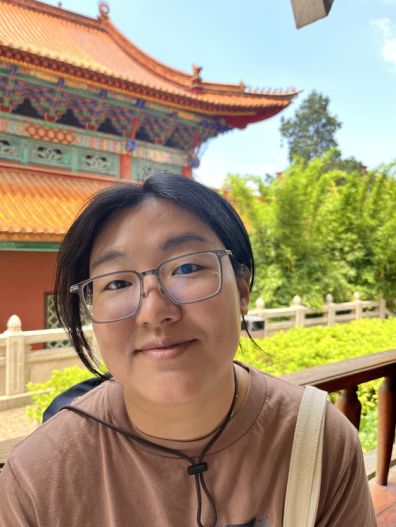
Speaker: Weixian Pan, Assistant Professor of Film & Media, Queen's University
Description:
How might the history of television and the history of energy development cross paths, inform, and complicate each other? This work revisits the formative decade of China’s economic reform, the 1980s, as one such moment when the expansion of televisual technology encountered demands for the redistribution of hydroelectric energy. By examining TV documentaries, popular writings/manuals on television infrastructure, and public documents of hydroelectric dams, I advance two intertwined arguments in this talk. First, the televisual played a prominent role in animating the imaginary and material distribution of natural and technologized currents. The televisual broadcasting of river documentaries in the early 1980s, such as Stories of the Yangtze (1983) and the regional Guangdong TV series Zhujiang Qing / Love for the Pearl River (1983), reshaped China’s major rivers as complex frontiers on screen for geopolitical aspirations, cultural power, and economic resource extraction on screen. Such televisual imaginations were built upon an overlapping development of airwaves, cable, and satellite transmission infrastructure. Second, while kinetic movements of river currents generate volumes of electricity that fuel the coastal economic frontline, infrastructure projects also produce new models for engineering and managing hydraulic resources upstream. I would elaborate on this dynamic through the early development of Lubuge Dam, the first internationally funded hydroelectricity project in the reform era, and a celebrated model for China’s hydraulic engineering and management revolution. These various cultural, technological, and managerial practices for governing and redistributing water, electrical currents, and televisual imaginations, therefore, constitute a distinct form of “current governance” that relies on destructive trans-regional resource dependency while continuing to extend this political-economic logic to new resource frontiers in recent years.
Speaker's Bio:
Weixian Pan is Assistant Professor in the Department of Film and Media at Queen’s University. She received her PhD in Film and Moving Image Studies at Concordia University in Montreal. Her research interests center on the politics of visuality, critical media infrastructure, and environmental media, specifically in the context of the People’s Republic of China. Her current book manuscript, Frontier Vision: Distributed Media in China’s Environmental Enclosure, offers a transhistorical view of the visual regimes developed from the mid-20th century to the early 21st century that recalibrate natural environments and their political promises. These medium-specific images and visuality operationalize various frontier-making projects, from socialist geological extraction, reform-era hydropower development, and techno-sovereignty in disputed oceans. Her work appeared in peer-reviewed journals such as Television and New Media, Culture Machine, Asiascape: Digital Asia, and is forthcoming in Feminist Media Histories, APRIA: ArtEZ Journal, and Journal of Chinese Cinemas. She was the 2024-2025 Luce/ACLS Early Career Fellow in China Studies. She is currently working on a collaborative video project on the hydraulic and infrastructural landscapes along the Pearl River in southern China.
About East Asia Program
As Cornell’s hub for research, teaching, and engagement with East Asia, the East Asia Program (EAP) serves as a forum for the interdisciplinary study of historical and contemporary East Asia. The program draws its membership of over 45 core faculty and numerous affiliated faculty, graduate, and undergraduate students from eight of Cornell’s 12 schools and colleges.
Additional Information
Program
Einaudi Center for International Studies
East Asia Program