

Durand Line: Resolved for Pakistan, Ambiguous for Afghanistan
January 29, 2026
12:00 pm
Uris Hall, G08
In this chapter, I am examining the Pashtun nationalist claims in the context of the Afghanistan government’s historical resistance to officially recognizing the Durand Line. What has been the reaction of Afghanistan’s successive governments to the Durand Line? Can this resistance be characterized as a national reaction irrespective of the people’s ethnicity, language and religion?
Or would it be more accurate to describe it as a political project by the ethnocentric Pashtun ruling elites to unify Pashtuns and to maintain their monopoly on power?
This topic is important because the official position of the Afghan government on Durand Line has had both external and internal consequences, fostering geopolitical conflict with its eastern neighbor, Pakistan, as well as alienating its non-Pashtun citizens. If the problem persists, the current instability in Afghanistan will continue with its people paying the price.
Speaker
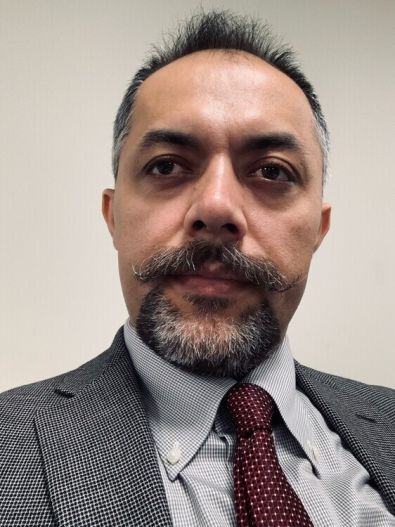
Sharif Hozoori has a PhD in International Relations from the Center for International Politics, Organization, and Disarmament at the School of International Studies, Jawaharlal Nehru University (JNU), New Delhi.
Currently, Sharif is a Visiting Lecturer in the Department of Government. His research focuses on Afghanistan politics and foreign policy, comparative politics, Central Asian and Middle Eastern affairs.
Sharif has authored several journal articles and book chapters in both national and international publications. His recent book, The Political Elites and Foreign Policy at Mullah Omar’s Emirate and Karzai’s Republic (in Persian), was published in 2024 but subsequently banned by the Taliban authorities. His most recent article, “Taliban 1.0 and 2.0 in Afghanistan: Same Policies, Persistent Vision,” appeared in the Journal of Strategic Studies in June 2025.
Sharif is presently working on two additional book chapters and one journal article. The current talk is based on his under-review book chapter contribution to Oxford University Press’s Oxford Handbook of South Asian Borders.
Host
Reppy Institute for Peace and Conflict Studies, part of the Einaudi Center for International Studies
Additional Information
Program
Einaudi Center for International Studies
Reppy Institute for Peace and Conflict Studies
South Asia Program