

Errant youth: Circling the subcontinent, 1968
September 15, 2025
12:15 pm
Uris Hall, G08
Talk by Ann Gold (Religion, Syracuse University)
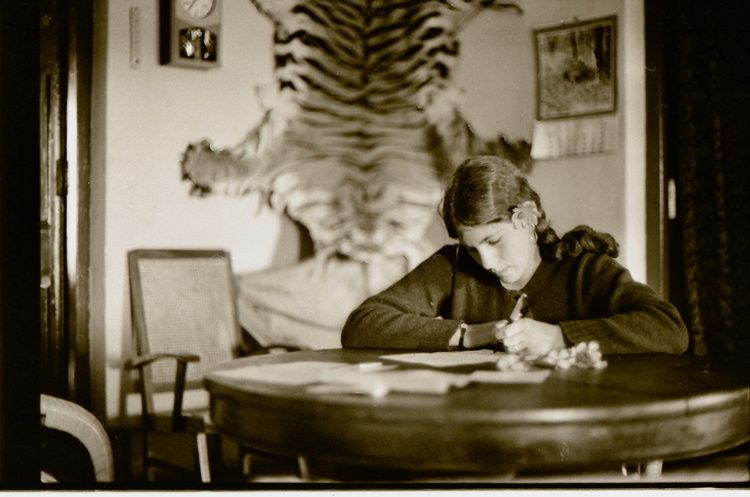
On March 1, 1968 my first husband and I, both college drop-outs, set forth on the now stereotypical overland journey from Europe to South Asia. We reached Pakistan in mid-April at the peak of the hot season, and walked across the border into India about three weeks later. Well into August we literally circled the subcontinent: from Lahore to Kashmir, gradually southward all the way to Rameshwaram, north again briefly visiting Nepal. We moved constantly -- riding ordinary buses and 3rd-class trains, rarely stopping anywhere more than 2-3 nights, rarely spending more than 5-10 rupees for a night’s lodging. In letters home I repeatedly lament my ignorance and express my yearning to remain in one place, even as I rush to the next destination. While observant, I never contemplate how privileged are my hardships and the mobility I take for granted. I learn to love South Asian culture, meals, and people. Numerous strangers exert themselves to welcome, teach and feed us. Today’s presentation draws on Chapter 6 of a memoir manuscript describing my seven years as a college dropout. Chronologically it falls about two years into that chaotic period of my life. When I resumed my education in 1973 I chose to study anthropology and eventually to focus on India. My memoir wonders how I found my way into a fulfilling career without any prior plan through a fortuitous combination of aptitude, affinity, ancestry and dumb luck. Emerging retrospective anthropological themes in the South Asia chapter are the privilege of mobility and the “banquet of hospitality.”
Ann Grodzins Gold is emerita Thomas J. Watson Professor of Religion and Professor of Anthropology at Syracuse University. Her research in North India focused on pilgrimage, gender, expressive traditions, environmental history, and most recently landscape and identity in a small market town. She has authored or co-authored numerous articles and five books all based on fieldwork in provincial Rajasthan, including Shiptown: Between Rural and Urban North India (University of Pennsylvania Press, 2017). Her book, In the Time of Trees and Sorrows: Nature, Power and Memory in Rajasthan (Duke University Press, 2002, co-authored with Bhoju Ram Gujar) was awarded the Ananda Kentish Coomaraswamy Book Prize from the Association for Asian Studies. During her career as an anthropologist of religion, Gold has held awards from the Fulbright Foundation, Guggenheim Foundation, National Endowment for the Humanities, and National Humanities Center, among others. In 2025 she was elected to membership in the American Academy of Arts and Sciences.
Additional Information
Program
Einaudi Center for International Studies
South Asia Program