
Gender, Authority, and Epistemology in Islamic Medical Ethics
September 30, 2022
4:30 pm
Goldwin Smith Hall, G76, Lewis Auditorium
There is a serious lacuna in Islamic medical ethics in considering the category of gender, especially in the consciousness that gender, maleness, femaleness, or non-binary status, affects how patients receive medical counsel and medical care, and interact with religious authorities. This lack of attention to gender is also true for specifically so-called “women’s health” topics such as assisted reproductive technologies or abortion. In this talk Dr. Zahra Ayubi will analyze the limitations of fiqh (Islamic jurisprudence) based medical ethics in addressing gender concerns in such topics. She will do a close reading of jurisprudential opinions (fatwas) and the queries that originate them and also present research from interviews that demonstrate a mismatch between the issues important to the questioners and jurists (muftis). Ultimately, as a scholar of religion taking a feminist standpoint, she will argue that a gender contentious epistemology in Islamic medical ethics is impossible to achieve without centering women’s experiences and interpretive authority.
Masks are required to attend.
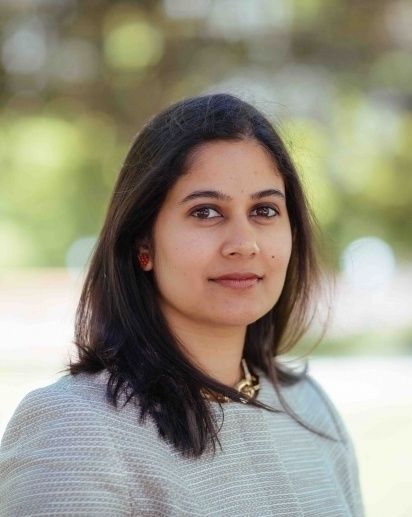
Zahra Ayubi is a scholar of women and gender in premodern and modern Islamic ethics. She specializes in feminist philosophy of Islam and has published on gendered concepts of ethics, justice, and religious authority, and on Muslim feminist thought and American Muslim women's experiences. Her first book, Gendered Morality: Classical Islamic Ethics of the Self, Family, and Society (Columbia, 2019) rethinks the tradition of Islamic philosophical ethics from a feminist critical perspective. Developing a lens for a feminist philosophy of Islam, Ayubi analyzes constructions of masculinity, femininity, and gender relations in classic works of philosophical ethics by Abu Hamid Muhammad al-Ghazali, Nasir-ad Din Tusi, and Jalal ad-Din Davani. She interrogates how these thinkers conceive of the ethical human being as an elite male within a hierarchical cosmology built on the exclusion of women and nonelites. She calls for a philosophical turn in the study of gender in Islam based on resources for gender equality that are unlocked by feminist engagement with the Islamic ethical tradition.
Sponsored by the Religious Studies Program as part of the New Directions in Religious Studies Lecture Series. With support from Cornell's Feminist, Gender & Sexuality Studies Program, Comparative Muslim Societies Program, and Department of Science & Technology Studies.