
Geonarratives of Hope and Resistance
April 9, 2026
12:15 pm
Rockefeller Hall, 374
Gatty Lecture Series
Anti-authoritarian Counter-Cartographies of Solidarity with Human Rights Defenders (HRDs) in the Philippines
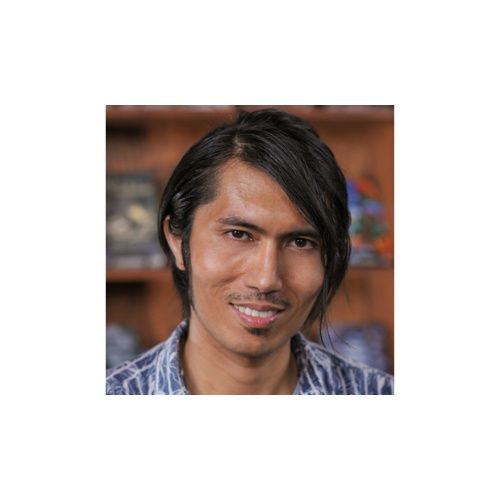
Join us for a talk by Arnisson Ortega, Associate Professor from the Department of Geography and the Environment at Syracuse University.
This Gatty Lecture will take place at Rockefeller 374, Asian Studies Lounge. Lunch will be served. For questions, contact seapgatty@cornell.edu.
Abstract
Human Rights Defenders (HRDs) in the Philippines have long endured systemic violence, making the country one of the most dangerous places for HRDs. In solidarity with HRDs in Negros Island—a key hotspot targeted by the state —me and my colleagues in the Philippines initiated a participatory mapping project grounded in HRD geonarratives: spatially anchored accounts of resistance, trauma, and survival. Working with activists, artists, and grassroots organizations, we launched a series of storytelling and sketchmapping activities, and co-created artmaps to visualize sites of struggle, care, and state repression. These maps served as tools for social media advocacy, political mobilization, and cultivating care practices. What have emerged from these initiatives are counter-cartographies of resistance and solidarity that expose the spatial logics of authoritarian violence. Through geonarrative storytelling and sketchmapping, we expose the spatial configurations of authoritarian violence that HRDs face. We traced the necropolitical spaces where HRDs confront psychological and physical violence—from surveillance and red-tagging to arbitrary arrests and extrajudicial killings—within everyday spaces such as homes, workplaces, hospitals, commercial centers, and rural farmlands. These geonarratives reveal how state and non-state actors systematically constrict safe spaces for HRDs, embedding violence into the micro-geographies of everyday life. Despite these conditions, HRDs and their communities have cultivated practices of care, resilience, and collective survival to sustain their advocacy work. The maps we generated amplified the plight of HRDs, supported public-facing campaigns, and fostered broader awareness of HRD vulnerability and resistance. By centering their geonarratives, we advance a justice-oriented geographic praxis that foregrounds solidarity and creative collaboration.
About the Speaker
Arnisson Ortega is a human geographer committed to community-engaged work that advances social justice. Arnisson’s research spans the spatial politics of urbanization, transnational migration, and uneven geographies of accumulation and dispossession. Much of Arnisson’s work focuses on the Philippines, Arnisson’s homeland, where Arnisson uses decolonial, community-engaged, and mixed-method approaches—particularly mapping and storytelling—as tools for resistance and world-making. Arnisson’s current projects examine decolonial cartographies, migrant-driven urban change in post-industrial cities, and the spatial politics of urban development in former U.S. military estates in the Philippines.
Additional Information
Program
Einaudi Center for International Studies
Southeast Asia Program