
Hemispheric Internment and Its Afterlives in Nikkei (2011)
February 3, 2026
12:20 pm
Uris Hall, G08
Cancelled due to an emergency!
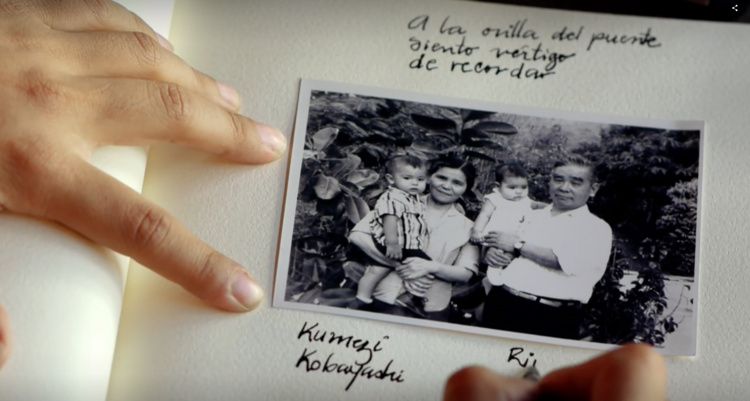
Although the internment of Japanese Americans during World War II following the invocation of the Enemy Aliens Act has been well documented, the parallel experiences of Latin Americans of Japanese descent remain far less examined. Like their U.S.-based counterparts, these communities were removed from their homes, stripped of property, and interned in U.S.-run camps. In Venezuela, rather than being interned abroad, Caracas’ Japanese community was confined to a camp in Ocumare del Tuy—a story almost entirely erased from both Venezuelan historical memory. This history raises urgent questions about whose experiences are recorded, whose are forgotten, and which forms of memory gain recognition. In this talk, Elizabeth Barrios explores these questions through Nikkei (2011), the largely overlooked documentary by filmmaker Kaori Flores Yonekura, which traces her own family’s experiences and illuminates a hidden chapter of Venezuelan and hemispheric history. The film not only preserves personal and collective memory but also challenges us to rethink the boundaries of national and transnational histories, exposing the racial and political logics that made such internments possible. These questions are particularly urgent today, as the Enemy Aliens Act has been invoked once more (this time specifically targeting Venezuelans), revealing how the mechanisms of exclusion and surveillance from the past continue to resonate in the present.
Elizabeth Barrios is an Associate Professor in the Department of Modern Languages and Cultures at Albion College. This year she is a fellow at the Society for the Humanities. Her research explores ecology, energy humanities, and Latin American and Latina/o literature and media, with an emphasis on Venezuela and its diaspora. She is the author of Failures of the Imagination: Reckoning with Oil in Venezuelan Cultural Production (University of Pittsburgh Press, 2026), which examines how Venezuelan literature and media have confronted the social and ecological toll of oil, often in ways overlooked or deliberately obscured by critics and institutions
Additional Information
Program
Einaudi Center for International Studies
Latin American and Caribbean Studies
Reppy Institute for Peace and Conflict Studies