
Protecting Civilians in Modern Warfare: The Principle of Foreseeable Harm to Innocents
March 5, 2026
12:00 pm
Uris Hall, G08
Modern surveillance technology has transformed the epistemic conditions of armed conflict. Drones, satellites, and persistent ISR systems now enable military commanders to identify individual civilians and predict, with statistical precision, the casualties their strikes will cause. Yet international humanitarian law continues to operate on frameworks designed for an era when such knowledge was unavailable - permitting foreseeable civilian deaths as lawful "collateral damage" provided they are not "excessive" relative to military advantage gained.
The Principle of Foreseeable Harm to Innocents (FHI) addresses this gap through one core proposition: if you can see them, and you can spare them, you must spare them. FHI does not create new law but clarifies what existing obligations under Additional Protocol I already require when properly interpreted for contemporary capabilities. It introduces an "avoidability gate" into targeting analysis: before asking whether civilian deaths are proportionate, commanders must first ask whether they are avoidable through feasible alternatives—different timing, different weapons, different approaches.
This lecture presents FHI as a further-protective interpretation of existing international humanitarian law, particularly Articles 51 and 57 of Additional Protocol I. Drawing on cases including the 2016 drone strike that killed Mohammad Azam - a Pakistani taxi driver identifiable as a civilian, whose death was foreseeable with certainty, and avoidable through alternative means—it demonstrates how current law permits outcomes that contradict its own protective purposes. FHI reorders the legal analysis to match the moral intuition that knowledge of preventable harm generates obligation to prevent it.
Speaker
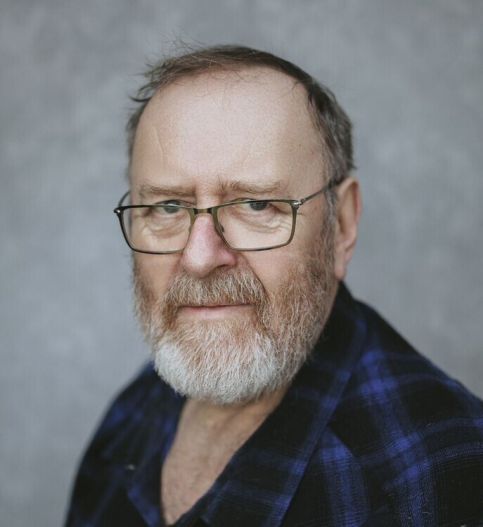
Neil Cameron read law with computing at Sussex University, where he studied international humanitarian law under Professor Colonel Gerald Draper. Called to the Bar in 1978, he practised briefly before moving into legal technology consultancy - a field in which he has worked for over thirty-five years, latterly as an adviser to major law firms on technology strategy. He conducted a review of IT systems for the European Court of Human Rights and currently serves as Lead Analyst at Legal IT Insider.
His interest in humanitarian law never waned. Reading Daniel Ellsberg's Confessions of a Nuclear War Planner during the COVID lockdown prompted him to write The Inherent Flexibility of the Human Moral Compass, a two-part analysis tracing the erosion of civilian protection norms from the League of Nations' 1938 resolution through to contemporary drone strikes. The Principle of Foreseeable Harm to Innocents grew from that work. He has since engaged with scholars at Cornell Law School and Oxford's Ethics and Laws of Armed Conflict research group, and has an academic article under preparation. Originally from the UK, Neil currently lives in Ithaca, New York.
Host
Hosted by the Reppy Institute for Peace and Conflict Studies, part of the Einaudi Center for International Studies
Additional Information
Program
Einaudi Center for International Studies
Reppy Institute for Peace and Conflict Studies
South Asia Program