
Residual Sovereignty: Bodies, Radionuclides, & the Birth of the Marshallese State
March 26, 2026
12:00 pm
Uris Hall, G08
Marshall Islanders explain that US nuclear blasting is woven into their polity “kone jubar”—like an ironwood tree roots in the soil; like a child belongs to the lands of their mother’s lineage. This talk is about bodies (biological, territorial, political) and persons (natural and legal), and about radionuclides that expose, permeate, entangle, and transform them. Between 1946 and 1958, the United States detonated sixty-seven of its most powerful nuclear weapons in the Marshall Islands, which it governed as part of a United Nations “strategic trusteeship.” During decolonization negotiations, the residues of US nuclear colonialism shaped the birth of the Marshallese state. In international law, “residual sovereignty” describes sovereign rights that will only vest fully following the removal of an encumbrance. In the late 1970s, US Defense Department planned to retain extensive military rights in the Marshall Islands that would limit Marshallese state sovereignty indefinitely. Marshallese sovereignty also became residual in a second, material sense, for it was shaped by the enduring damage and residues of US blasting. As a condition of the formation of a Marshallese state “in free association” with the United States, US negotiators required Islanders not only to cede military and security rights, but also to settle all legal claims relating to the nuclear legacy. This talk will explore the significance of this history for broader post-World War II entanglements between the racialized international legal politics of decolonization, on the one hand, and the material and epistemic politics of technology and technogenic pollution, on the other.
Speaker
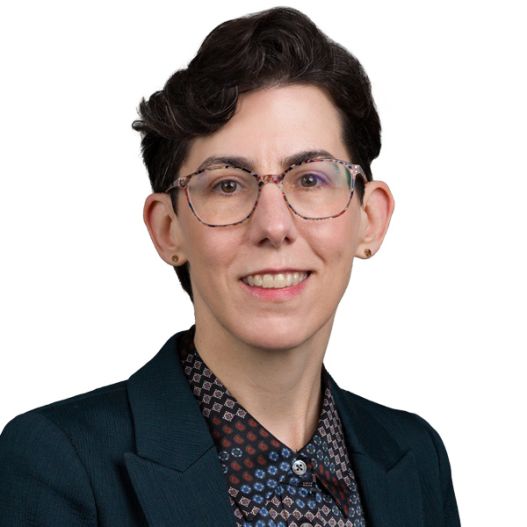
Mary X. Mitchell is a lawyer and a historian of science and technology. Her forthcoming book, Unsettling Sovereignty: International Law, Nuclear Weapons, and US Extraterritorial Power in Postwar Oceania (University of Chicago Press), uses legal wrangling over US nuclear blasting and contamination in the Marshall Islands to explore the shifting shape of sovereignty following World War II. Mitchell is an assistant professor in the Federated Department of History at the New Jersey Institute of Technology and Rutgers-Newark.
Host
Reppy Institute for Peace and Conflict Studies, part of the Einaudi Center for International Studies
Additional Information
Program
Einaudi Center for International Studies
Reppy Institute for Peace and Conflict Studies