
East Asia Program
Andrea Bachner
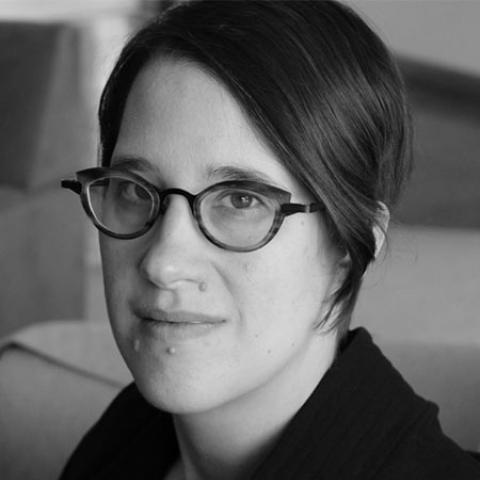
Professor, Comparative Literature
Andrea Bachner is a professor of comparative literature. She was the director of the East Asia Program for the term 2019-22 and a member of the East Asia Program steering committee and the CEAS editorial board.
She holds an MA from Munich University, Germany, and a PhD from Harvard University. Her research explores comparative intersections between Sinophone, Latin American, and European cultural productions in dialogue with theories of interculturality, sexuality, and mediality.
Additional Information
Program
Role
- Faculty
- EAP Core Faculty
- SEAP Faculty Associate
Contact
Email: asb76@cornell.edu
Phone: 607-255-6795
Taiwan Should Be Kept Off the Negotiating Table

Allen Carlson, EAP/SAP/SEAP
Allen Carlson, a Cornell University faculty member, authors the article analyzing U.S.-China-Taiwan relations.
Additional Information
CCCC: "Cracking Administrative Documents in Classical Chinese: 'Adjudicating Lawsuits (聽訟)' in Hu Taichu's 胡太初 Pulling Down the Screen During the Daytime (晝簾緖論)"
November 13, 2026
3:30 pm
Rockefeller Hall, 374 (Asian Studies Lounge)
Speaker: Sukhee Lee, Associate Professor of History, Rutgers University
Title: "Cracking Administrative Documents in Classical Chinese: 'Adjudicating Lawsuits (聽訟)' in Hu Taichu's 胡太初 Pulling Down the Screen During the Daytime (晝簾緖論)"
About Cornell Classical Chinese Colloquium
The group meets monthly during the semester to explore a variety of classical Chinese texts and styles. Other premodern texts linked to classical Chinese in Japanese, Korean, and Vietnamese have also been explored. Presentations include works from the earliest times to the 20th century. Workshop sessions are led by local, national, and international scholars. Participants with any level of classical Chinese experience are welcome to attend.
o At each session, a presenter guides the group in a reading of a classical Chinese text. Attendees discuss historical, literary, linguistic, and other aspects of the text, working together to resolve difficulties in comprehension and translation.
o No preparation is required; all texts will be distributed at the meeting.
o Refreshments will be served.
Additional Information
Program
Einaudi Center for International Studies
East Asia Program
Information Session: International Minors
November 3, 2026
4:30 pm
Uris Hall, G08
Take your learning to the next level with minors from the Einaudi Center for International Studies and our programs. In this session, you'll learn about three international minors that can help you expand your global knowledge. View a full list of minors.
European Studies
Explore Europe’s past, present, and future and demonstrate a knowledge of European languages, culture, politics, and international relations.
International Relations
Study global governance, politics, economics, history, languages, and cultures across national boundaries.
Migration Studies
Learn about how human migration and migrant experiences shape our world on the move.
Can’t attend? Contact programs@einaudi.cornell.edu to learn more.
***
The Mario Einaudi Center for International Studies hosts info sessions for graduate and for undergraduate students to learn more about funding opportunities, international travel, research, and internships. View the full calendar of fall semester sessions.
Additional Information
Program
Einaudi Center for International Studies
Reppy Institute for Peace and Conflict Studies
East Asia Program
Southeast Asia Program
Latin American and Caribbean Studies
Institute for African Development
Institute for European Studies
South Asia Program
Migrations Program
Cornell Classical Chinese Colloquium with Jeffrey Niedermaier
December 4, 2026
3:30 pm
Rockefeller Hall, 374 (Asian Studies Lounge)
Speaker: Jeffrey Niedermaier, Brown University
Title: "Intimacies of the Guestless Guesthouse: Diplomacy with the Departed in Post-Parhae Japan."
About Cornell Classical Chinese Colloquium
The group meets monthly during the semester to explore a variety of classical Chinese texts and styles. Other premodern texts linked to classical Chinese in Japanese, Korean, and Vietnamese have also been explored. Presentations include works from the earliest times to the 20th century. Workshop sessions are led by local, national, and international scholars. Participants with any level of classical Chinese experience are welcome to attend.
o At each session, a presenter guides the group in a reading of a classical Chinese text. Attendees discuss historical, literary, linguistic, and other aspects of the text, working together to resolve difficulties in comprehension and translation.
o No preparation is required; all texts will be distributed at the meeting.
o Refreshments will be served.
Additional Information
Program
Einaudi Center for International Studies
East Asia Program
Decolonial Endurance: Indigenous Wellbeing Against Chinese Settler Colonialism
November 24, 2026
12:00 pm
Kahin Center
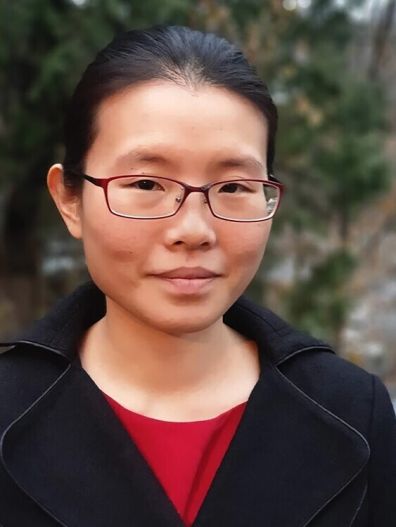
Speaker: Ting Hui Lau, Assistant Professor of Sociology and Anthropology, University of Singapore
Title: Decolonial Endurance: Indigenous Wellbeing Against Chinese Settler Colonialism
Abstract: Like many countries in Asia, China does not recognize the existence of Indigenous peoples within its borders, insisting instead on the category of ethnic minority. This denial of Indigeneity forecloses discussions of Chinese colonialism, with long-term implications for Indigenous health and wellbeing. Drawing on my new book, Decolonial Endurance: Lisu World-Making Against Chinese Settler Colonialism (Stanford University Press, 2026), I argue that Indigenous health is inextricably linked to decolonization: the return and repair of Indigenous relations to land, language, livelihood, and self-determination. I focus on Indigenous Lisu subsistence farmers on the China-Myanmar border and their experiences of Chinese development. Based on long-term ethnographic fieldwork, I show how Lisu health challenges are connected to their experiences of Chinese colonialism, carried out today in the form of state-led development. At the same time, moving beyond discourses of Indigenous victimhood, I trace Lisu practices of everyday decolonization. Through storytelling, care, play, and prayer, Lisu enact forms of decolonial worldmaking that enable them to endure colonial erasure by sustaining relationships with land, refusing assimilation, and imagining alternative futures. These practices, too, are critical to health. The refusal to recognize Indigeneity, and the collapsing of Indigenous struggles into class-based or regional problems, obscures a major dimension of Indigenous health. Public health interventions must therefore attend not only to access to health services, but also to the political conditions of Indigenous wellbeing: decolonization, cultural revitalization, and Indigenous resurgence.
Speaker's bio:
Assistant Professor Lau Ting Hui is a sociocultural anthropologist in the Department of Sociology and Anthropology in the National University of Singapore. Her research focuses on mental health, development, and Indigeneity in Asia.
Additional Information
Program
Einaudi Center for International Studies
East Asia Program
Southeast Asia Program
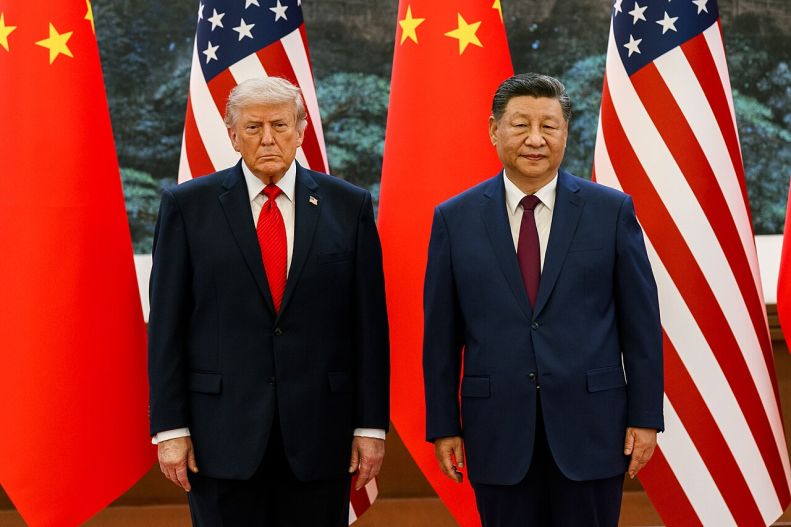
Xi Meets Trump After 10 Days Out of Public Eye Amid Health Speculation
Allen Carlson, EAP/SAP/SEAP
Allen Carlson, a Cornell University associate professor of government and expert on Chinese foreign policy, provides analysis on the U.S.-China summit and its geopolitical implications.
Additional Information
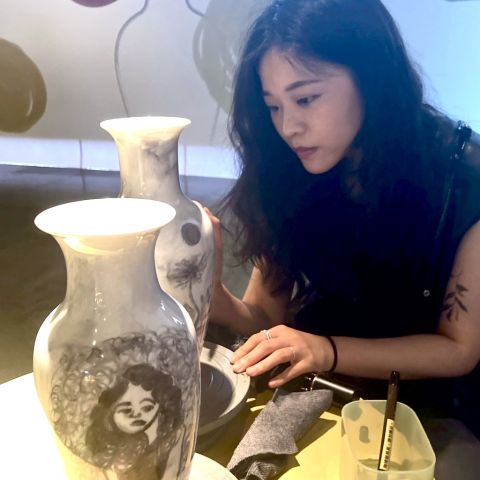
Fina Chu
Graduate Student
Degree Pursued: PhD
Anticipated Degree Year: 2033
Committee Chair: Nancy Lin
Discipline: Art History
Research Interests: modern and contemporary Taiwanese art and visual culture, with broader interests in East Asian art, global modernisms, and museum studies.
Additional Information
Xinyu H. Zhang

Graduate Student
Degree Pursued: PhD
Anticipated Degree Year: 2028
Discipline: Comparative Literature
Research Interests: translation, critical theory
Additional Information
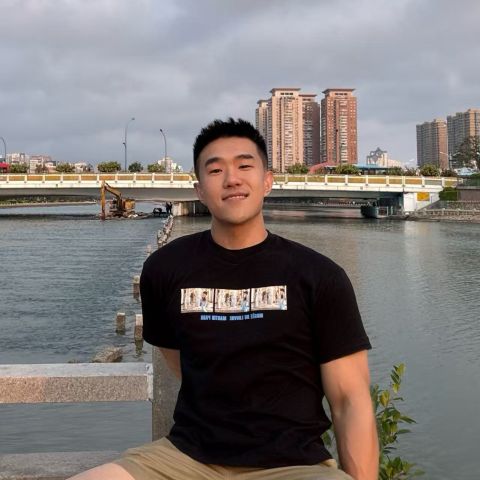
Chencong Zhu
Graduate Student
Degree Pursued: PhD
Anticipated Degree Year: 2028
Committee Chair: Noah Tamarkin
Discipline: Anthropology