
East Asia Program
Sexual Revolutions and the Future of the Institution of Marriage

October 26, 2022
3:00 pm
Uris Hall, G08
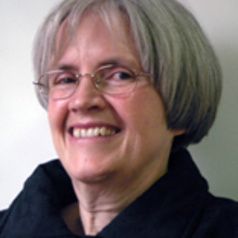
The Cornell Contemporary China Initiative (CCCI) of the East Asia Program welcomes Deborah Davis (Sociology, Yale University)
as part of our semester-long theme of Fashion and Politics in Twentieth-Century China with faculty host, Peidong Sun (History, Cornell)
Some of the questions that guest speakers will investigate include: How do we define politics from the dimension of fashion? What was a politicized fashion? How did fashion reflect the power structure? How did fashion become a way of obedience and resistance? And how do we define and interpret the human condition in China under Mao's rule (1949-1976)? What was human resilience in the face of absolute power?
Deborah Davis's talk is titled, "Sexual Revolutions and the Future of the Institution of Marriage."
Drawing on census data, documentaries, life histories, and a decade of fieldwork, the lecture considers the future of marriage and sexual intimacy in contemporary China where the one-child policy, massive migration out of villages, and multiplying connections to global youth cultures have transformed the legal, demographic, and cultural supports for marriage.
The CCCI lecture series aims to expose the broad campus community to issues and scholarship of contemporary China.
We thank our co-sponsors:
Asian American Pacific Studies Program | Asian Studies | College of Human Ecology | Cornell Society for the Humanities | Feminist, Gender & Sexuality StudiesDepartment of History | Department of International & Comparative Labor Relations | Department of History | The Levinson China & Asia-Pacific Studies Program
Additional Information
Program
Einaudi Center for International Studies
East Asia Program
Patterns for the People in Communist China
October 12, 2022
3:00 pm
Uris Hall, G08
The Cornell Contemporary China Initiative (CCCI) of the East Asia Program welcomes Antonia Finnane (History, University of Melbourne) as part of our semester-long theme of Fashion and Politics in Twentieth-Century China with faculty host, Peidong Sun (History, Cornell)
Some of the questions that guest speakers will investigate include: How do we define politics from the dimension of fashion? What was a politicized fashion? How did fashion reflect the power structure? How did fashion become a way of obedience and resistance? And how do we define and interpret the human condition in China under Mao's rule (1949-1976)? What was human resilience in the face of absolute power?
Antonia Finnane's talk is titled, "Patterns for the People in Communist China."
When the People’s Republic of China was founded, new clothing protocols for state employees resulted in a general change in everyday dress. This was consistent with historical precedent: when the dynasty changed, the clothing was altered. But who made the new clothes and how were they made? Clothing in this period is often discussed in terms such as variety, agency, and consumption, contradicting assumptions of general conformity under communism; yet if we look at how clothes were made, we can see how conformity was instilled.
The CCCI lecture series aims to expose the broad campus community to issues and scholarship of contemporary China.
We thank our co-sponsors:
Asian American Studies Program | Asian Studies | College of Human Ecology | Cornell Society for the Humanities | Feminist, Gender & Sexuality Studies | Department of International & Comparative Labor Relations | Department of History | The Levinson China & Asia-Pacific Studies Program
Additional Information
Program
Einaudi Center for International Studies
East Asia Program
China’s Gen Z and Millennials Have a Word for Their Disaffection with the Economy and Life in General. Evolution is Dead, Meet ‘Involution’

Eli Friedman, EAP
The ideas of “giving up on fighting tooth and nail” for an increasingly elusive reward has grown in appeal for young Chinese citizens, says Eli Friedman, associate professor in the ILR School.
Additional Information
Fashion and Politics in Twentieth-Century China

Cornell Contemporary China Initiative's Fall Theme
The Cornell Contemporary China Initiative (CCCI) lecture series aims to expose the broad campus community to issues and scholarship of contemporary China and and the fall 2022 CCCI lecture series connected to two courses taught by Professor Peidong Sun, Fashion and Politics in Twentieth-Century China and Life and Death in China Under Mao. She also hosted and directed the series.
FALL ’22 Fashion and Politics in Twentieth-Century China * – Peidong Sun
Some of the questions that guest speakers investigated include: How do we define politics from the dimension of fashion? What was a politicized fashion? How did fashion reflect the power structure? How did fashion become a way of obedience and resistance? And how do we define and interpret the human condition in China under Mao's rule (1949-1976)? What was human resilience in the face of absolute power?
The Fall 2022 CCCI lecture videos linked in the titles and were recorded on the dates of the talk. If a title is not linked, the speaker did not permit recording.
Jeffrey Wasserstrom, (History, University of California, Irvine)
Clothing, Kinship, Slogans, and Songs in Chinese Protest Movements of the Past and Present
September 26, 2022.
Antonia Finnane, (History, University of Melbourne, Australia)
Patterns for the People in Communist China
October 12, 2022.
Deborah Davis, (Sociology, Yale University)
Sexual Revolutions and the Future of the Institution of Marriage
October 26, 2022.
Simona Segre-Reinach, (Fashion Studies, University of Bologna, Italy)
Sino-Italian Encounters in Global Fashion: 20 Years of Sino-Italian Collaborations
November 9, 2022.
We thank all of our co-sponsors for helping to make this series possible: Asian American Pacific Studies Program, Asian Studies, College of Human Ecology, Cornell Society for the Humanities, Feminist, Gender & Sexuality Studies, Department of History, Department of International & Comparative Labor Relations, The Levinson China & Asia-Pacific Studies Program.
*Professor Peidong Sun’s course listings: Fashion and Politics in the Twentieth Century China (HIST4075/HIST6075/CAPS 4075) and Life and Death in China Under Mao (HIST3525/CAPS3525)
Additional Information
Program
World’s Key Workers Threaten to Hit Economy Where It Will Hurt

Eli Friedman, EAP
“There’s a very tight labor market, so that puts workers in a position where they have both an accumulation of lots of grievances and they feel empowered,” says Eli Friedman, associate professor and chair of International & Comparative Labor.
Additional Information
The Economy: Tearing Down the Bamboo Walls
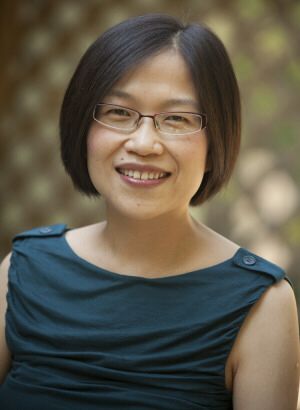
Panle Jia Barwick, EAP
Piece about “local protectionism” in China, mentions research by Panle Jia Barwick about priority given locally made cars to access express lanes.
Additional Information
ISSI 2022
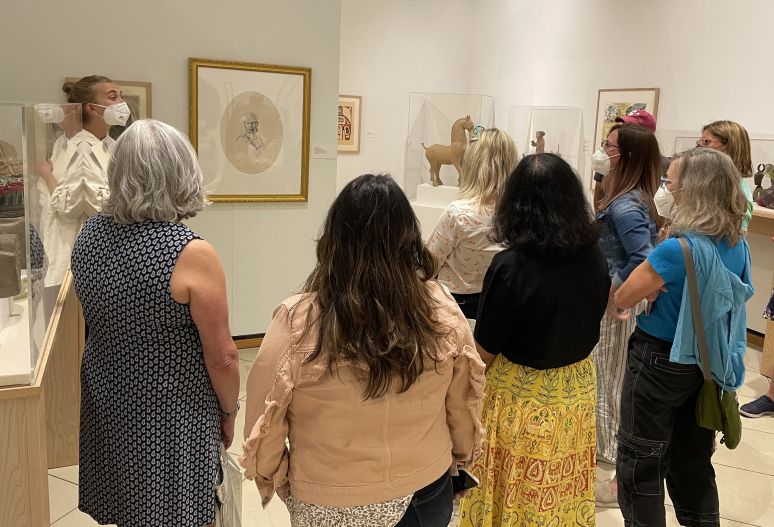
Institute for K–12 Teachers Highlights Global Inequalities
Einaudi's regional programs hosted more than 30 teachers from across central New York for professional development on the Cornell campus.
Additional Information
Perspective Taking and Security Dilemma Thinking: Experimental Evidence from China and the United States

November 17, 2022
11:25 am
Uris Hall, G08
Professor Ryan Brutger explains that one of the central challenges in China-US relations is the risk of a security dilemma between China and the United States, as each side carries out actions for what it perceives to be defensively-motivated reasons, failing to realize how it is perceived by the other side. Yet how susceptible to the psychological biases that undergird the security dilemma are the Chinese and American publics? Can their deleterious effects be mitigated?
The speaker explores the microfoundations of the security dilemma, fielding parallel dyadic cross-national survey experiments in China and the United States. Micro-level evidence is found to be consistent with the logic of the security dilemma in publics in both countries. IR scholars have overstated the palliative effects of perspective taking, which can backfire in the face of perceived threats to actors' identities and goals. These findings have important implications for the study of public opinion in China-US relations, and perspective taking in IR.
About the Speaker
Ryan Brutger is an Assistant Professor of Political Science at the University of California, Berkeley. He earned his Ph.D. from the Department of Politics at Princeton University. Prior to joining Berkeley, he was an Assistant Professor at the University of Pennsylvania.
Moderator
Paul Lushenko is a U.S. Army Lieutenant Colonel and a Ph.D. student in International Relations at Cornell University.
***
Presented by the Reppy Institute for Peace and Conflict Studies. Co-sponsored by the East Asia Program, the Department of Government, and the Gender and Security Sector Lab.
Additional Information
Program
Einaudi Center for International Studies
Reppy Institute for Peace and Conflict Studies
East Asia Program
International Fair 2022

August 31, 2022
11:00 am
Uris Hall, Terrace
The annual International Fair showcases Cornell's global opportunities for undergraduate and graduate students. Explore the fair and find out about international majors and minors, language study, study abroad, funding opportunities, global internships, and more.
The International Fair is sponsored by the Mario Einaudi Center for International Studies, the Office of Global Learning (both part of Global Cornell), and Cornell's Language Resource Center.
Additional Information
Program
Einaudi Center for International Studies
Reppy Institute for Peace and Conflict Studies
East Asia Program
Southeast Asia Program
Latin American and Caribbean Studies
Institute for African Development
Institute for European Studies
South Asia Program
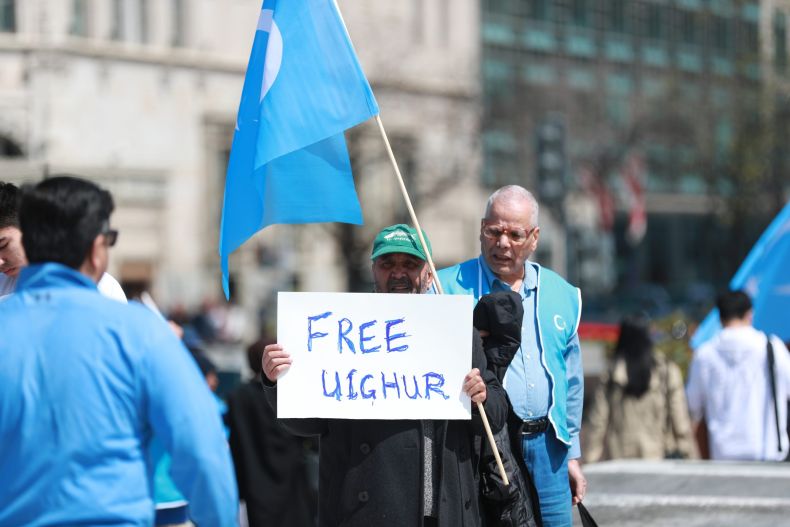
Genocide and Cultural Genocide in China
Magnus Fiskesjö Anthropology/EAP/SEAP/PACS
There is ongoing confusion about whether “genocide” or “cultural genocide” best describes what is happening in China’s Uyghur region today. Some say there is no genocide, only cultural genocide. "In my view, it is both genocide and cultural genocide," explains Magnus Fiskesjö (Anthropology, Cornell and core EAP faculty).
Magnus Fiskesjö