
Einaudi Center for International Studies
CCCC: "Cracking Administrative Documents in Classical Chinese: 'Adjudicating Lawsuits (聽訟)' in Hu Taichu's 胡太初 Pulling Down the Screen During the Daytime (晝簾緖論)"
November 13, 2026
3:30 pm
Rockefeller Hall, 374 (Asian Studies Lounge)
Speaker: Sukhee Lee, Associate Professor of History, Rutgers University
Title: "Cracking Administrative Documents in Classical Chinese: 'Adjudicating Lawsuits (聽訟)' in Hu Taichu's 胡太初 Pulling Down the Screen During the Daytime (晝簾緖論)"
About Cornell Classical Chinese Colloquium
The group meets monthly during the semester to explore a variety of classical Chinese texts and styles. Other premodern texts linked to classical Chinese in Japanese, Korean, and Vietnamese have also been explored. Presentations include works from the earliest times to the 20th century. Workshop sessions are led by local, national, and international scholars. Participants with any level of classical Chinese experience are welcome to attend.
o At each session, a presenter guides the group in a reading of a classical Chinese text. Attendees discuss historical, literary, linguistic, and other aspects of the text, working together to resolve difficulties in comprehension and translation.
o No preparation is required; all texts will be distributed at the meeting.
o Refreshments will be served.
Additional Information
Program
Einaudi Center for International Studies
East Asia Program
Information Session: International Minors

November 3, 2026
4:30 pm
Uris Hall, G08
Take your learning to the next level with minors from the Einaudi Center for International Studies and our programs. In this session, you'll learn about three international minors that can help you expand your global knowledge. View a full list of minors.
European Studies
Explore Europe’s past, present, and future and demonstrate a knowledge of European languages, culture, politics, and international relations.
International Relations
Study global governance, politics, economics, history, languages, and cultures across national boundaries.
Migration Studies
Learn about how human migration and migrant experiences shape our world on the move.
Can’t attend? Contact programs@einaudi.cornell.edu to learn more.
***
The Mario Einaudi Center for International Studies hosts info sessions for graduate and for undergraduate students to learn more about funding opportunities, international travel, research, and internships. View the full calendar of fall semester sessions.
Additional Information
Program
Einaudi Center for International Studies
Reppy Institute for Peace and Conflict Studies
East Asia Program
Southeast Asia Program
Latin American and Caribbean Studies
Institute for African Development
Institute for European Studies
South Asia Program
Migrations Program
Cornell Classical Chinese Colloquium with Jeffrey Niedermaier

December 4, 2026
3:30 pm
Rockefeller Hall, 374 (Asian Studies Lounge)
Speaker: Jeffrey Niedermaier, Brown University
Title: "Intimacies of the Guestless Guesthouse: Diplomacy with the Departed in Post-Parhae Japan."
About Cornell Classical Chinese Colloquium
The group meets monthly during the semester to explore a variety of classical Chinese texts and styles. Other premodern texts linked to classical Chinese in Japanese, Korean, and Vietnamese have also been explored. Presentations include works from the earliest times to the 20th century. Workshop sessions are led by local, national, and international scholars. Participants with any level of classical Chinese experience are welcome to attend.
o At each session, a presenter guides the group in a reading of a classical Chinese text. Attendees discuss historical, literary, linguistic, and other aspects of the text, working together to resolve difficulties in comprehension and translation.
o No preparation is required; all texts will be distributed at the meeting.
o Refreshments will be served.
Additional Information
Program
Einaudi Center for International Studies
East Asia Program
The Subnational Politics of Deforestation in the Peruvian Amazon, 2002-2022
December 1, 2026
12:20 pm
Uris Hall, G08
What are the local political factors influencing deforestation in the Peruvian Amazon? Global deforestation continues to pose a significant environmental challenge, with the Peruvian Amazon experiencing a loss of approximately 4% of its primary forest from 2002 to 2024. While policy responses often rely on collaboration among local politicians, elites, and communities, political factors remain understudied. We contribute to the literature by analyzing how local political competition and communal land titling influence subnational forest loss in Peru—a context where decentralization and Indigenous land titling differ significantly from cases like Brazil and Argentina. We draw on a panel dataset that spans 21 years (2002–2022), enabling us to analyze both cross-sectional and temporal variation in deforestation. Our results reveal that local elections—specifically their timing and level of contestation—are linked to increased forest loss. We interpret these findings in the context of local political dynamics that incentivize politicians to pursue particularistic benefits (such as land titles and infrastructure projects) that detract from conservation efforts.
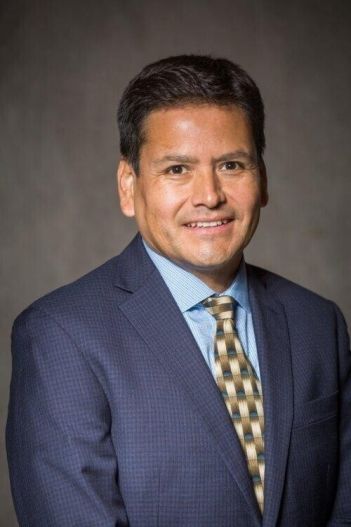
Moises Arce is the Scott and Marjorie Cowen Chair in Latin American Social Sciences and Professor in the Department of Political Science at Tulane University. Professor Arce specializes in conflict processes, democratic governance and environmental politics. He is the author of Market Reform in Society (Penn State 2005), Resource Extraction and Protest in Peru (Pittsburgh 2014), Social Protest and Democracy (Calgary 2019), The Roots of Engagement (Oxford 2022), Popular Politics and Protest Event Analysis in Latin America (New Mexico 2024), and numerous journal articles and book chapters.
Additional Information
Program
Einaudi Center for International Studies
Latin American and Caribbean Studies
Decolonial Endurance: Indigenous Wellbeing Against Chinese Settler Colonialism
November 24, 2026
12:00 pm
Kahin Center
Speaker: Ting Hui Lau, Assistant Professor of Sociology and Anthropology, University of Singapore
Title: Decolonial Endurance: Indigenous Wellbeing Against Chinese Settler Colonialism
Abstract: Like many countries in Asia, China does not recognize the existence of Indigenous peoples within its borders, insisting instead on the category of ethnic minority. This denial of Indigeneity forecloses discussions of Chinese colonialism, with long-term implications for Indigenous health and wellbeing. Drawing on my new book, Decolonial Endurance: Lisu World-Making Against Chinese Settler Colonialism (Stanford University Press, 2026), I argue that Indigenous health is inextricably linked to decolonization: the return and repair of Indigenous relations to land, language, livelihood, and self-determination. I focus on Indigenous Lisu subsistence farmers on the China-Myanmar border and their experiences of Chinese development. Based on long-term ethnographic fieldwork, I show how Lisu health challenges are connected to their experiences of Chinese colonialism, carried out today in the form of state-led development. At the same time, moving beyond discourses of Indigenous victimhood, I trace Lisu practices of everyday decolonization. Through storytelling, care, play, and prayer, Lisu enact forms of decolonial worldmaking that enable them to endure colonial erasure by sustaining relationships with land, refusing assimilation, and imagining alternative futures. These practices, too, are critical to health. The refusal to recognize Indigeneity, and the collapsing of Indigenous struggles into class-based or regional problems, obscures a major dimension of Indigenous health. Public health interventions must therefore attend not only to access to health services, but also to the political conditions of Indigenous wellbeing: decolonization, cultural revitalization, and Indigenous resurgence.
Speaker's bio:
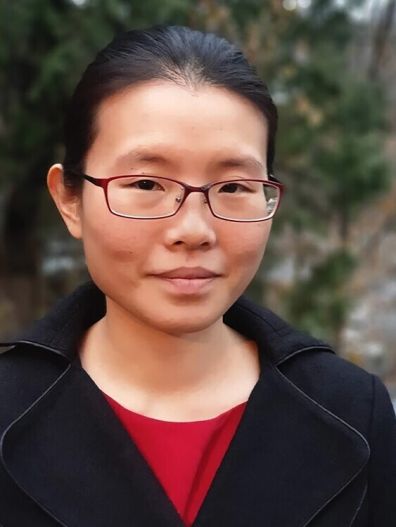
Assistant Professor Lau Ting Hui is a sociocultural anthropologist in the Department of Sociology and Anthropology in the National University of Singapore. Her research focuses on mental health, development, and Indigeneity in Asia.
Additional Information
Program
Einaudi Center for International Studies
East Asia Program
Southeast Asia Program
The White House’s Arguments About China and A.I. Have a Few Big Problems

Sarah Kreps, PACS
Sarah Kreps, director of Cornell University's Tech Policy Institute, comments on China's approach to A.I. regulation.
Additional Information
Democratic Governance and Corruption Control Mechanisms: A Comparative Study with Illustrations from South Africa, Nigeria, Chad and The Democratic Republic of Congo

November 18, 2026
2:00 pm
Uris Hall, G-08
Lecture
Additional Information
Program
Einaudi Center for International Studies
Institute for African Development
Language Resource Center Speaker Series - Designing Language Courses for Healthcare
November 10, 2026
4:00 pm
Stimson Hall, G25
"Designing Language Courses for Healthcare: Development, Implementation, and Lessons Learned (Spanish and Bangla)"
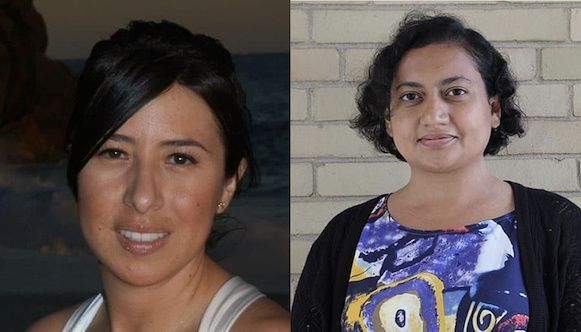
Brisa Teutli and Razima Selim Chowdhury
Teaching Professors, Cornell University
This joint presentation explores the development and implementation of two Languages for Specific Purposes courses at Cornell University: Spanish for the Medical and Health Professions and Bangla for Communication in Healthcare. Designed for students interested in healthcare and related professions, both courses move beyond specialized terminology to prepare learners for meaningful, culturally responsive communication with patients and communities.
The presenters will discuss approaches to curriculum and materials development, including needs and domain analysis, the identification of communicative and intercultural learning goals, and the use of authentic healthcare communication tasks. Drawing on clinical interactions, role-plays, and community-centered learning experiences, the courses emphasize communication practices grounded in empathy, compassion, respect, and attention to language access and health equity.
Reflecting on implementation in two distinct linguistic and curricular contexts, the presenters will share pedagogical decisions, challenges, student responses, and lessons learned. The session will offer practical insights for language educators interested in developing purpose-specific courses that connect language learning with students' academic and professional goals.
Bios:
Brisa Teutli is a Teaching Professor of Spanish Language in the Department of Romance Studies at Cornell University, where she has taught since 2005. She has extensive experience in language teaching, curriculum development, teacher training, and supervision of graduate Teaching Assistants. Her academic interests include second language acquisition, pragmatics, cultural and intercultural competence, curriculum design, and assessment. Her current work focuses particularly on Spanish for the Medical and Health Professions and on preparing students to communicate effectively, empathetically, and respectfully with Spanish-speaking patients in healthcare settings. She is also exploring the use of artificial intelligence and technology-enhanced language learning to create interactive medical interview simulations that help students develop linguistic, intercultural, and interpersonal communication skills.
Razima Selim Chowdhury is a Teaching Professor of Bangla in the Department of Asian Studies at Cornell University. Her work focuses on Bangla language pedagogy, heritage language education, Languages for Specific Purposes (LSP), healthcare communication, and proficiency-oriented instruction. She is particularly interested in developing innovative, culturally grounded curricula that connect language learning with social justice, community engagement, and authentic cultural resources while fostering deeper understanding of the histories, cultures, and contemporary realities of South Asia. Beyond Cornell, she has held leadership roles with the Wisconsin Intensive Summer Language Institutes (WISLI), where she has supported instructor training, curriculum development, assessment, and pedagogical innovation across a wide range of less commonly taught languages. She also contributes to the advancement of South Asian language education through her service on the Language Committee of the American Institute of Indian Studies (AIIS) and the American Institute of Bangladesh Studies (AIBS). Her current research interests include heritage language learner development, domain analysis, AI-assisted language learning, healthcare communication, and community-engaged language education.
This event will be held in person in G25 Stimson and will also be streamed live over Zoom (registration required). Join us at the LRC or on Zoom.
The event is free and open to the public.
Additional Information
Program
Einaudi Center for International Studies
Latin American and Caribbean Studies
South Asia Program
Southeast Asia Program
Southwest Asia and North Africa Program
The Contemporary Face of Jew Hatred: Threats Against Jews Today

October 6, 2026
4:30 pm
Caldwell Hall
Join us for an in-depth discussion of the rising tide of violence against Jews worldwide and the reasons why. Registration is required in advance to attend this event; please register here. (Note there is a no-bag policy at this event, and a Cornell I.D. is required for entry.)
Speaker Adam Louis-Klein, an anthropologist, studies and writes about the different forms that hatred and prejudice against Jews have taken over the centuries. He will discuss the rising number of violent attacks against Jews here in the U.S. and around the world.
Louis-Klein has published in The Atlantic, The Wall Street Journal, The Free Press, Tablet, Sapir and elsewhere, where he writes on the symbolic structures of anti-Jewish hate and the media logics that amplify and legitimize it. His essays and articles aim to rearticulate Jewish identity in a time of rising hostility, offering rigorous critiques of the ideological frameworks that sustain contemporary Jew hatred.
He is a Faculty Fellow at the Institute for the Study of Global Antisemitism & Policy (ISGAP), Postgraduate Fellow at the London Centre for the Study of Contemporary Antisemitism (LCSCA), and an adjunct fellow at the Z3 Institute.
The talk is sponsored by Standing Against Antisemitism at Cornell, a staff special interest group under the auspices of the Department of Belonging and Inclusion and co-sponsored by Cornell Hillel. For more information, contact SAAC-SIG@cornell.edu.
Additional Information
Program
Einaudi Center for International Studies
UN Food Agency Funding Cuts Leave World Ill-equipped for Looming Food Crises

Chris Barrett, IAD/SEAP
Chris Barrett, a Cornell University agricultural and development economist, warns that funding shortfalls at international food agencies hinder global capacity for early warning and response to hunger crises.