
Einaudi Center for International Studies
Book Talk: Convict Politics: Innocent Convicts and Unlawful Commoners in Early Chinese Empires (221 BCE-23 CE)
April 9, 2026
4:30 pm
Rockefeller Hall, 374
East Asia Program Lecture Series presents "Convict Politics: Innocent Convicts and Unlawful Commoners in Early Chinese Empires (221 BCE-23 CE)"
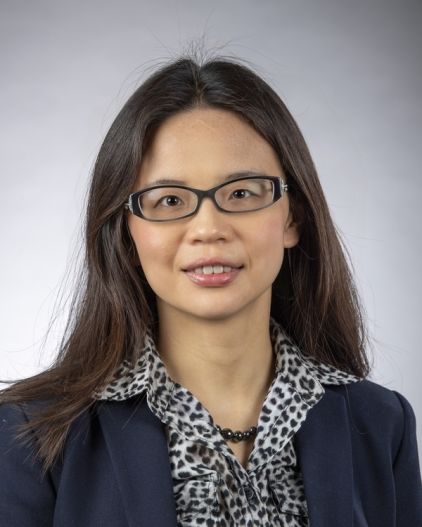
Speaker: Liang Cai, Ruth and Paul Idzik Associate Professor in Digital Scholarship of History, University of Notre Dame
Description:
This talk, based on newly mined data from newly unearthed manuscripts and traditional sources, explores convict politics in the early Chinese empires. Whereas a substantial number of bureaucratic personnel were convict laborers, assisting local officials, the central court reemployed numerous previously convicted individuals as high officials. The book argues that convict politics emerged because the mutual responsibility system and high-performance-oriented law extensively criminalized people, including the innocent. Paradoxically, the Western Han dynasty’s stringent criminalization of individuals was juxtaposed with redemption policies and frequent amnesties that excessively exonerated offenders, even the most heinous. The intellectual roots underpinning the harsh laws and the universal amnesties fundamentally embraced the same utopian ideal of a crime-free society. Although this dual practice of extensive criminalization and widespread pardoning fostered the population’s tolerance towards the political system, these practices were fraught with injustice and led to form Confucian deep-seated skepticism towards the law in Chinese tradition.
Speaker's Bio:
Dr. Liang Cai received her Ph.D. from Cornell University and currently serves as an associate professor of history at the University of Notre Dame. She specializes in Chinese political and intellectual history, with a focus on the Qin-Han dynasties (221 BCE - 23 CE). Dr. Cai's publications cover topics such as Confucianism, bureaucracy, law, social networks, and archaeologically excavated manuscripts. She has also collaborated with computer scientists on a digital humanities project aimed at creating structured biographical data and conducting social network analysis of early Chinese empires, particularly those in the Qin-Han period, which is considered the fountainhead of Chinese civilization.
Dr. Cai’s first book Witchcraft and the Rise of the First Confucian Empire contests long-standing claims that Confucianism came to prominence with the promotion of Emperor Wu in the Han dynasty. She argues that it was a witchcraft scandal in 91–87 BCE that created a political vacuum and permitted Confucians to rise to power, ultimately transforming China into a Confucian regime. Her book won the 2014 Academic Award for Excellence presented by Chinese Historians in the United States and was a finalist for the 2015 Best First Book in the History of Religions presented by the American Academy of Religion.
Her other selected publications appear in The Journal of the Royal Asiatic Society, the Journal of Asian studies and Law and History Review.
Dr. Cai’s second book, Convict Politics: From Utopia to Serfdom in Early China (221 BCE–23 CE) (Cambridge: Cambridge University Press), is scheduled for release in December 2025. This book seeks to stimulate deeper reflection on utopian thought and its perilous application in political practice.
About East Asia Program
As Cornell’s hub for research, teaching, and engagement with East Asia, the East Asia Program (EAP) serves as a forum for the interdisciplinary study of historical and contemporary East Asia. The program draws its membership of over 45 core faculty and numerous affiliated faculty, graduate, and undergraduate students from eight of Cornell’s 12 schools and colleges.
Additional Information
Program
Einaudi Center for International Studies
East Asia Program
Geonarratives of Hope and Resistance
April 9, 2026
12:15 pm
Rockefeller Hall, 374
Gatty Lecture Series
Anti-authoritarian Counter-Cartographies of Solidarity with Human Rights Defenders (HRDs) in the Philippines
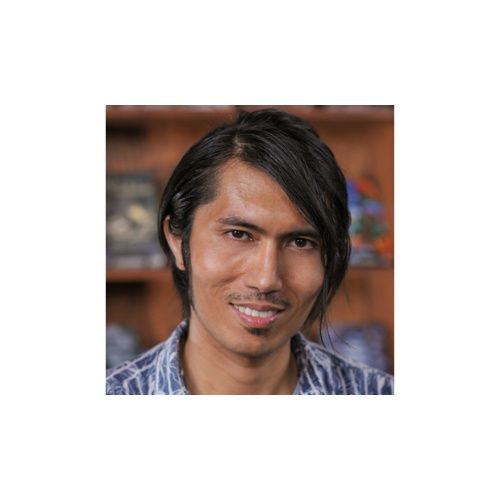
Join us for a talk by Arnisson Ortega, Associate Professor from the Department of Geography and the Environment at Syracuse University.
This Gatty Lecture will take place at Rockefeller 374, Asian Studies Lounge. Lunch will be served. For questions, contact seapgatty@cornell.edu.
Abstract
Human Rights Defenders (HRDs) in the Philippines have long endured systemic violence, making the country one of the most dangerous places for HRDs. In solidarity with HRDs in Negros Island—a key hotspot targeted by the state —me and my colleagues in the Philippines initiated a participatory mapping project grounded in HRD geonarratives: spatially anchored accounts of resistance, trauma, and survival. Working with activists, artists, and grassroots organizations, we launched a series of storytelling and sketchmapping activities, and co-created artmaps to visualize sites of struggle, care, and state repression. These maps served as tools for social media advocacy, political mobilization, and cultivating care practices. What have emerged from these initiatives are counter-cartographies of resistance and solidarity that expose the spatial logics of authoritarian violence. Through geonarrative storytelling and sketchmapping, we expose the spatial configurations of authoritarian violence that HRDs face. We traced the necropolitical spaces where HRDs confront psychological and physical violence—from surveillance and red-tagging to arbitrary arrests and extrajudicial killings—within everyday spaces such as homes, workplaces, hospitals, commercial centers, and rural farmlands. These geonarratives reveal how state and non-state actors systematically constrict safe spaces for HRDs, embedding violence into the micro-geographies of everyday life. Despite these conditions, HRDs and their communities have cultivated practices of care, resilience, and collective survival to sustain their advocacy work. The maps we generated amplified the plight of HRDs, supported public-facing campaigns, and fostered broader awareness of HRD vulnerability and resistance. By centering their geonarratives, we advance a justice-oriented geographic praxis that foregrounds solidarity and creative collaboration.
About the Speaker
Arnisson Ortega is a human geographer committed to community-engaged work that advances social justice. Arnisson’s research spans the spatial politics of urbanization, transnational migration, and uneven geographies of accumulation and dispossession. Much of Arnisson’s work focuses on the Philippines, Arnisson’s homeland, where Arnisson uses decolonial, community-engaged, and mixed-method approaches—particularly mapping and storytelling—as tools for resistance and world-making. Arnisson’s current projects examine decolonial cartographies, migrant-driven urban change in post-industrial cities, and the spatial politics of urban development in former U.S. military estates in the Philippines.
Additional Information
Program
Einaudi Center for International Studies
Southeast Asia Program
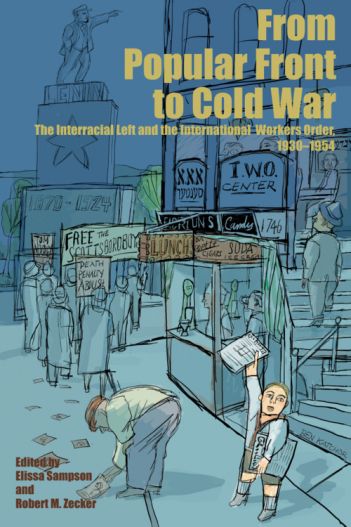
Book Talk - ILR Global Labor and Work Workshop - From Popular Front to Cold War: The Interracial Left and the International Workers Order, 1930–1954
February 18, 2026
4:00 pm
Ives Hall, Doherty Lounge, 281 Faculty Wing
The Jewish Studies Program invites you to come join our colleagues at the School of Industrial and Labor Relations (ILR) Global Labor and Work Workshop in welcoming a new book from Cornell University Press at a book launch with Elissa Sampson and Robert Zecker. The Global Labor and Work series has a longstanding tradition of hosting panels and individual presentations that foster rich and stimulating discussions at the cutting edge of the study of work, labor, and employment—all within a collegial setting.
The room capacity of Doherty Lounge is limited to 36.
Co-editors Elissa Sampson and Robert Zecker will discuss their new book, "From Popular Front to Cold War," which tells the story of the International Workers Order (IWO). Originally a left-wing Yiddish-speaking fraternal organization founded in 1930 as a mutual benefit insurance society, the IWO uniquely became interracial and multiethnic, championing early civil-rights campaigns, battling for labor unions and needed social reforms during the Great Depression and World War II, while pushing the boundaries of multiracial social democracy. Although the postwar Red Scare sentenced the IWO to liquidation in 1954, this organization remains a vital reminder in our current distressing times that another world was possible.
At its height, the pro-Soviet IWO had almost 200,000 members drawn from a broad ethnic and racial spectrum of the working class--Jews, Blacks, Poles, Slovaks, Italians, Hispanics, and others. It operated summer camps, published foreign-language newspapers, and supported a wide range of cultural activities; its multilingual archives are housed at Cornell's Kheel Center. An early advocate for the US's entry into World War II, the IWO was ahead of its time in championing the nascent Civil Rights movement and Black leadership. Its leaders and activists included Clara Lemlich Shavelson, Paul Robeson, Langston Hughes, Louise Thompson Patterson, and Vito Marcantonio. The IWO was declared a subversive organization during the Cold War although its membership was not connected to the Communist Party. Its legacy as a model for working-class cooperation across racial and ethnic differences endures to this day.
Dr. Elissa Sampson is an urban geographer who studies how the past is actively used to create new spaces of migration, memory, heritage and activism. Her life-long interest in migration, diaspora, re-diasporization and immigrant culture has been pursued in the Lower East Side, Brooklyn, Jerusalem, Paris and elsewhere and points to the dynamic interactions among diasporas in shared spaces/places. She has worked extensively with Cornell University’s, Kheel Center archives on the International Workers Order (IWO) and is responsible for its partial digitization. She co-organized a public, online academic conference, “Di Linke,” (the Left) based largely on its Jewish Section holdings: a weeklong series of webcasts in December 2020 attracted more than six hundred attendees. She is a Research Associate in Cornell’s Jewish Studies Program where she has taught labor and gender history, including the 1911 Triangle Shirtwaist Fire, its memorialization, and its relationship to current activism. She has published in the fields of urban geography and memory studies as well as on the IWO and is the co-editor of "From Popular Front to Cold War: The Interracial Left and the International Workers Order, 1930–1954" from Cornell University Press.
Robert M. Zecker is a professor of history at Saint Francis Xavier University, Nova Scotia, Canada, where he teaches courses in race, immigration, social movements, and US history. His research includes immigration, radicalism, and the popular culture of immigrants on the left. He is the author of many articles in journals such as the Journal of American Ethnic History, American Communist History, the Journal of Popular Culture, and the Journal of Transnational American Studies. He is the author of four books, most recently “A Road to Peace and Freedom”: The International Workers Order and the Struggle for Economic Justice and Civil Rights, 1930–1954 (Temple University Press, 2018). He is currently writing a history of the workers’ schools of the CPUSA.
Sponsors: Jewish Studies Program, ILR School Global Labor and Work
Co-sponsors: Mario Einaudi Center for International Studies, Reppy Institute for Peace and Conflict Studies, Department of Government, Institute for Comparative Modernities, Department of Anthropology, Feminist, Gender, & Sexuality Studies Program, American Studies Program, Department of History, Africana Studies & Research Center
Additional Information
Program
Einaudi Center for International Studies
Reppy Institute for Peace and Conflict Studies
Ways of Thinking with SWANA
February 6, 2026
9:30 am
Kahin Center
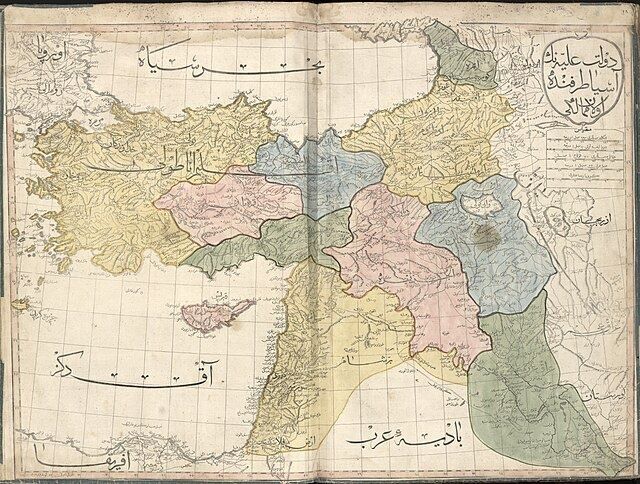
In an age of surveillance, censorship, and closed borders, this symposium will consider ways of doing research in and on the SWANA region. Points of discussion will include conceptual and methodological innovations in the face of restrictions, engaging with non-academic discourses, and possible lessons from post-colonialism in an increasingly inchoate world. Please register at https://forms.gle/p9vYMnyEZWkpGT1D9
10:00 Introduction and Welcome
Seema Golestaneh (Southwest Asia and North Africa Program & Near Eastern Studies)
10:15 - 12:00 Doing Research in the Region: Challenges, Tactics, Possibilities roundtable
Opening comments by Farzin Lotfi-Jam (Architecture), with remarks by Ziad Fahmy (Near Eastern Studies), Pamela Karimi (Architecture), Mostafa Minawi (History), Zinab Attai (Goverenment), and Amr Lehta (Near Eastern Studies)
1:30 - 2:45: SWANA and Critique Workshop
Parisa Vaziri (Near Eastern Studies & Comparative Literature) will lead a workshop, discussing a pre-circulated reading
3:00 - 4:15: Beyond Academic Prose: Art, Activism, Expressions
Visual artist Tracy Chawan will lead a hand-on workshop on political posters from the region.
Lunch and coffee will be served.
Additional Information
Program
Einaudi Center for International Studies
Southwest Asia and North Africa Program
Cornell Classical Chinese Colloquium with Rania Huntington
February 20, 2026
3:30 pm
Rockefeller Hall, 374
Speaker: Rania Huntington, Professor of Chinese Literature, University of Wisconsin-Madison
Title: The Grieving Father and the Baleful Spirits: Qian Xiyan’s Ting lan zhi (Record of Listening to Falsehood)
To join virtually: https://cornell.zoom.us/j/94787909537?pwd=QLz62Hgzx1GiwKNGXh5E6CiNPnhha…
Abstract: Qian Xiyan composed the Ting lan zhi in response to the death of his young son, the most recent of a series of similar losses. Attempting to explain the boy’s death, Qian chronicles ordinary and extraordinary incidents in his short life. A collector of contemporary strange tales who was also very well read in the earlier tradition, Qian interrogates many of his culture’s common explanations of infant and child mortality, finally concluding with a bitter indictment of heterodox religious practice. The resulting text is part memoir and part treatise.
About Cornell Classical Chinese Colloquium
The group meets monthly during the semester to explore a variety of classical Chinese texts and styles. Other premodern texts linked to classical Chinese in Japanese, Korean, and Vietnamese have also been explored. Presentations include works from the earliest times to the 20th century. Workshop sessions are led by local, national, and international scholars. Participants with any level of classical Chinese experience are welcome to attend.
o At each session, a presenter guides the group in a reading of a classical Chinese text. Attendees discuss historical, literary, linguistic, and other aspects of the text, working together to resolve difficulties in comprehension and translation.
o No preparation is required; all texts will be distributed at the meeting.
o Refreshments will be served.
Additional Information
Program
Einaudi Center for International Studies
East Asia Program
Ugandans, Iranians Turn to Dorsey's Messaging App Bitchat in Web Crackdowns

Aditya Vashistha, SAP
Aditya Vashistha, assistant professor at Cornell University, comments on how internet shutdowns impact information sharing and do not effectively reduce misinformation or electoral risk.
Additional Information
Cornell Classical Chinese Colloquium with Tingting Xu
February 6, 2026
3:30 pm
Rockefeller Hall, 374
Speaker: Tingting Xu, Assistant Professor of Art History, University of Rochester
Title: Prince Chun, Photography, and Poetry: Visual and Textual Accounts of the Naval Drill of 1886
Abstract: The poem Singing while Sailing (Hanghai fangge) was written by Prince Chun Yihuan (1840~1891) on the 15th days of the Fourth lunar month in 1886, during his inspection of the naval drill of the Beiyang Fleet in the Bohai Sea. It was composed just after the Haiyan Steamer he was aboard left Dagu and entered the open Bohai Sea. The poem was included in Yihuan’s Verses of Navigation (Hanghai yincao) and was inscribed onto the monumental painting Riding the Wind by two court painters. The painting further incorporated facial details drawn from a group photograph of Yihuan and two accompanying inspectors, Li Hongzhang (1823~1901) and Shanqing (1833~1888), thereby integrating poetry, painting, and photography into a single commemorative ensemble. We will conduct a close reading of the poem, examining how image and text intertwine, how ideals and realities coexist, and how personal expression is woven into courtly narratives.
About Cornell Classical Chinese Colloquium
The group meets monthly during the semester to explore a variety of classical Chinese texts and styles. Other premodern texts linked to classical Chinese in Japanese, Korean, and Vietnamese have also been explored. Presentations include works from the earliest times to the 20th century. Workshop sessions are led by local, national, and international scholars. Participants with any level of classical Chinese experience are welcome to attend.
o At each session, a presenter guides the group in a reading of a classical Chinese text. Attendees discuss historical, literary, linguistic, and other aspects of the text, working together to resolve difficulties in comprehension and translation.
o No preparation is required; all texts will be distributed at the meeting.
o Refreshments will be served.
Additional Information
Program
Einaudi Center for International Studies
East Asia Program
The Current Governance: Distributed Chinese Television and Hydropower in the 1980s
February 11, 2026
12:00 pm
Uris Hall, G-08
Speaker: Weixian Pan, Assistant Professor of Film & Media, Queen's University
Description:
How might the history of television and the history of energy development cross paths, inform, and complicate each other? This work revisits the formative decade of China’s economic reform, the 1980s, as one such moment when the expansion of televisual technology encountered demands for the redistribution of hydroelectric energy. By examining TV documentaries, popular writings/manuals on television infrastructure, and public documents of hydroelectric dams, I advance two intertwined arguments in this talk. First, the televisual played a prominent role in animating the imaginary and material distribution of natural and technologized currents. The televisual broadcasting of river documentaries in the early 1980s, such as Stories of the Yangtze (1983) and the regional Guangdong TV series Zhujiang Qing / Love for the Pearl River (1983), reshaped China’s major rivers as complex frontiers on screen for geopolitical aspirations, cultural power, and economic resource extraction on screen. Such televisual imaginations were built upon an overlapping development of airwaves, cable, and satellite transmission infrastructure. Second, while kinetic movements of river currents generate volumes of electricity that fuel the coastal economic frontline, infrastructure projects also produce new models for engineering and managing hydraulic resources upstream. I would elaborate on this dynamic through the early development of Lubuge Dam, the first internationally funded hydroelectricity project in the reform era, and a celebrated model for China’s hydraulic engineering and management revolution. These various cultural, technological, and managerial practices for governing and redistributing water, electrical currents, and televisual imaginations, therefore, constitute a distinct form of “current governance” that relies on destructive trans-regional resource dependency while continuing to extend this political-economic logic to new resource frontiers in recent years.
Speaker's Bio:
Weixian Pan is Assistant Professor in the Department of Film and Media at Queen’s University. She received her PhD in Film and Moving Image Studies at Concordia University in Montreal. Her research interests center on the politics of visuality, critical media infrastructure, and environmental media, specifically in the context of the People’s Republic of China. Her current book manuscript, Frontier Vision: Distributed Media in China’s Environmental Enclosure, offers a transhistorical view of the visual regimes developed from the mid-20th century to the early 21st century that recalibrate natural environments and their political promises. These medium-specific images and visuality operationalize various frontier-making projects, from socialist geological extraction, reform-era hydropower development, and techno-sovereignty in disputed oceans. Her work appeared in peer-reviewed journals such as Television and New Media, Culture Machine, Asiascape: Digital Asia, and is forthcoming in Feminist Media Histories, APRIA: ArtEZ Journal, and Journal of Chinese Cinemas. She was the 2024-2025 Luce/ACLS Early Career Fellow in China Studies. She is currently working on a collaborative video project on the hydraulic and infrastructural landscapes along the Pearl River in southern China.
About East Asia Program
As Cornell’s hub for research, teaching, and engagement with East Asia, the East Asia Program (EAP) serves as a forum for the interdisciplinary study of historical and contemporary East Asia. The program draws its membership of over 45 core faculty and numerous affiliated faculty, graduate, and undergraduate students from eight of Cornell’s 12 schools and colleges.
Additional Information
Program
Einaudi Center for International Studies
East Asia Program
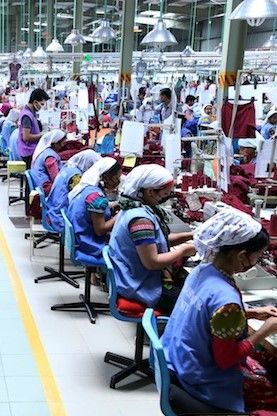
Justice for Jeyasre: How a Brutal Murder Led to a Better Deal for Garment Workers in India
Sarosh Kuruvilla, SEAP/SAP
Sarosh Kuruvilla, a Cornell University professor, provides an analysis of the Dindigul labor agreement and sourcing challenges in the Indian garment industry.
Additional Information
Unsettled Futures: Speculation, Urban Life, and Political Uncertainty in Contemporary Myanmar
March 26, 2026
12:15 pm
Kahin Center
Gatty Lecture Series
Join us for a talk by Courtney Wittekind, Assistant Professor of Anthropology at Purdue University.
This Gatty Lecture will take place at The Kahin Center, 640 Stewart Ave. Lunch will be served. For questions, contact seapgatty@cornell.edu.
Abstract
Why has speculation become a dominant way of engaging with the future in moments of profound political uncertainty? This talk takes up this question through Myanmar’s proposed 20,000-acre “New Yangon City,” launched during the country’s democratic transition of 2011-2021. Drawing on ethnographic research in peri-urban Yangon, I show how farmers living in the shadow of this urban project turned to speculation when democratic and developmental promises repeatedly faltered. I argue that this vernacular speculation was less about profit than about acting on uncertainty amid compounding crises. Over time, speculative practices reshaped political participation and shifted collective demands toward individualized wagers structured by unequal access to land, capital, and time. Extending my analysis into Myanmar’s post-coup moment, I conclude by highlighting speculation as a defining feature of political life across Southeast Asia today.
About the Speaker
Courtney Wittekind is an Assistant Professor of Anthropology at Purdue University, where she researches uneven urban development, speculative investment, and digital technologies. She received her Ph.D. in Social Anthropology, with a secondary field in Critical Media Practice, from Harvard University in 2022. From 2022 to 2024, she was a Postdoctoral Associate at Yale University with the Program in Agrarian Studies and the Council on Southeast Asia Studies. Her publications include articles in leading journals such as Cultural Anthropology and Antipode, as well as her forthcoming book, City of Speculation: Unsettled Futures in UrbanMyanmar (Stanford University Press).
Additional Information
Program
Einaudi Center for International Studies
Southeast Asia Program