
Einaudi Center for International Studies
Biofortification of Staple Crops to Improve Nutrition in Latin America and the Caribbean
March 10, 2026
12:20 pm
Uris Hall, G08
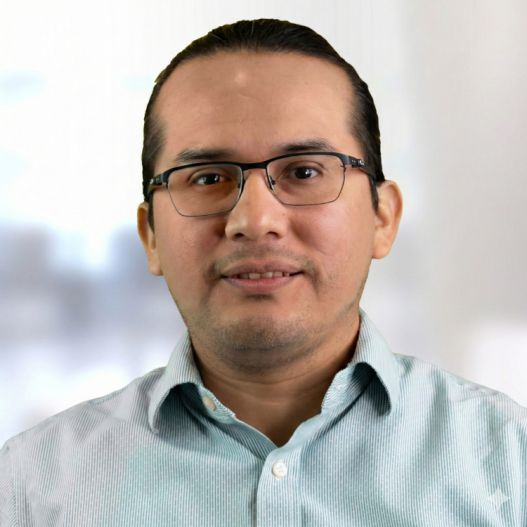
High rates of micronutrient deficiency persist in Latin America and the Caribbean (LAC) and disproportionately impact populations with limited access to nutrient-rich foods. In response, national agricultural research programs and international organizations are prioritizing biofortification as a strategy to improve the nutritional value of staple crops. This presentation will examine efforts to scale these crops throughout the region and summarize specific research and applied interventions that address the broader food system, exploring the intersections of policy, processing, market access, the food environment, and human behavior.
Dr. Victor Taleon is a Research Fellow at IFPRI, specializing in the nexus of crop biofortification and food processing. With a Ph.D. in Food Science and Technology from Texas A&M University, he investigates the stability and bioavailability of micronutrients in staple crops like maize, beans, and rice. His research focuses on the post-harvest value chain to identify strategies that preserve the nutritional benefits of biofortified foods from farm to plate. Dr. Taleon collaborates with partners across Africa, South Asia, and Latin America to scale these solutions and combat hidden hunger.
Additional Information
Program
Einaudi Center for International Studies
Latin American and Caribbean Studies
Citizens, Criminals, and Claim-Making for Public Goods in Latin America
March 3, 2026
12:20 pm
Uris Hall, G08
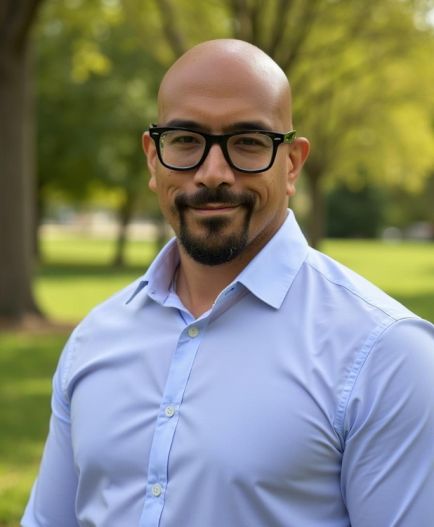
In this talk, I analyze the relationship between criminal governance and citizen claim-making for public goods. Millions of people across Latin America live in urban peripheries marked by uneven state presence but where criminal organizations are often present and govern everyday life. What impact does this overlapping reality have on the strategies citizens use to make claims on the state for public goods? A comparative analysis across three peripheral Mexico City neighborhoods shows that claim-making strategies vary in both level – individual or collective – and mode – brokered or direct. I argue that criminal governance influences claim-making through two channels: social capital and political brokerage. I use this argument to structure a comparative analysis of claim-making for a basic but fundamental public good: water. The study contributes to broader debates on distributive politics, citizenship, and democracy.
Eduardo Moncada is the Claire Tow Associate Professor of Political Science at Barnard College of Columbia University, and he is also the Director of the Institute of Latin American Studies at Columbia University. His research examines the origins, dynamics and consequences of crime and violence in Latin America, with a focus on how criminal governance shapes political life. He is the author of Cities, Business, and the Politics of Urban Violence in Latin America (Stanford University Press) and Resisting Extortion: Victims, Criminals, and States in Latin America (Cambridge University Press). He is also co-editor of Inside Countries: Subnational Research in Comparative Politics (Cambridge University Press). In his current research, Moncada is examining how variation in the ways that criminal organizations govern territories shapes how citizens make claims on the state for public goods and services. Moncada’s work has been supported by the National Science Foundation, the Fulbright Program, the Ford Foundation, and the Harry Frank Guggenheim Foundation, among others.
Additional Information
Program
Einaudi Center for International Studies
Latin American and Caribbean Studies
LACS Research Symposium: Futures in (Re)Construction

February 21, 2026
9:00 am
PSB, 401
Faced with a past that seems to repeat itself ad infinitum, through the dynamics of colonialism, neocolonialism, and neoliberalism, we ask ourselves about the past, present, and future of Latin America and Caribbean. The slogan “Otro futuro es posible” –another future is possible– has been appropriated in a wide array of spaces, movements, and temporalities to trigger the imagination of many, from political movements to environmental causes. This symposium is an invitation to explore this expression not as an enthusiastic affirmation but rather a question awaiting an answer: is another future possible in Latin America and the Caribbean? Thinking about and with categories such as encounters, crossings, (dis)continuities, fractures and unions in space and time, and the search for autonomy, we ask: how can we think about the future of the region?
With this in mind, we invite the Cornell community to participate in the Latin American and Caribbean Studies program’s annual research symposium entitled “Futures in (Re)Construction”, to take place on February 20th and 21st, 2026. VENUE In the midst of the current political sphere that especially affects Latin American and Caribbean communities and has sought to silence not only their traditions, heritage, and languages but also the academic study of the land and the impacts of climate change in various communities, we especially welcome abstracts for projects related to categories, concepts, and keywords that, in the current political climate, have been erased and discarded, such as gender, race, climate and environmental justice, and cuir/queer.
Additional Information
Program
Einaudi Center for International Studies
Latin American and Caribbean Studies
LACS Research Symposium: Futures in (Re)Construction
February 20, 2026
5:00 pm
PSB, 401
Faced with a past that seems to repeat itself ad infinitum, through the dynamics of colonialism, neocolonialism, and neoliberalism, we ask ourselves about the past, present, and future of Latin America and Caribbean. The slogan “Otro futuro es posible” –another future is possible– has been appropriated in a wide array of spaces, movements, and temporalities to trigger the imagination of many, from political movements to environmental causes. This symposium is an invitation to explore this expression not as an enthusiastic affirmation but rather a question awaiting an answer: is another future possible in Latin America and the Caribbean? Thinking about and with categories such as encounters, crossings, (dis)continuities, fractures and unions in space and time, and the search for autonomy, we ask: how can we think about the future of the region?
With this in mind, we invite the Cornell community to participate in the Latin American and Caribbean Studies program’s annual research symposium entitled “Futures in (Re)Construction”, to take place on February 20th and 21st, 2026. VENUE In the midst of the current political sphere that especially affects Latin American and Caribbean communities and has sought to silence not only their traditions, heritage, and languages but also the academic study of the land and the impacts of climate change in various communities, we especially welcome abstracts for projects related to categories, concepts, and keywords that, in the current political climate, have been erased and discarded, such as gender, race, climate and environmental justice, and cuir/queer.
Additional Information
Program
Einaudi Center for International Studies
Latin American and Caribbean Studies
Refusing to Fear: Benevolence and Deportation Among Central Americans in Rural New York
February 10, 2026
12:20 pm
Uris Hall, G08
“We’re not going to be afraid of Immigration.” Juana spoke those words to her undocumented niece Sonia while they agonized over Sonia’s upcoming court hearing. Sonia had missed a previous hearing and might have a deportation order awaiting her. It was February 2025. But Juana advised against fear. She told her niece, We’ll go to court together.
This paper reaches for a theory of the state in order to think through the dilemmas faced by Central American immigrants in the rural and small-town Hudson Valley. To start, I focus on people who are at high risk of deportation and decide to go to court anyway. As Juana says, they are deciding not to be afraid. Why refuse to fear?
To search for an answer, I turn to 2021, when New York State created the Excluded Worker Fund, a COVID unemployment benefit designed specifically for undocumented New Yorkers. The shift from 2021 to 2025 – from state benevolence to mass deportation – can seem like a dramatic transformation in regimes. Immigrants, however, may be detecting an underlying continuity. In both periods, state intervention is managing the rural labor market by rewarding workers who have strong links to their employers. First trust and then loyalty (rather than enterprise) emerge as key dispositions. Through their refusal to fear, immigrants may demonstrate loyalty in the midst of danger. This paper turns an ethnographic eye to the practices and attitudes that rural New Yorkers develop in the current moment. By charting five tumultuous years in a single valley, we aim to understand what, during a time of change, ends up remaining the same.
Gregory Duff Morton is an economic anthropologist and social worker. He wants to know how people send value across borders in the Americas. He has engaged with welfare programs in Latin America, with Brazilian migrants who move back to the countryside, with Dominican seniors undergoing surgery in New York City, and, most recently, with Central Americans and the activists they meet in upstate New York. Morton has a special interest in the MST, Brazil’s landless movement, which brings small farmers together to occupy plantations. By thinking internationally about human services, he hopes, we can equip ourselves to confront the inequalities so characteristic of public life in the Americas.
Additional Information
Program
Einaudi Center for International Studies
Latin American and Caribbean Studies
Hemispheric Internment and Its Afterlives in Nikkei (2011)
February 3, 2026
12:20 pm
Uris Hall, G08
Cancelled due to an emergency!
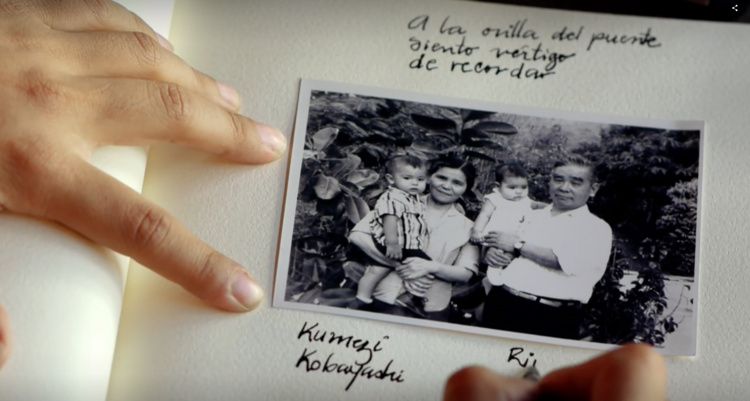
Although the internment of Japanese Americans during World War II following the invocation of the Enemy Aliens Act has been well documented, the parallel experiences of Latin Americans of Japanese descent remain far less examined. Like their U.S.-based counterparts, these communities were removed from their homes, stripped of property, and interned in U.S.-run camps. In Venezuela, rather than being interned abroad, Caracas’ Japanese community was confined to a camp in Ocumare del Tuy—a story almost entirely erased from both Venezuelan historical memory. This history raises urgent questions about whose experiences are recorded, whose are forgotten, and which forms of memory gain recognition. In this talk, Elizabeth Barrios explores these questions through Nikkei (2011), the largely overlooked documentary by filmmaker Kaori Flores Yonekura, which traces her own family’s experiences and illuminates a hidden chapter of Venezuelan and hemispheric history. The film not only preserves personal and collective memory but also challenges us to rethink the boundaries of national and transnational histories, exposing the racial and political logics that made such internments possible. These questions are particularly urgent today, as the Enemy Aliens Act has been invoked once more (this time specifically targeting Venezuelans), revealing how the mechanisms of exclusion and surveillance from the past continue to resonate in the present.
Elizabeth Barrios is an Associate Professor in the Department of Modern Languages and Cultures at Albion College. This year she is a fellow at the Society for the Humanities. Her research explores ecology, energy humanities, and Latin American and Latina/o literature and media, with an emphasis on Venezuela and its diaspora. She is the author of Failures of the Imagination: Reckoning with Oil in Venezuelan Cultural Production (University of Pittsburgh Press, 2026), which examines how Venezuelan literature and media have confronted the social and ecological toll of oil, often in ways overlooked or deliberately obscured by critics and institutions
Additional Information
Program
Einaudi Center for International Studies
Latin American and Caribbean Studies
Reppy Institute for Peace and Conflict Studies
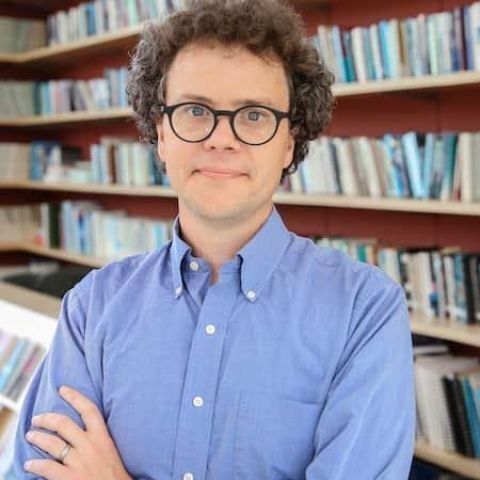
Director’s Introduction to LACS Seminar/ course LATA 4000
January 20, 2026
12:20 pm
Uris Hall, G08
Interested in Latino Studies and Latin American Studies? This course will explore topics in Anthropology, Art, Economics, History, Literature, Government, Sociology, etc., of US Latino and Latin American contexts. Course features guest speakers from Cornell and other institutions.
https://classes.cornell.edu/browse/roster/SP26/class/LATA/4000
Additional Information
Program
Einaudi Center for International Studies
Latin American and Caribbean Studies
Residual Sovereignty: Bodies, Radionuclides, and the Birth of the Marshallese State
March 26, 2026
12:00 pm
Uris Hall, G08
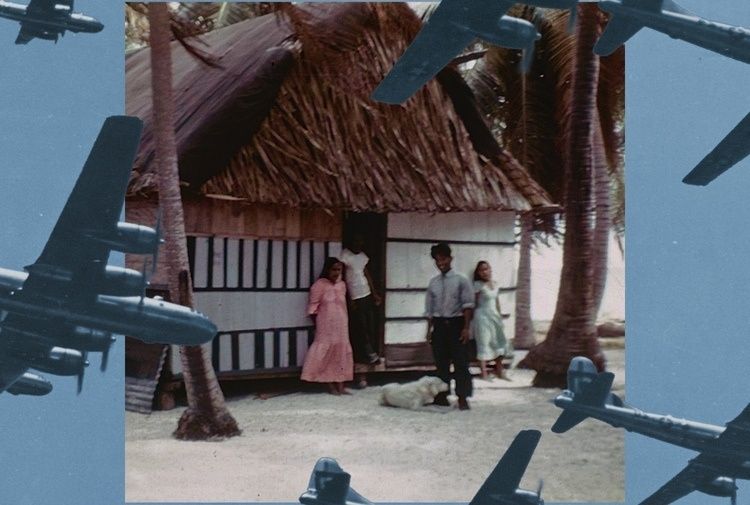
Marshall Islanders explain that US nuclear blasting is woven into their polity “kone jubar”—like an ironwood tree roots in the soil; like a child belongs to the lands of their mother’s lineage. This talk is about bodies (biological, territorial, political) and persons (natural and legal), and about radionuclides that expose, permeate, entangle, and transform them.
Between 1946 and 1958, the United States detonated 67 of its most powerful nuclear weapons in the Marshall Islands, which it governed as part of a United Nations “strategic trusteeship.” During decolonization negotiations, the residues of US nuclear colonialism shaped the birth of the Marshallese state. In international law, “residual sovereignty” describes sovereign rights that will only vest fully following the removal of an encumbrance. In the late 1970s, US Defense Department planned to retain extensive military rights in the Marshall Islands that would limit Marshallese state sovereignty indefinitely.
Marshallese sovereignty also became residual in a second, material sense, for it was shaped by the enduring damage and residues of US blasting. As a condition of the formation of a Marshallese state “in free association” with the United States, US negotiators required Islanders not only to cede military and security rights, but also to settle all legal claims relating to the nuclear legacy.
This talk will explore the significance of this history for broader post-World War II entanglements between the racialized international legal politics of decolonization, on the one hand, and the material and epistemic politics of technology and technogenic pollution, on the other.
About the Speaker
Mary X. Mitchell is a lawyer and historian of science and technology. Her forthcoming book, Unsettling Sovereignty: International Law, Nuclear Weapons, and US Extraterritorial Power in Postwar Oceania (University of Chicago Press), uses legal wrangling over US nuclear blasting and contamination in the Marshall Islands to explore the shifting shape of sovereignty following World War II. Mitchell is an assistant professor in the Federated Department of History at the New Jersey Institute of Technology and Rutgers-Newark.
Host
The talk is hosted by the Reppy Institute for Peace and Conflict Studies, part of the Einaudi Center for International Studies.
Additional Information
Program
Einaudi Center for International Studies
Reppy Institute for Peace and Conflict Studies
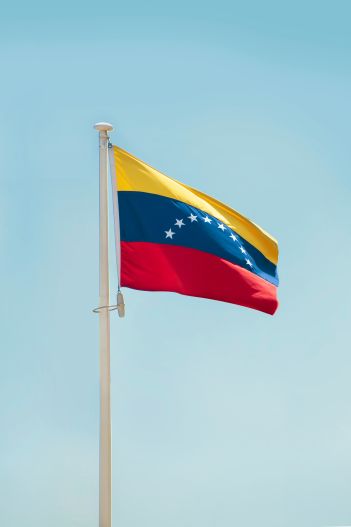
Latin American Left Responds to Trump's Pledge to Take Over Venezuelan Oil
Santiago Anria, LACS
Cornell University political scientist Santiago Anria provides analysis on the weakening and fragmentation of Latin America's political left.
Additional Information
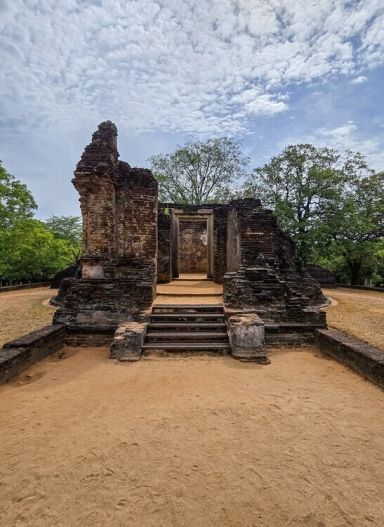
The Politics of Culture in Peninsular India and Sri Lanka, 900-1500 AD conference
April 11, 2026
10:00 am
Kahin Center
This conference explores the interrelationships among political literary, and religious culture in early second-millennium South India and Sri Lanka. Scholars of premodern South Asia and Indian Ocean political culture now recognize that transregional processes fundamentally shaped political environments in this region. The substantial migration of scholars, military operators, ritual specialists, and pilgrim-patrons led to substantial transfers of knowledge. During this period, textual forms, material culture, languages, and technical sciences were on the move. Speakers will highlight the potential of working across languages and between key political-cultural centers to identify core characteristics of premodern political culture in peninsular India and Sri Lanka from approximately 900-1500. The culture of politics in this region underwent substantial changes during this period, bookended by the Indian Ocean imperial vision of the Cōḷas to the advent of the Portuguese Indian Ocean colonial empire.
Conference participants include:
Manasicha Akepiyapornchai, Asian Studies, University of Texas at Austin
Daud Ali, South Asia Studies, University of Pennsylvania
Stephen Berkwitz, Religious Studies, Missouri State University
Anne Blackburn, Asian Studies, Cornell University
Whitney Cox, South Asian Languages & Civilizations, University of Chicago
Elaine Fisher, Religious Studies, Stanford University
Alistair Gornall, History & Religion, Singapore University of Technology and Design
Larry McCrea, Asian Studies, Cornell University
Bruno Shirley, Buddhist Studies, Heidelberg University
Additional Information
Program
Einaudi Center for International Studies
South Asia Program
Southeast Asia Program