Einaudi Center for International Studies
CANCELED - Spacing Palestine
November 7, 2025
12:00 pm
Uris Hall, G08
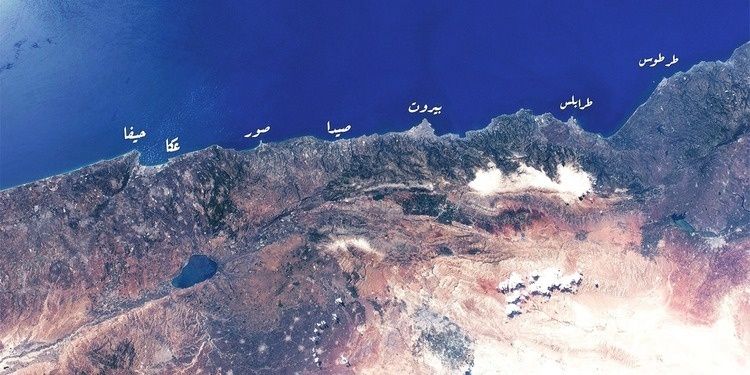
This talk invites us to think about what it would mean if we considered Palestine from an a priori space of de-territorialization. Taking the examples of mapping and speculative infrastructures, it proposes to start from the Palestinian condition of fragmentation, distance, and disconnection, and move outward beyond the confines of territoriality.
Helga Tawil-Souri is an Associate Professor in Media, Culture and Communication, and Middle Eastern and Islamic Studies at New York University. Helga’s work deals with spatiality, technology, infrastructure, and politics in the Middle East, with a particular focus on contemporary Palestine. She is most recently co-editor of the book Producing Palestine: The Creative Production of Palestine Through Contemporary Media (I.B. Tauris, 2024).
Additional Information
Program
Einaudi Center for International Studies
Southwest Asia and North Africa Program
Monitoring and Accompanying Peacebuilding Processes in Post-Accord Contexts: The Case of Colombia
November 6, 2025
12:00 pm
Uris Hall, G08
This lecture discusses the concept of peace agreements as platforms for constructive social change, which requires authentic engagement and institutional transformations. It posits that signing peace accords is an important yet, alone and by itself, an insufficient step towards peacebuilding. Rather, the challenge of peacebuilding after wars lies in a robust implementation of the commitments reached at the negotiation table. Dialogue and inclusion during the negotiations needs to be permanent and continued after the signature. This lecture discusses these aspects in particular in the Colombian case, and highlights the role of third-party monitors in accompanying the process.
About the speaker
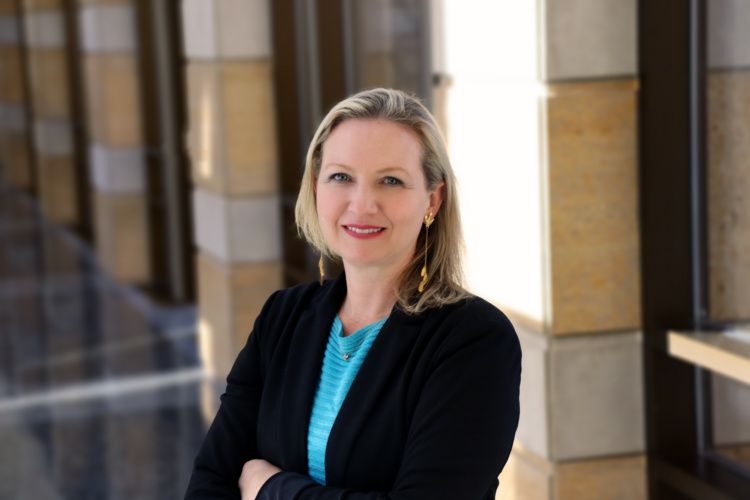
Josefina Echavarría Álvarez is professor of the practice and the director of the Peace Accords Matrix (PAM) program at the Kroc Institute for International Peace Studies, part of the Keough School of Global Affairs at the University of Notre Dame. She leads PAM’s researchers, faculty and staff in the South Bend campus, as well as PAM’s field units that carry out official monitoring of the implementation of peace accords in real time. In Colombia, PAM’s Barometer Initiative carries out official monitoring of the entire 2016 Final Peace Agreement between the Colombian government and the former FARC-EP guerrillas. In the Philippines, in partnership with Catholic Relief Services (CRS) Philippines, PAM-Mindanao provides monitoring methodology and technical assistance to measure the progress of the Normalization Annex of the 2014 agreement between the Government of the Philippines and the Moro Islamic Liberation Front (MILF). Josefina also directs the Legacy Project for “Preserving and Engaging the Digital Archive of the Colombian Truth Commission", which guarantees continued access to more than 200,000 files including audiovisual, non-textual knowledge and digitized documents compiled by the Colombian Truth Commission.
Host
Reppy Institute for Peace and Conflict Studies, part of the Einaudi Center for International Studies
Additional Information
Program
Einaudi Center for International Studies
Reppy Institute for Peace and Conflict Studies
Latin American and Caribbean Studies
Summer Program in India Info Session
October 29, 2025
8:00 pm
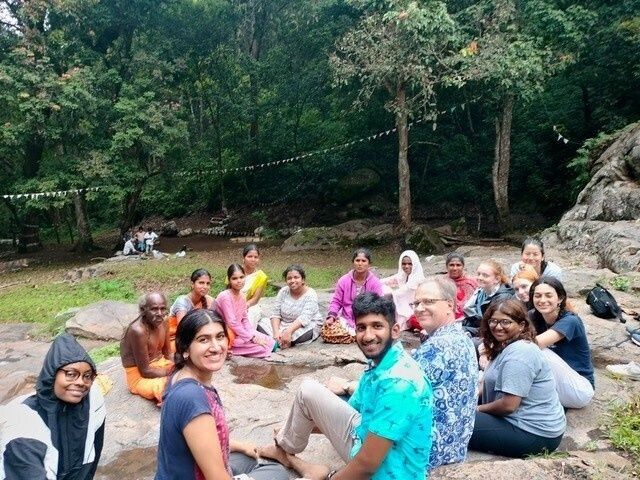
Are you interested in the intersection of mental health and culture, global health, and community engagement? Do you want to gain field research skills and learn about indigenous communities in South India’s beautiful and fragile Nilgiris Biosphere Reserve? If so, the Cornell-Keystone Nilgiris Field Learning Program might be for you!
Additional Information
Program
Einaudi Center for International Studies
South Asia Program
Is (Cutting) International Aid Good?
October 22, 2025
5:00 pm
Goldwin Smith Hall, G76, Lewis Auditorium
Lund Critical Debate
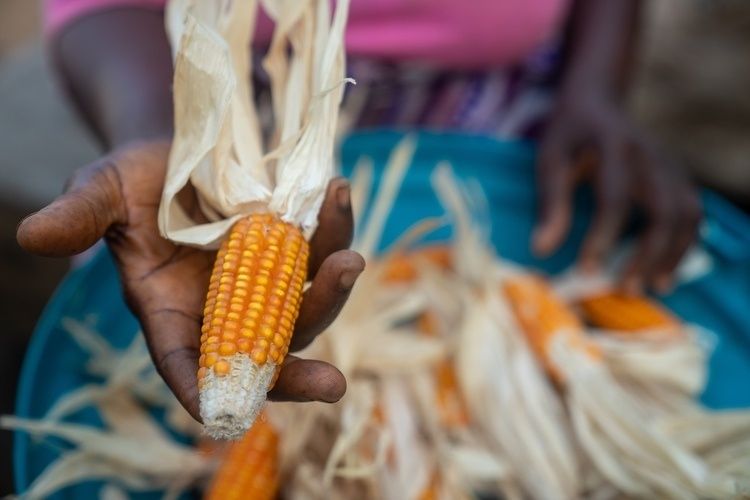
Since January 2025, the United States has slashed billions in international aid—and effectively dismantled the U.S. Agency for International Development (USAID), responsible for administering U.S. development and humanitarian aid around the world. In what has become the largest restructuring of aid in the nation’s history, thousands of UN-administered programs have also lost funding, disrupting critical programs and services, breaking supply chains, and leading to widespread closures and layoffs.
These sweeping cuts affect food security, global health, democratic governance, and more—and the stakes have never been higher. As the landscape of international aid evolves, the world faces new questions about the impact of aid on communities, what makes international aid effective—and how to move forward.
This year's Lund debate from the Mario Einaudi Center for International Studies brings together policy and practice experts for an unfiltered look at the future of international aid. Join Einaudi Center faculty Chris Barrett (Dyson/Brooks) and Muna Ndulo (Law) as they tackle these questions: Who benefits from aid? Do some types of aid work better than others? Should we pursue new approaches to international development? What are the best ways to take strategic action in the world while investing in America’s security, economy, and global position?
***
Interested in attending? Complete this RSVP.
***
Panelists
Chris Barrett is the Stephen B. and Janice G. Ashley Professor of Applied Economics and Management in the Dyson School of Applied Economics and Management and a professor in the Cornell Brooks School of Public Policy. He is coeditor-in-chief of the journal Food Policy and a frequent commentator and policy advisor on food security and agricultural economics. Barrett won the USAID Science and Technology Pioneers Prize (2013), among many other awards for research, teaching, and public outreach. Read recent Chronicle coverage of Barrett's research.
Muna Ndulo is the William Nelson Cromwell Professor of International and Comparative Law at Cornell Law School and an internationally recognized scholar in the fields of constitution making, governance and institution building, international criminal law, African legal systems, and human rights. Ndulo has served as consultant to the African Development Bank, World Bank, Economic Commission for Africa, United Nations Development Program, and other international organizations. He led the Einaudi Center's Institute for African Development from 2001 to 2020.
Moderator
Paul Kaiser is the Einaudi Center's practitioner in residence in fall 2025. Kaiser has extensive experience in international development, with a focus on sub-Saharan Africa, South Asia, and the Pacific Islands. His career spans roles at USAID, the Millennium Challenge Corporation, and World Bank. Previously, Kaiser taught political science and African studies at Mississippi State University and the University of Pennsylvania.
***
About the Debate
The Lund Critical Debate is a signature event of the Mario Einaudi Center for International Studies. Established in 2008, Einaudi's Lund Debate series is made possible by the generosity of Judith Lund Biggs '57.
Additional Information
Program
Einaudi Center for International Studies
Reppy Institute for Peace and Conflict Studies
East Asia Program
Southeast Asia Program
Latin American and Caribbean Studies
Institute for African Development
Institute for European Studies
South Asia Program
Migrations Program
Southwest Asia and North Africa Program
US Says 'Framework' for TikTok Ownership Deal Agreed with China

Sarah Kreps, PACS
Sarah Kreps, director of the Tech Policy Institute at Cornell University, raises concerns about data security and algorithm control in the proposed TikTok ownership deal.
Additional Information
Kidney Disease and Climate Change in Nicaragua’s Sugarcane Zone
Alex Nading, LACS Director
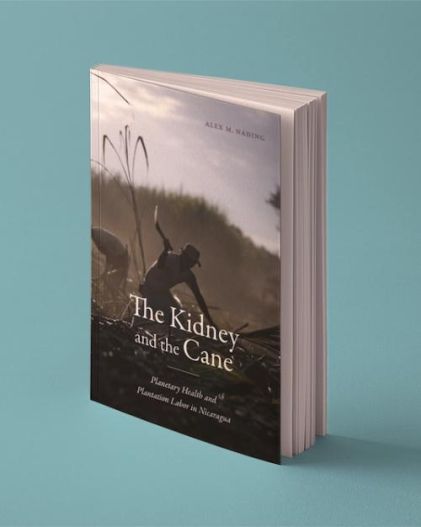
“What is happening to the kidneys of sugarcane workers is not a result of climate change. It is climate change,” writes LACS director Alex Nading in his new book.
Additional Information
Research at Risk: Cultural and Language Fluency
SEAP and SAP lose funding, seek solutions
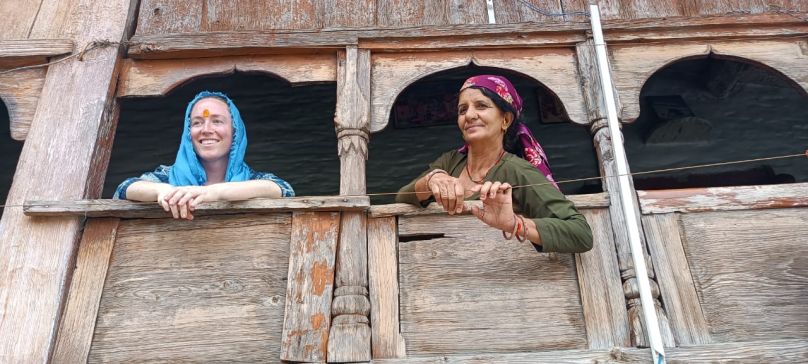
The federal government has announced the end of National Resource Center and FLAS funding, which have supported area studies training for decades.
Additional Information
Faculty Research Seed Grants: Global Hubs Info Session
October 1, 2025
12:00 pm
Join this info session to learn about 2026 Global Hubs Faculty Research Seed Grants offered by Global Cornell as part of our Global Hubs initiative. Info session attendees will learn about the grant opportunity and application tips through a short presentation and Q&A.
Through these seed grants, Cornell faculty from across the university are invited to apply for research funds to work with collaborators at Hubs partner institutions. Funded projects should lead to tangible outcomes, including the submission of at least one co-authored peer-reviewed publication and at least one application for external grant funding.
Up to 20 applications for research with a Global Hubs collaborator will be funded.
Successful proposals will receive up to $5,000 from Cornell, with the potential for matching funds from some Global Hubs partner universities.
Application deadline: October 15, 2025, 4:00 p.m. ET
Project duration: January 1–December 31, 2026
Virtual information sessions:
September 18, 2025, 12:00–1:00 p.m. ET (register)
October 1, 2025, 12:00–1:00 p.m. ET (register)
Learn more and apply for a Global Hubs joint seed grant.
Additional Information
Program
Einaudi Center for International Studies
Latin American and Caribbean Studies
Reppy Institute for Peace and Conflict Studies
East Asia Program
Southeast Asia Program
Institute for African Development
Institute for European Studies
South Asia Program
Migrations Program
Southwest Asia and North Africa Program
Faculty Research Seed Grants: Global Hubs Info Session
September 18, 2025
12:00 pm
Join this info session to learn about 2026 Global Hubs Faculty Research Seed Grants offered by Global Cornell as part of our Global Hubs initiative. Info session attendees will learn about the grant opportunity and application tips through a short presentation and Q&A.
Through these seed grants, Cornell faculty from across the university are invited to apply for research funds to work with collaborators at Hubs partner institutions. Funded projects should lead to tangible outcomes, including the submission of at least one co-authored peer-reviewed publication and at least one application for external grant funding.
Up to 20 applications for research with a Global Hubs collaborator will be funded.
Successful proposals will receive up to $5,000 from Cornell, with the potential for matching funds from some Global Hubs partner universities.
Application deadline: October 15, 2025, 4:00 p.m. ET
Project duration: January 1–December 31, 2026
Virtual information sessions:
September 18, 2025, 12:00–1:00 p.m. ET (register)
October 1, 2025, 12:00–1:00 p.m. ET (register)
Learn more and apply for a Global Hubs joint seed grant.
Additional Information
Program
Einaudi Center for International Studies
Latin American and Caribbean Studies
Reppy Institute for Peace and Conflict Studies
East Asia Program
Southeast Asia Program
Institute for African Development
Institute for European Studies
South Asia Program
Migrations Program
Southwest Asia and North Africa Program
Einaudi Welcomes SWANA Program
Four New Program Directors
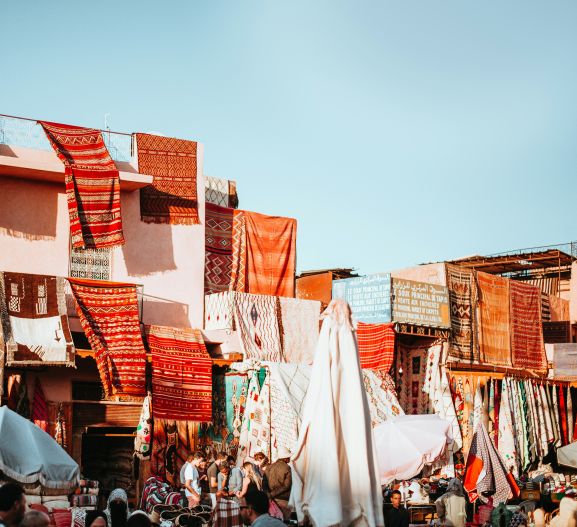
We welcome the Einaudi Center's new Southwest Asia and North Africa Program and four new program directors this fall.
We're excited to introduce the Southwest Asia and North Africa Program! SWANA is Einaudi's new hub for research, learning, and engagement with the cultures and peoples of the vast geographical region stretching from Morocco in the west to Iran in the east.

SWANA gathers expertise and perspectives from across Cornell's colleges and schools under the leadership of the program's inaugural director, Seema Golestaneh. Golestaneh is an associate professor of Near Eastern studies in the College of Arts and Sciences (A&S). Her research focuses on contemporary Islamic thought in the Persian-speaking world.
“We approach the Middle East as a region of complex engagements, shifting boundaries, and shared histories.”
Golestaneh looks forward to partnering with communities in the SWANA region and scholars around the world, she said, noting plans this year to “further develop our burgeoning relationship with the American University in Cairo.”
Extending beyond the Middle East, Southwest Asia and North Africa is a place-based description that highlights geographical and cultural inclusion. Golestaneh hopes SWANA will embody that spirit on campus by serving as a social and intellectual home for Cornell's diverse community of researchers and students.
“This year we'll host interdisciplinary scholars whose work represents the cutting edge of the field,” she said. “We are particularly excited about the graduate student conference we have scheduled for spring 2026.”
SWANA premiered as an initiative through a cosponsored speaker series last spring. Don't miss its first event as an Einaudi program: a lecture by Islamic art historian Margaret Graves on September 25.
New Program Directors
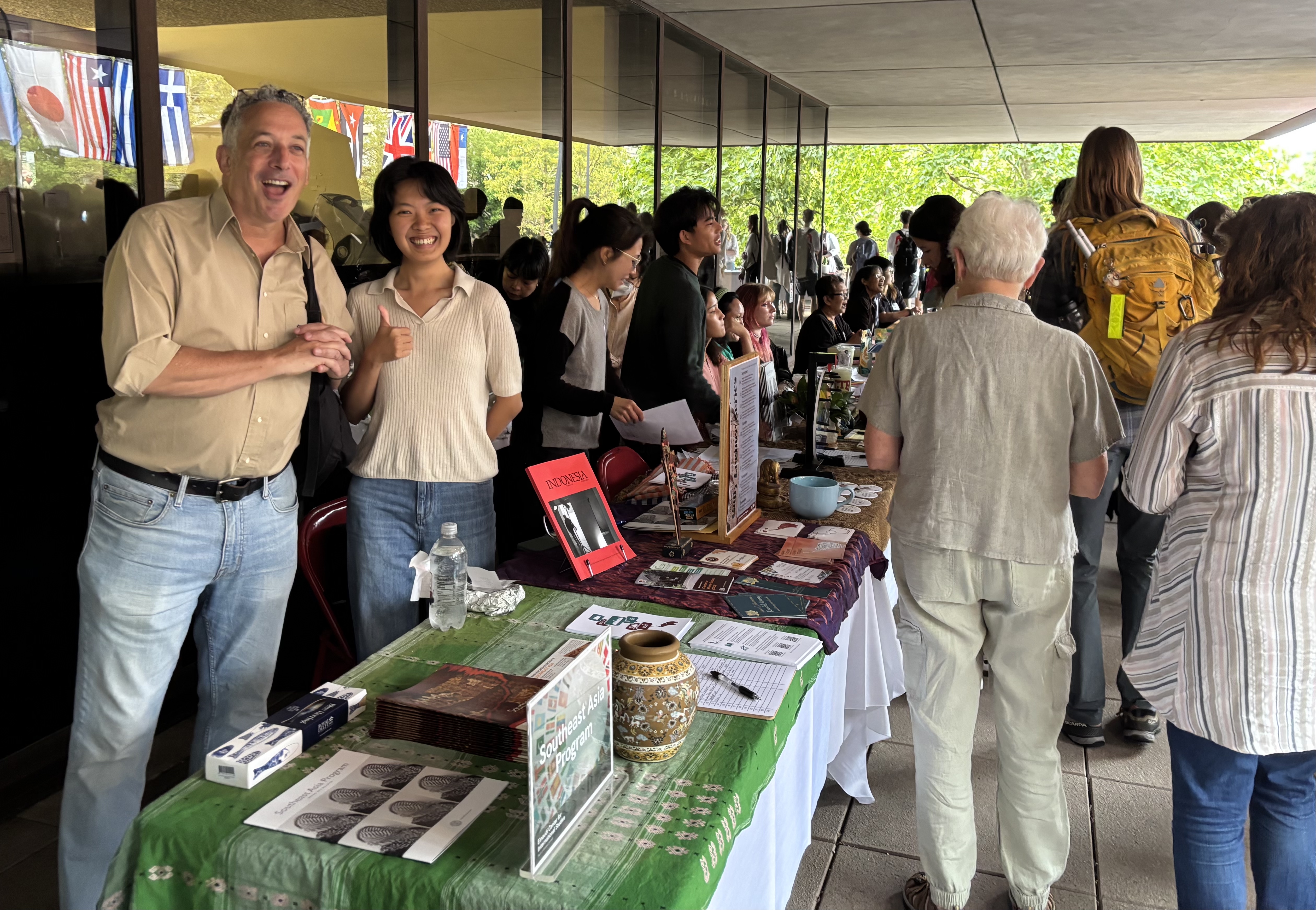
Joining SWANA's Seema Golestaneh are new program directors in the East Asia Program, Latin American and Caribbean Studies Program, and Southeast Asia Program.
EAP: Nick Admussen
Nick Admussen is an associate professor in the Department of Asian Studies (A&S). His research on contemporary Chinese poetry focuses on inventing and refining methods of interpretation through which people separated by linguistic or political distance can come to understand one another.
LACS: Alex Nading
Alex Nading is a medical and environmental anthropologist (A&S). His research—mostly focused on Nicaragua—has examined transnational campaigns against dengue fever, bacterial disease, and chronic kidney disease, as well as grassroots movements to address these issues.
SEAP: Eric Tagliacozzo
Eric Tagliacozzo is the John Stambaugh Professor of History in A&S. His research centers on the history of people, ideas, and material in motion in and around Southeast Asia, especially in the colonial age.