
Einaudi Center for International Studies
The Paradox of Economic Nationalism: How India's Quest for Self-Reliance Constrains its Global Ambitions
October 27, 2025
12:15 pm
Uris Hall, G08
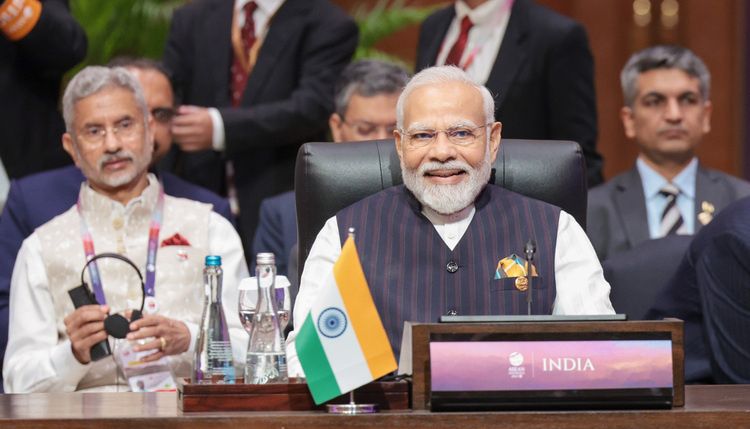
Talk by Rohit Lamba (Economics, Cornell University)
India's pursuit of great power status faces a fundamental paradox: the economic nationalism that shapes its development strategy simultaneously undermines the global integration necessary for achieving its international ambitions. This article examines how India's current blanket commitment to strategic autonomy and self-reliance, while producing notable achievements, such as in digital infrastructure and financial inclusion, under Prime Minister Narendra Modi (2014-2024), ultimately constrains its ability to project power and influence globally. Drawing on developmental state theory, nationalism and civilizational-state typologies, and comparative analysis with East Asian success stories, I argue that India's economic nationalism operates through four transmission mechanisms—worldview constraints, state capacity limitations, decision-making pathologies, and foreign perception costs—that create a self-reinforcing feedback loop limiting its global reach. Highlighting India's distinctive political economy model as a premature and pluralist democracy specializing in high-skilled services, I argue that the country's development trajectory may be better served by strategies that leverage its democratic strengths and pursue an incremental but consistent reforms by consensus strategy while heeding Deng Xiaoping’s dictum of "hide your strength, bide your time" on the international stage. The analysis suggests that while India's fundamentals ensure respectable growth rates of 5-6%, achieving the 8-9% growth needed to fulfill its global ambitions before demographic dividends dissipate will require transcending the current overtly nationalist framework in the economic realm.
Rohit Lamba is an assistant professor of economics at Cornell University. He has previously held academic positions at the Pennsylvania State University, University of Pennsylvania, and New York University Abu Dhabi. He did his PhD in economics at Princeton University. He was also an economist at the Office of the Chief economic Adviser to the Government of India. His research spans economic theory and economic development. He is the co-author of the best-selling book Breaking the Mould: Reimagining India's Economic Future.
Additional Information
Program
Einaudi Center for International Studies
South Asia Program
Fictions of Capital: Extracting, Liquidating, and Fabricating Islamic Ceramics for a Global Market
September 25, 2025
5:00 pm
Uris Hall, G08
Talk by Margaret Graves (History of Art and Architecture, Brown University)
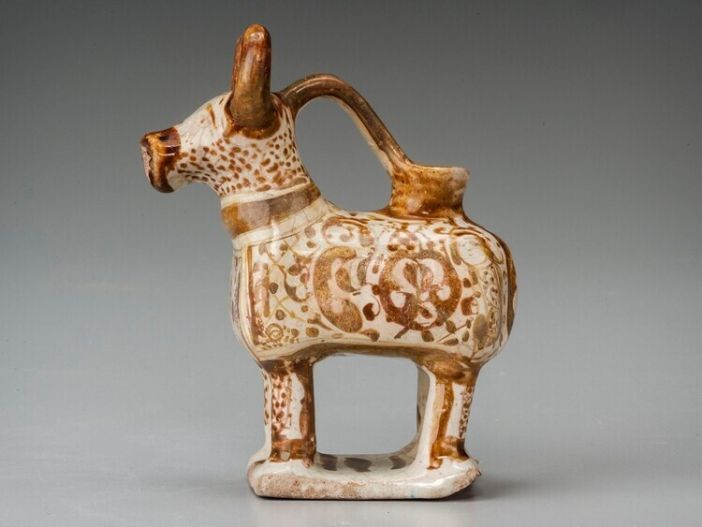
Historical ceramics from the Islamic world are now held in elite collections worldwide. Many migrated westward during the turn-of-the-twentieth-century heyday of Islamic art collecting, a time when craft skills in the Middle East were being redirected towards a new market generated by the colonial project’s fanatical harvesting of artefacts: the faking, forging, and fictionalizing of antiquities. This lecture re-encounters ceramics faking and forgery in the Middle East as a form of highly skilled craft participation in modern global capitalism that was capable of creating stunning new objects of encounter. These fictionalized objects married manual and cerebral ingenuity to generate new objects of delight for elite collectors, in an environment where the structures of antiquities collection derive ultimately from both colonial-era resource extraction and the structures of international banking.
Margaret Graves is a specialist in the art of the Islamic world, with a particular research focus on the plastic arts (ceramics, metalwork, and stone carving) and the acts and contexts of making in the medieval and modern eras. Her first monograph, Arts of Allusion: Object, Ornament, and Architecture in Medieval Islam (Oxford University Press, 2018), looked at medieval artworks that make formal and conceptual allusions to architecture, placing these acts of material allusion into medieval Islamic intellectual history. Arts of Allusion won the 2019 book prize of the International Center of Medieval Studies and the 2021 Karen Gould prize from the Medieval Academy of America. Her new book, Invisible Hands: Fabrication, Forgery, and the Art of Islamic Ceramics (Princeton University Press, February 2026), explores the craft skills of ceramics faking and forgery for the nineteenth- and twentieth-century antiquities market. Other ongoing research topics include contemporary art that explores the legacies of colonial-era craft reform and heritage management in the Middle East; locating a global “golden age” of faking for the international antiquities market; and collaborations with conservators on the material lives of doctored objects.
Additional Information
Program
Einaudi Center for International Studies
Southwest Asia and North Africa Program
Catching Air: Risk, Conservation, and Health in Dominican Dive Fishing
October 21, 2025
12:20 pm
Uris Hall, G08
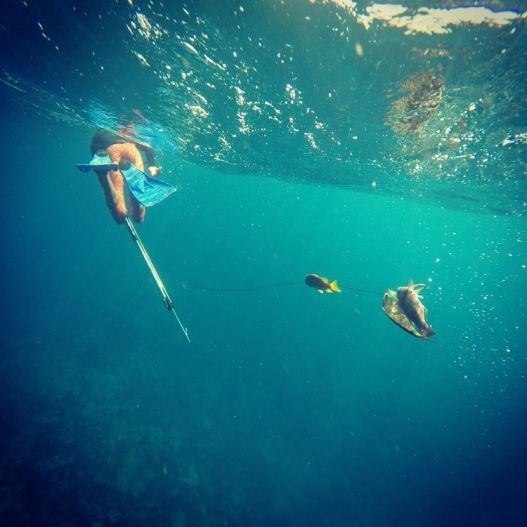
The Caribbean has been identified as a region particularly vulnerable to changing climates, where conservation imperatives have advocated for the protection of fragile ocean ecosystems. As shifting ocean environments refigure marine ecosystems, making fish scarce in the shallows, diver fishermen along the coasts of the Dominican Republic dive deeper and stay longer in risky conditions. As a result, decompression sickness (the bends) has become a pervasive injury, and a way that coastal communities experience changing ocean health. In this talk, I examine the connections between bodily health and environmental health among Dominican diver fishermen, alongside the ways marine conservation initiatives further marginalize the health and well-being of fishing communities. Drawing from ethnographic research with divers who “caught air,” the local term for the bends, I argue that decompression sickness is a symptom of the overlapping injustices of ecologies in decline and colonial conceptualizations of conservation in the Caribbean.
Kyrstin Mallon Andrews is Assistant Professor of Anthropology at Syracuse University. Her work explores shifting ocean ecosystems, environmental politics, and experiences of health among spearfishermen in the Dominican Republic. Her articles and photo essays have appeared in American Anthropologist, Medical Anthropology Quarterly, and Current Anthropology.
Additional Information
Program
Einaudi Center for International Studies
Latin American and Caribbean Studies
Language Resource Center Speaker Series - Mijeong Mimi Kim - Implementing Undergraduate TAs in the Language Curriculum
October 6, 2025
4:30 pm
Stimson Hall, G25
"Implementing Undergraduate TAs in the Language Curriculum"
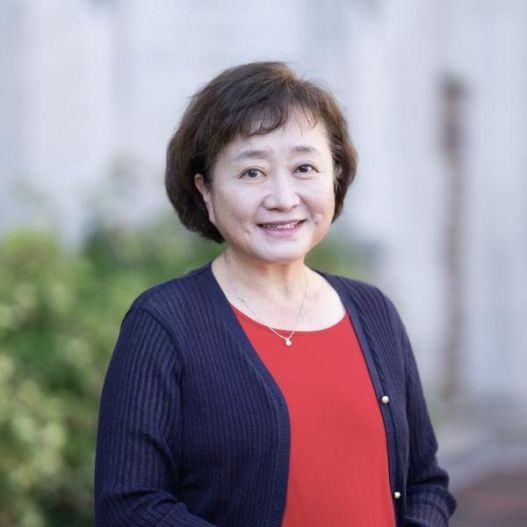
Mijeong Mimi Kim
Teaching Professor of Korean Language and Director of Undergraduate Studies, Washington University in St. Louis
This presentation examines the strategic integration of Undergraduate Teaching Assistants (UTAs) into the Korean language program at Washington University in St. Louis, drawing from 15 years of implementation experience. The model can be adapted across diverse language instruction contexts, offering valuable insights applicable to language programs more broadly. The presentation highlights how UTAs create opportunities for improved language proficiency, increased speaking confidence, and enhanced cultural understanding through structured peer interactions. By facilitating additional practice opportunities, UTAs help build supportive learning communities both within and beyond classroom settings.
The session provides practical frameworks for effective UTA recruitment, training, and retention strategies adaptable to various language programs. As integrated members of the language curriculum, UTAs receive course credit and benefit from experiential learning through direct teaching practice, exposure to diverse cultural perspectives, and reflective examination of their own language use. Furthermore, the UTA model promotes diversity, equity, and inclusion by incorporating varied linguistic and cultural perspectives into the learning environment. UTAs foster inclusive and accessible learning spaces where students comfortably practice language skills, addressing individual learner challenges through targeted supplemental support. UTAs link formal instruction to authentic language experiences, establishing meaningful pathways for language acquisition and cultivating inclusive learning communities where learning becomes a shared and enriching experience.
Bio: Mijeong Mimi Kim is a Teaching Professor in the Department of East Asian Languages and Cultures at Washington University in St. Louis, where she serves as Director of Undergraduate Studies. She also coordinated the Korean language program through 2024. Since joining the university in 2002, she has taught Korean at all levels, developed curricula for both traditional and heritage learners, and founded the WashU Coalition for Language Teaching and Learning, which promotes collaboration among language faculty and students.
Dr. Kim's interests include language pedagogy, curriculum design, and technology-enhanced instruction. Drawing on critical pedagogy, she creates content-based curricula that immerse students in Korean culture through media, fostering both language proficiency and cultural agency. She is co-author of several textbooks, including the You Speak Korean OER series (2023), Advanced Korean (2021), and Tigers, Fairies, and Gods: Enchanting Folktales from Korea (2019). She has served on the Executive Board of the American Association of Teachers of Korean (AATK) and contributed to national initiatives such as the Standards-Based Korean Language Curriculum project and the Korean Honor Society (KHS). Dr. Kim is committed to student-centered pedagogy that integrates cultural literacy into language education, recognizing its transformative potential in cultivating global citizenship.
This event will be held in person in G25 Stimson and will also be streamed live over Zoom (registration required). Join us at the LRC or on Zoom.
The event is free and open to the public.
Additional Information
Program
Einaudi Center for International Studies
Latin American and Caribbean Studies
Language Resource Center Speaker Series - Fernando Rubio - The Rise of OER in Language Teaching and Learning
September 17, 2025
4:00 pm
Stimson Hall, G25
"The Rise of OER in Language Teaching and Learning"
Fernando Rubio
Director of the Center for Language Study, Yale University
Compared with STEM fields, second language (L2) education has only recently begun to embrace open education and the new knowledge ecologies it produces. L2 educators may have been hesitant to participate in the open education movement due to a lack of research which investigates the benefits and challenges of L2 learning and teaching in open environments. This talk contextualizes open education in L2 learning and teaching in terms of a dynamic ecology, along with a discussion of how the open movement affects L2 education beyond the classroom context. Also discussed will be the new ways of creating, adapting, and curating OER for language learning.
Bio: Fernando Rubio currently serves as the Director of the Center for Language Study at Yale University. Prior to that, he was a Professor of Spanish Linguistics in the Department of World Languages and Cultures and co-founder and Director of the Second Language Teaching and Research Center at the University of Utah. Over the past two decades, he has been actively involved in various professional organizations, including The Modern Language Association, The College Board, and ACTFL. He also served as president of the National Federation of Modern Language Teachers Associations.
Dr. Rubio's research interests lie in the fields of applied linguistics and teaching methodologies, with a focus on technology-enhanced language learning and teaching. He is the author of two textbooks, Tercer Milenio (Kendall-Hunt, 2009) and Juntos (Cengage, 2018). Additionally, he has co-edited the volume Hybrid Language Teaching and Learning: Exploring Theoretical, Pedagogical and Curricular Issues (Heinle, 2012) and co-authored Creating Effective Blended Language Learning Courses: A Research-Based Guide from Planning to Evaluation (Cambridge UP, 2020), which was honored with the 2019-2020 MLA Mildenberger Prize.
This event will be held in person in G25 Stimson and will also be streamed live over Zoom (registration required). Join us at the LRC or on Zoom.
The event is free and open to the public.
Additional Information
Program
Einaudi Center for International Studies
Latin American and Caribbean Studies
Cinema Series: The Caribbean: Social Issues, Yesterday and Today

September 29, 2025
6:00 pm
Cornell Cinema
Last Public Issues Forum
This film series has been created to celebrate the new minor in Caribbean Studies. It invites viewers to reflect on the Caribbean as a space of media creation, as well as to consider social issues of global concern from the perspective of the Caribbean. With films from Colombia, Cuba, and the Dominican Republic, this series aims to consider different parts of the Caribbean, allowing for a reflection on how the region is affected by geopolitics at a global scale, national politics, and by social issues including race, gender, sexual orientation and class. It also insists on and highlights the possibility and the power in narrating and creating from the margins, emphasizing the Caribbean not only as a subject matter but also and especially as agent and creator of languages, worlds, and ways of resistance.
These films are part of the LACS UISFL grant, funded by the Department of Education.
The schedule would be as follows:
Monday, September 15 at 6pm - Memorias del subdesarrollo (Tomás Gutiérrez, Cuba, 1968) Monday, September 22 at 6pm - Cocote (Nelson Arias de los Santos, 2017, Dominican Republic) Monday, September 29 at 6pm - La estrategia del mero (Edgar de Luque Jácome, 2022, Colombia)
Additional Information
Program
Einaudi Center for International Studies
Latin American and Caribbean Studies
Grant Delays Threaten Cultural and Language Studies Programs
Einaudi Center NRCs
Director Ellen Lust: “Our current and future students are the foreign service officers, intelligence analysts and CEOs of the future…. Ultimately, these policies weaken the US’ global position and will make America less secure and prosperous.”
Additional Information
The Division of Feelings: Affect and Gender Politics in Cold War Literature of Taiwan and South Korea
October 21, 2025
4:30 pm
Rockefeller Hall, 374 (Asian Studies Lounge)
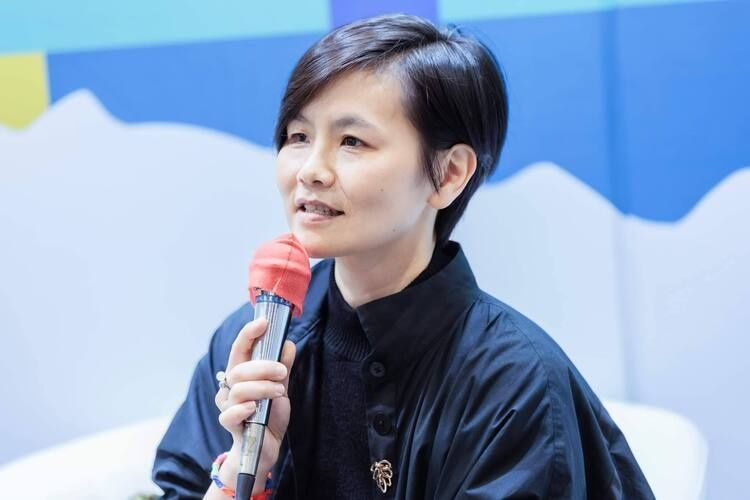
Speaker: Eno Pei-Jean Chen (Associate Professor, Taiwanese Literature at the National Chengchi University)
Description:
This talk speaks to the existing scholarship on "Cultural Cold War" and "Affective Turn" in gender/East Asian Studies, explores the dynamics of intra-East Asian literary contact nebulae. Building on the research approach conducted in my resent monograph Cold War Feelings (2024), this talk will first theorize affect/feeling/emotion as method and historicize it as research subject, for the better understanding of the post-war Taiwanese and South Korean societies, with the issues of the (re)construction of female subjects and Cold War ideology. Furthermore, this talk will demonstrate the historical specificity of 3 kinds of emotion--happiness, shame, and melancholia--and their intersectionality with each other, and the female subjects. Finally, I propose to analyze the historical impact in an intersectional manner in Taiwan and South Korea, with the transnational approach of inter-referencing Taiwan and Korea. My research shows that a broad archive of texts that have mediated the entanglement between East Asian societies, however, were routed through and interrupted by imaginative geographies incommensurate with the nation-state. This approach expects to explore the articulation of the specificities of the Taiwanese and Korean socio-historical situation, and to contrast it against the existing geopolitical referencing systems, as well as the division of gender and feelings.
Speaker's Bio:
Eno Pei Jean Chen is Associate Professor of Taiwanese Literature at the National Chengchi University, Taipei, Taiwan. She received her PhD degree from the Dept. of Asian Studies, Cornell University in May 2016. She is the author of Cultural Politics of Love: Colonial Genealogy of Modern Intimate Relationships in Taiwan and Korea (2023) and Cold War Feelings: Politics of Gender and Affect in 1950-1980s’ Taiwan and South Korea (2024). Her current research projects focus on the Cold War genealogy of feminism, and the archival nature of queer cultural history in Taiwan and South Korea.
This lecture is sponsored by a grant from the Taipei Economic and Cultural Office in New York and co-organized by the East Asia Program and the Department of Asian Studies.
Additional Information
Program
Einaudi Center for International Studies
East Asia Program
Global Chinese Theatre: A Transnational Perspective
October 16, 2025
4:30 pm
Uris Hall, G08
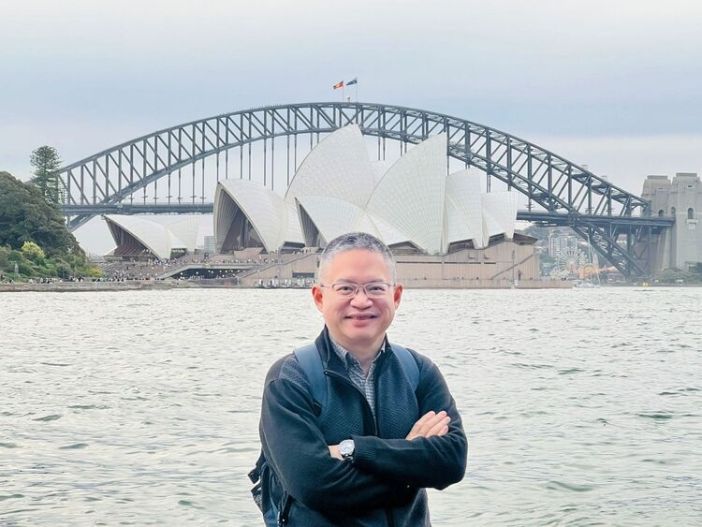
Speaker: Wah Guan LIM Associate Professor of Transcultural Theatre National Chung Hsing University
Description:
The 1980s was a most important decade for global Chinese theatre. In large part prompted by changes in regional geopolitics, the search for a local identity peaked among the Chinese communities in East and Southeast Asia. This period coincided with the rise of the professional careers of four important diasporic director-playwrights—Gao Xingjian 高行健 (b. 1940), Danny Yung Ning Tsun 榮念曾 (b. 1943), Stan Lai Sheng-chuan 賴聲川 (b. 1954), and Kuo Pao Kun 郭寶崑 (1939–2002)—whose efforts shaped the contemporary Chinese-language theater scenes across China, Hong Kong, Taiwan, and Singapore. While the geopolitical conditions of the Cold War imposed ethno-nationalist identities across the region, in contrast, these dramatists weaved together native, foreign, and Chinese elements in their theater praxis to give voice to the local. At the same time, by performing cultural identities alternative to the ones sanctioned by their own states, they also debunked the notion of a unified “Chineseness.” My talk highlights the key role theater and performance played in suturing identity in the diaspora and circulating people and ideas across geographical space, well before cross-strait relations were yet to thaw.
Speaker's Bio:
LIM Wah Guan (BA Hons 1 UNSW, MSt Oxford, MA Princeton, PhD Cornell) is Associate Professor of Transcultural Chinese Theatre at National Chung Hsing University, Taichung, Taiwan. His research interests span Chinese-language drama, cinema, and literature. His first monograph Denationalizing Identities: The Politics of Performance in the Chinese Diaspora (Cornell University Press, 2024) examines the role theatre and performance have played in identity formation in Chinese communities across East and Southeast Asia. Most recently the recipient of the Yushan Fellowship for Early Career Academics, he was the sole awardee in the Arts and Humanities category this year in Taiwan Ministry of Education’s effort to attract outstanding academics globally to strengthen the international standing of higher education in the country. He served previously as Assistant Professor at Bard College in New York and the University of New South Wales, Sydney, where he was Lecturer in Chinese Studies in the School of Humanities and Languages, and Fellow of New College.
To join virtually: https://cornell.zoom.us/j/92307207515?pwd=i3NiMc9IAzZN981x5PZnp4cqnM9GQ…
This lecture is sponsored by a grant from the Taipei Economic and Cultural Office in New York and co-organized by the East Asia Program and the Department of Asian Studies.
Additional Information
Program
Einaudi Center for International Studies
East Asia Program
Southeast Asia Program
Information Session: Global Research Fellows
September 11, 2025
4:30 pm
Uris Hall, G08
Global Research Fellows are a new interdisciplinary research and professional development community at the Einaudi Center for advanced graduate students, Cornell postdocs, and visiting and local scholars. You'll find a community of fellow researchers with regional and international interests and a desire to foster a more equitable world.
Eligible students:
• Have completed at least two years of graduate education
• Engaged in research on a topic of global or regional studies significance
• Hold a strong desire to impact global challenges and create real-world solutions
• Interested in engaging and collaborating with other researchers
Can’t attend? Contact programs@einaudi.cornell.edu.
***
The Mario Einaudi Center for International Studies hosts info sessions for graduate and for undergraduate students to learn more about funding opportunities, international travel, research, and internships. View the full calendar of fall semester sessions.
Additional Information
Program
Einaudi Center for International Studies
Reppy Institute for Peace and Conflict Studies
East Asia Program
Southeast Asia Program
Latin American and Caribbean Studies
Institute for African Development
Institute for European Studies
South Asia Program
Migrations Program
Southwest Asia and North Africa Program