
Institute for African Development
N’Dri Thérèse Assié-Lumumba

Professor, African and African Diaspora
Additional Information
Program
Role
- Faculty
- IAD Core Faculty
- IAD Advisory Council
Contact
Email: n.assie-lumumba@cornell.edu
Phone: 607-255-7839
UN Food Agency Funding Cuts Leave World Ill-equipped for Looming Food Crises

Chris Barrett, IAD/SEAP
Chris Barrett, a Cornell University agricultural and development economist, warns that funding shortfalls at international food agencies hinder global capacity for early warning and response to hunger crises.
Additional Information
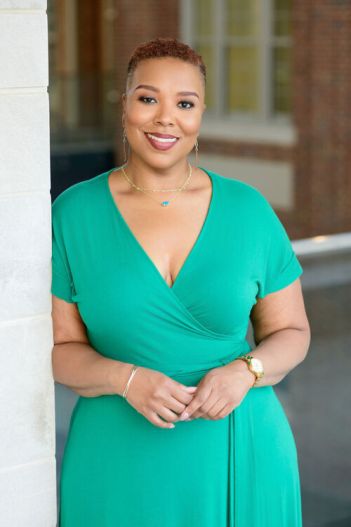
Anthropology Colloquium: Laurian Bowles
November 13, 2026
3:00 pm
120 Mary Ann Wood Drive, B21
Aluminum’s Past, Contemporary Coloniality and Porter Labor in Ghana
Reading aluminum’s infrastructural history alongside Accra’s contemporary market porters, this talk argues that women porters’ embodied labor extends and exposes the same extractive logics, revealing enduring coloniality within Ghana’s built and human infrastructures. Centering the everyday use of aluminum pans and the scientific history of aluminum, Bowles traces how an ordinary object mediates power relationships between traders and the state, facilitate modes of protection and mutuality among workers, and animates racial capitalism and uneven accumulation in a contemporary African city. In addition, this work explores intimacy and fugitivity as ethnographic methods that uncover porter work as a prototype of the global gig economy and the improvisational strategies of precarious workers.
Laurian Bowles is Vann Professor of Racial Justice; Associate Professor & Chair in the Department of Anthropology; and Director of the Davidson in Ghana Program at Davidson College.
Bio:
I am a cultural and visual anthropologist who researches, writes and teaches about social mobility and the visual economies of women’s labor in Ghana and the African Diaspora. My research attends to the way women’s activism take shape through ordinary forms of mobilization and refusals in public and intimate spaces. I am especially interested in the haptic nature of photographs, the circulation of pictures as material artifacts, and the way race, class, and queerness are formed through visual storytelling.
I have published articles in Feminist Anthropology, Visual Anthropology Review, The Journal of African History and African Arts.
My book, Headstrong: Women Porters, Blackness and Modernity in Accra (Penn Press, 2025) draws on a decade of fieldwork with women porters in Ghana to illustrates how antiblackness, queer sexual politics, and feminized labor inform state and social sensibilities about what constitutes progress and modernity in Accra.
Co-sponsored by the Institute for African Development; the Feminist, Gender & Sexuality Studies Program; the Africana Studies and Research Center; and the Department of Communication. Thank you!
Additional Information
Program
Institute for African Development
The Role of the Private Sector in Infrastructure Construction in Developing Countries

Wednesday, September 30, 2026 12pm to 1:00pm Uris Hall, G-08
"The world needs infrastructure more acutely than ever. A cumulative $106 trillion in investments is imperative to meet global infrastructure requirements through 2040, not only for traditional assets such as roads, ports, bridges, and power grids but also for the next generation of those assets—and an emerging intersection of systems and facilities across verticals, including data centers, charging stations, fiber-optic networks, and more. This unprecedented call for capital can no longer be answered by the public sector alone.
Private capital is meeting the moment. In 2025, global infrastructure fundraising reached a record of nearly $200 billion, surpassing the previous high of $180 billion in 2022. Limited partners (LPs) continue to name infrastructure as the asset class they most want to increase their allocations to (increasingly for both diversification and performance) and are also displaying a willingness to move up the risk curve. General partners (GPs) are doing larger, more complex deals, with notably large funds (several holding $5 billion or more of committed capital) gaining share as the industry matures." - Mckinsey & Co
Muna B. Ndulo is the William Nelson Cromwell Professor of International & Comparative Law; Elizabeth and Arthur Reich Director, Leo and Arvilla Berger International Legal Studies Program, Cornell Law School. His focus is in the fields of constitution making, governance and institution building, international criminal law, African legal systems, human rights, and international law and foreign direct investments.
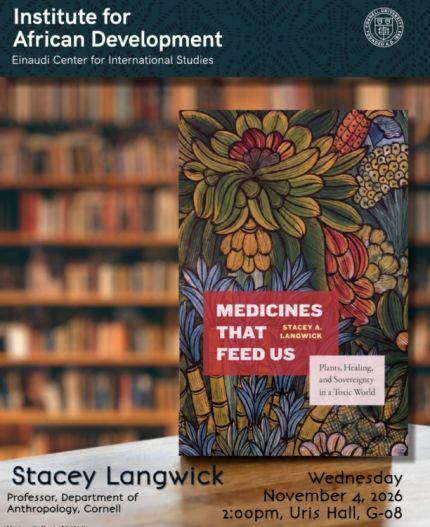
Medicines that Feed Us
November 4, 2026
2:00 pm
Uris Hall, G-08
Medicines That Feed Us examines the relationship between toxicity and remedy in the face of the intertwined health and environmental crises that are shaping life in the twenty-first century. Through ethnographic work with organizations that use plant-based healing and sustainable farming practices in Tanzania, Stacey A. Langwick asks what it means to heal in a toxic world.
Stacey Langwick is a cultural and medical anthropologist. At Cornell, Professor Langwick teaches undergraduate and graduate courses on the anthropology of medicine, the body, postcolonial science, toxicity, critical plant studies and Africa. Her scholarship is broadly concerned with the politics of knowledge, questions of evidence, and possibilities of care. Most recently, she has taken up these themes through a range of interlocking issues including the science of traditional medicine in Africa, the afterlives of botanical colonization, the problem of toxicity, the politics of intellectual property, questions of bodily and territorial sovereignty, the work of chronicity and the rise chronic disease, and the possibilities of gardens as sites of epistemological and ontological experimentation.
Additional Information
Program
Einaudi Center for International Studies
Institute for African Development
The Role of the Private Sector in Infrastructure Construction in Developing Countries

September 30, 2026
12:00 pm
Uris Hall, G-08
The world needs infrastructure more acutely than ever. A cumulative $106 trillion in investments is imperative to meet global infrastructure requirements through 2040, not only for traditional assets such as roads, ports, bridges, and power grids but also for the next generation of those assets—and an emerging intersection of systems and facilities across verticals, including data centers, charging stations, fiber-optic networks, and more. This unprecedented call for capital can no longer be answered by the public sector alone.
Private capital is meeting the moment. In 2025, global infrastructure fundraising reached a record of nearly $200 billion, surpassing the previous high of $180 billion in 2022. Limited partners (LPs) continue to name infrastructure as the asset class they most want to increase their allocations to (increasingly for both diversification and performance) and are also displaying a willingness to move up the risk curve. General partners (GPs) are doing larger, more complex deals, with notably large funds (several holding $5 billion or more of committed capital) gaining share as the industry matures. - Mckinsey & Co
Muna B. Ndulo, William Nelson Cromwell Professor of International & Comparative Law; Elizabeth and Arthur Reich Director, Leo and Arvilla Berger International Legal Studies Program, Cornell LAw School. His focus is in the fields of constitution making, governance and institution building, international criminal law, African legal systems, human rights, and international law and foreign direct investments.
Additional Information
Program
Einaudi Center for International Studies
Institute for African Development
Trump's Beef Import Plan Angers Agricultural Sector Before Midterm Elections

Christopher Barrett, IAD/SEAP
Christopher Barrett, a Cornell University agricultural economist, critiques the Trump administration's beef import policy and its effects on U.S. ranchers.
Additional Information
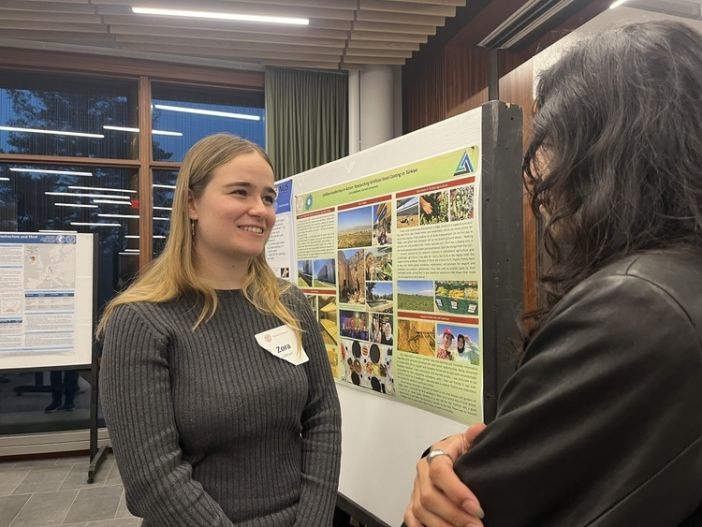
International Research Showcase
October 28, 2026
4:30 pm
Physical Sciences Building, Baker Portico & Atrium
Meet Cornell's Laidlaw scholars and Global Interns at our fall showcase. They'll present their undergraduate international summer experiences, including hands-on research and leadership-in-action.
The International Research Showcase is hosted by the Einaudi Center for International Studies and cosponsored by the Office of Global Learning. Both are part of Global Cornell.
***
Applications for Global Internships and the Laidlaw Leadership and Research Program will open in the fall semester.
Global Internships give undergraduate students valuable international experience in fields spanning global development, climate and sustainability, international relations, communication, business, governance, and more. They are managed by the Einaudi Center for International Studies and Office of Global Learning, both part of Global Cornell.
The Laidlaw Undergraduate Leadership and Research Scholarship Program provides generous funding to first- and second-year undergraduates over two years as they pursue internationally focused research, engage in leadership training and a leadership-in-action experience, and join a global network of like-minded peers. The program is managed by the Einaudi Center.
Additional Information
Program
Einaudi Center for International Studies
Reppy Institute for Peace and Conflict Studies
East Asia Program
Southeast Asia Program
Latin American and Caribbean Studies
Institute for African Development
Institute for European Studies
South Asia Program
Migrations Program
Southwest Asia and North Africa Program
Faculty Research Seed Grants: Global Hubs Info Session

September 24, 2026
9:00 am
Drop in to learn more and ask questions about the 2027 Global Hubs Faculty Research Seed Grants that Global Cornell and partner universities are offering through the Global Hubs initiative.
Join us on Zoom at any time during the session.
Through these seed grants, Cornell faculty from across the university are invited to apply for research funds to explore and jumpstart collaborations with colleagues at Global Hubs partner institutions. Funded projects should lead to tangible outcomes, including the submission of at least one co-authored peer-reviewed publication and at least one application for external grant funding.
Successful proposals will receive up to $5,000 from Cornell, with the potential for matching funds from some Global Hubs partner universities.
Application deadline: October 14, 2026, 4:00 p.m. ET
Project duration: January 1–December 31, 2027
Learn more and apply for a Global Hubs joint seed grant.
Additional Information
Program
Einaudi Center for International Studies
Latin American and Caribbean Studies
Reppy Institute for Peace and Conflict Studies
East Asia Program
Southeast Asia Program
Institute for African Development
Institute for European Studies
South Asia Program
Migrations Program
Southwest Asia and North Africa Program
Food Safety Concerns Rise Amid High Grocery Prices and Agency Cuts

Christopher Barrett, IAD/SEAP
Christopher Barrett, a Cornell University economist, warns that cuts in federal food safety staffing have led to greater risks of foodborne illness and costly recalls.