Institute for African Development
Maize Seeds, Agroecology and the (De)coloniality of Agriculture in Malawi and South Africa
By Our Faculty
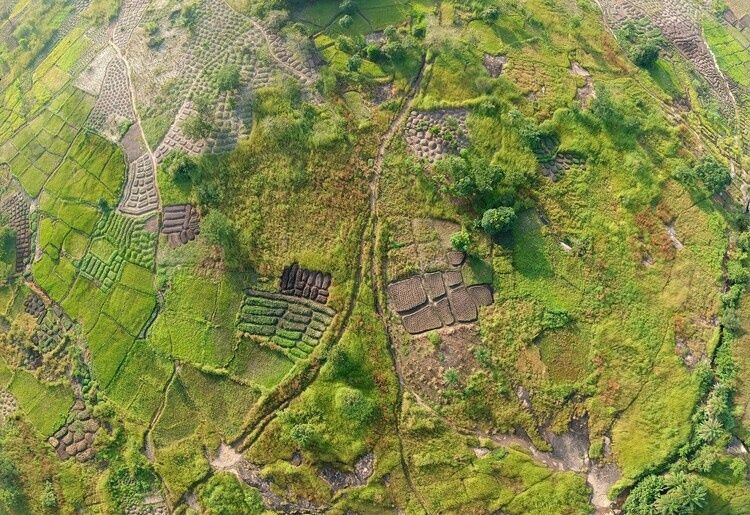
Farmer-managed seed systems and the conservation of agrobiodiversity are increasingly recognized as important components of food and seed sovereignty. In contrast, hybrid, genetically modified (GM), and, increasingly, gene-edited crops continue to be promoted by Green Revolution proponents as a “climate smart” package that includes fertilizers, pesticides, purchased seeds, and links to global markets.
Article
Additional Information
Program
Type
- Article
Publication Details
Publication Year: 2024
Journal: Elementa: Science of the Anthropocene
The Ants and the Grasshopper
March 6, 2024
7:00 pm
Willard Straight Hall Theatre
Anita Chitaya has a gift; she can help bring abundant food from dead soil, she can make men fight for gender equality, and she can end child hunger in her village. Now, to save her home from extreme weather, she faces her greatest challenge: persuading Americans that climate change is real.
Traveling from Malawi to California to the White House, Anita meets climate skeptics and despairing farmers. Her journey takes her across all the divisions shaping the US, from the rural-urban divide, to schisms of race, class and gender, to the thinking that allows Americans to believe we live on a different planet from everyone else. It will take all her skill and experience to persuade us that we’re all in this together.
This documentary, ten years in the making, weaves together the most urgent themes of our times: climate change, gender and racial inequality, the gaps between the rich and the poor, and the ideas that groups around the world have generated in order to save the planet.
Free admission. Sponsored by the Institute for African Development at the Mario Einaudi Center for International Studies.
Film website: https://www.antsandgrasshopper.org/
"I am blown away. You have found a hero of such grace and intelligence and power, and you had the good sense to get out of the way, center the narrative on her. The film is obviously not about agriculture in the way I expected to be-- it’s much bigger than that. We get to observe history. That’s what ten years on a movie gets you. I feel invested in the project... so wonderful to see it completed. I will be happy to spread the word." - Michael Pollan, Author & Director Of The Knight Program In Science And Environmental Journalism
Additional Information
Program
Einaudi Center for International Studies
Institute for African Development
Just Climate Futures
April 4, 2024
2:30 pm
Uris Hall, G08
Recent assessments of climate change impacts in Sub-Saharan Africa indicate that the continent is already experiencing impacts from rising temperatures, including water shortages, reduced food production, loss of lives and biodiversity loss. There are an increased number of extreme events, from drought, floods and tropical storms, and these events will worsen if global greenhouse gases are not significantly reduced. At the same time, Africa is one of the lowest contributors to greenhouse gas emissions, and many countries struggle to manage with the cost of climate change adaptation, while also paying high levels of debt. Alongside these climate challenges are ongoing extractive industries looking to Africa as a new or ongoing source of resources – including mining precious minerals to support renewable alternatives to fossil fuels. Despite this bleak picture, alternative models that are transformative and reparative are emerging as ways to imagine just climate futures in Africa. These alternatives include attention to multiple types of social inequities and building development strategies through dialogue and careful attention to power dynamics. Adaptation approaches that support decent livelihoods alongside biodiversity, ecosystems and indigenous knowledge are being tested and expanded. Recognition of power inequities at multiple scales and reparation of these inequities is part of such approaches.
Additional Information
Program
Einaudi Center for International Studies
Institute for African Development
Institute for African Development Seminar: The UN Global Compact Network Tanzania
March 7, 2024
2:30 pm
Uris Hall, G08
Recent assessments of climate change impacts in Sub-Saharan Africa indicate that the continent is already experiencing impacts from rising temperatures, including water shortages, reduced food production, loss of lives and biodiversity loss. There are an increased number of extreme events, from drought, floods and tropical storms, and these events will worsen if global greenhouse gases are not significantly reduced. At the same time, Africa is one of the lowest contributors to greenhouse gas emissions, and many countries struggle to manage with the cost of climate change adaptation, while also paying high levels of debt. Alongside these climate challenges are ongoing extractive industries looking to Africa as a new or ongoing source of resources – including mining precious minerals to support renewable alternatives to fossil fuels. Despite this bleak picture, alternative models that are transformative and reparative are emerging as ways to imagine just climate futures in Africa. These alternatives include attention to multiple types of social inequities and building development strategies through dialogue and careful attention to power dynamics. Adaptation approaches that support decent livelihoods alongside biodiversity, ecosystems and indigenous knowledge are being tested and expanded. Recognition of power inequities at multiple scales and reparation of these inequities is part of such approaches.
Additional Information
Program
Einaudi Center for International Studies
Institute for African Development
IAD Weekly Seminar Series: Adapting to and mitigating climate change in Tanzania: Report on use of the System of Rice Intensification
February 29, 2024
2:30 pm
G-08 Uris Hall
Dr. Primitiva Andrea Mboyerwa is a senior lecturer in the College of Agriculture’s Department of Soil and Geological Sciences at the Sokoine University of Agriculture. PhD in Climate-Smart Agriculture & Biodiversity Management from Haramaya University in Ethiopia as well as a M.Sc. in Soil Science and Land Management from Sokoine University of Agriculture. Over the past 14 years, she has studied and researched a wide range of farming systems in Tanzania as well as elsewhere in Africa, Australia and USA, addressing the System of Rice Intensification, crop productivity, soil health, mitigation of greenhouse gas emissions, soil conservation, fertilizer use efficiency, nutrient and water management, tillage practices, soil carbon sequestration, climate- smart agriculture, and biodiversity management. Her research interests have been framed by an understanding of the soil-water-plant-nutrients-environment interface emphasizing integrated approaches for devising crop production systems that have minimal to zero risks to the environment and human health.
Additional Information
Program
Einaudi Center for International Studies
Institute for African Development
Betty Maina: Imagining Just Environmental and Climate Futures in Africa
February 22, 2024
2:30 pm
G-08 Uris Hall
Ms. Betty Maina is a Kenyan politician who is currently Cabinet Secretary for Industrialization, Trade and Enterprise Development in the cabinet of Kenya. Ms. Betty Maina was the former P.S. for Environment and Cabinet Minister for Trade and Industrialization. She also was the CEO of the Kenya Association of Manufacturers (KAM) where her role/portfolio entailed working with the private sector on many environmental/energy/climate change related issues. Prior to taking up her position in the cabinet in 2020 she held roles at the Kenya Association of Manufacturers (KAM), where her role/portfolio entailed working with the private sector on many environmental/energy/climate change related issues, and the United Nations and as the Principal Secretary of the department for Industrialization, Trade and Enterprise Development.
Additional Information
Program
Einaudi Center for International Studies
Institute for African Development
Ngugi wa Thiongo's Son Mukoma wa Ngugi Follows in his Father's Footsteps
Mukoma Wa Ngugi, IAD
Mukoma, associate professor of literatures in English, visited Murang’a University five years after his father Prof Ngugi wa Thiong’o launched his Gikuyu book Kenda Muiyuru (Perfect Nine) at the institution.
Additional Information
Financing the Transition to Safe, Equitable, and Resilient Water and Sanitation Services in Africa
March 28, 2024
2:30 pm
Uris Hall, G08
Globally, 2.2 billion people lack access to safely managed drinking water services, 3.5 billion lack access to safely managed sanitation services, and 1 billion people still practice open defecation. At the same time, climate change is threatening communities’ water supplies and the integrity of existing infrastructure. These realities converge to create a pressing need for new thinking about the planning, design, and financing of the next generation of water and sanitation infrastructure. This talk will examine the global challenge of providing universal access to resilient water and sanitation services with particular attention to Sub-Saharan Africa and how the global community can finance this transition.
Recent assessments of climate change impacts in Sub-Saharan Africa indicate that the continent is already experiencing impacts from rising temperatures, including water shortages, reduced food production, loss of lives and biodiversity loss. There are an increased number of extreme events, from drought, floods and tropical storms, and these events will worsen if global greenhouse gases are not significantly reduced. At the same time, Africa is one of the lowest contributors to greenhouse gas emissions, and many countries struggle to manage with the cost of climate change adaptation, while also paying high levels of debt. Alongside these climate challenges are ongoing extractive industries looking to Africa as a new or ongoing source of resources – including mining precious minerals to support renewable alternatives to fossil fuels. Despite this bleak picture, alternative models that are transformative and reparative are emerging as ways to imagine just climate futures in Africa. These alternatives include attention to multiple types of social inequities and building development strategies through dialogue and careful attention to power dynamics. Adaptation approaches that support decent livelihoods alongside biodiversity, ecosystems and indigenous knowledge are being tested and expanded. Recognition of power inequities at multiple scales and reparation of these inequities is part of such approaches.
Additional Information
Program
Einaudi Center for International Studies
Institute for African Development
Environmental Cognition and Small Holder Farmed Climate Adaptation
March 21, 2024
2:30 pm
Uris Hall, G08
Recent assessments of climate change impacts in Sub-Saharan Africa indicate that the continent is already experiencing impacts from rising temperatures, including water shortages, reduced food production, loss of lives and biodiversity loss. There are an increased number of extreme events, from drought, floods and tropical storms, and these events will worsen if global greenhouse gases are not significantly reduced. At the same time, Africa is one of the lowest contributors to greenhouse gas emissions, and many countries struggle to manage with the cost of climate change adaptation, while also paying high levels of debt. Alongside these climate challenges are ongoing extractive industries looking to Africa as a new or ongoing source of resources – including mining precious minerals to support renewable alternatives to fossil fuels. Despite this bleak picture, alternative models that are transformative and reparative are emerging as ways to imagine just climate futures in Africa. These alternatives include attention to multiple types of social inequities and building development strategies through dialogue and careful attention to power dynamics. Adaptation approaches that support decent livelihoods alongside biodiversity, ecosystems and indigenous knowledge are being tested and expanded. Recognition of power inequities at multiple scales and reparation of these inequities is part of such approaches.
Additional Information
Program
Einaudi Center for International Studies
Institute for African Development
Ants and Grasshopper documentary and discussion (Cornell Cinema)
March 6, 2024
7:00 pm
Cornell Cinema
Recent assessments of climate change impacts in Sub-Saharan Africa indicate that the continent is already experiencing impacts from rising temperatures, including water shortages, reduced food production, loss of lives and biodiversity loss. There are an increased number of extreme events, from drought, floods and tropical storms, and these events will worsen if global greenhouse gases are not significantly reduced. At the same time, Africa is one of the lowest contributors to greenhouse gas emissions, and many countries struggle to manage with the cost of climate change adaptation, while also paying high levels of debt. Alongside these climate challenges are ongoing extractive industries looking to Africa as a new or ongoing source of resources – including mining precious minerals to support renewable alternatives to fossil fuels. Despite this bleak picture, alternative models that are transformative and reparative are emerging as ways to imagine just climate futures in Africa. These alternatives include attention to multiple types of social inequities and building development strategies through dialogue and careful attention to power dynamics. Adaptation approaches that support decent livelihoods alongside biodiversity, ecosystems and indigenous knowledge are being tested and expanded. Recognition of power inequities at multiple scales and reparation of these inequities is part of such approaches.
Additional Information
Program
Einaudi Center for International Studies
Institute for African Development