
Institute for European Studies
The Costs of Magical Realism: Europe, NATO, and Ukraine Face the Trump Challenge
April 28, 2026
5:00 pm
Goldwin Smith Hall, G64
IES Luigi Einaudi Distinguished Lecture
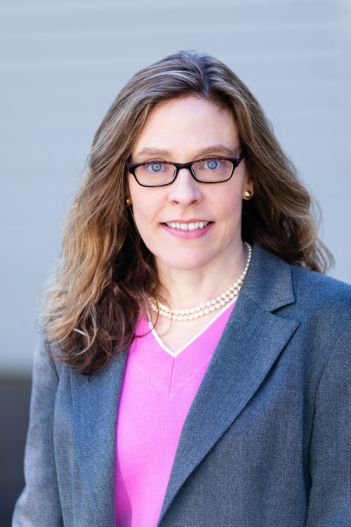
With the second Trump administration challenging the basic tenets of transatlantic relations, Europeans must find a way to contain the damage and chart a new path forward. Doing so successfully will require an understanding of the post-Cold War history of Europe, NATO, and Ukraine. In this lecture, Professor Mary Elise Sarotte, Director of Yale’s Brady-Johnson Program in Grand Strategy, will highlight how this history illuminates the tensions between Europe and the United States today. Drawing on her award-winning book Not One Inch: America, Russia, and the Making of Post-Cold War Stalemate, Sarotte will both illuminate how we got to where we are—and what might happen as American foreign policy enters an era of “magical realism.”
About the Speaker
Mary Elise Sarotte is the Brady-Johnson Professor of Grand Strategy with a tenured joint appointment at the Yale School of Management. An expert in the history of international relations, she directs the Brady-Johnson Program in Grand Strategy.
Professor Sarotte has held tenured faculty appointments at the University of Cambridge, the University of Southern California, and, most recently, the Johns Hopkins School of Advanced International Studies or SAIS, where she was the inaugural holder of the Marie-Josée and Henry R. Kravis Distinguished Professorship of Historical Studies.
Host and Sponsors
This event is hosted by the Institute for European Studies (IES), part of the Mario Einaudi Center for International Studies. The IES Luigi Einaudi Distinguished Lecture is an annual event.
Additional Information
Program
Einaudi Center for International Studies
Institute for European Studies
Reppy Institute for Peace and Conflict Studies
Mental States: Ordering Psychiatric Disorder in France
February 20, 2026
3:00 pm
Uris Hall, G08
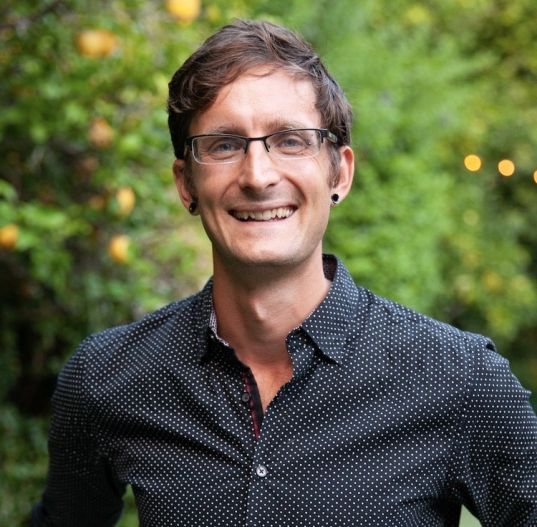
Presented by Alex V. Barnard, Assistant Professor of Sociology at New York University (NYU)
Is there an underlying order to how societies classify, treat, and control madness? Both popular and scholarly portrayals of contemporary mental health systems emphasize service fragmentation and inter-professional competition. In this talk, I draw on a year of in-depth fieldwork in France, including observations in a public mental health clinic, social service office, and courts, supplemented with nearly two-hundred interviews with administrators and clinicians, to show the underlying logic to the trajectories of people with serious mental illness through the welfare state. As I show, decision-making across these sites is linked by a shared conception, both embedded in formal policy and informal practices, of what makes someone a malade—a real mentally-ill person. This strong medical and bureaucratic identity ties this population to a paternalist, protective psychiatric system, in sharp contrast to the U.S., where the absence of a clear administrative category for this population leads to a chaotic mix of coercion and care from jails, shelters, and hospitals. While these results reveal the power of the French state to construct a particular definition of what it means to have a serious mental illness, I show how defining the population in this way constrains attempts to reform the system. This talk suggests how the dynamic interplay between categories adopted in official policy, used in professional practice, and adopted by populations themselves can reproduce national differences, even in an era where psychiatric knowledge and medical treatment are converging across national borders.
Speaker
Alex V. Barnard is an assistant professor of sociology at New York University and holds a PhD in sociology from the University of California, Berkeley. His work examines medical and bureaucratic decision-making, welfare policy, and social control comparatively. His previous book, Conservatorship: Inside California's System of Coercion and Care for Mental Illness (Columbia University Press), examines California's involuntary treatment system, showing how a failure of government oversight and inter-agency coordination leads to the extensive use of coercive interventions that provide neither care nor control. Ongoing projects include examining trends in national legislation around involuntary psychiatric treatment, analyzing variation in the policing of protests and university responses to the 2024 student protest encampments, and the governance of emerging addictions to online gambling and AI.
Host
Institute for European Studies, part of the Einaudi Center for International Studies
Co-host
The Department of Sociology Colloquium Series
Additional Information
Program
Einaudi Center for International Studies
Institute for European Studies
Razvan-Ioan Dumitru
Postdoctoral Fellow, History Department
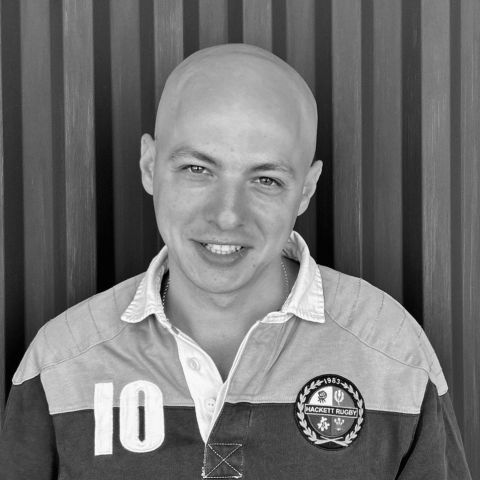
Răzvan Dumitru studies the visual culture of nineteenth-century Europe, focusing on how global textile circulation shaped local identities and aesthetic sensibilities in rural societies. His work intersects public history, oral history & memory, rural history, visual culture, and digital humanities. He is a Marie Skłodowska Curie Postdoctoral Fellow in the History Department.
Additional Information
Transforming the Global Labor System: Europe and the U.S. on the Global Stage

November 18, 2025
12:00 pm
Uris Hall, G08
Panelists:
Samira Rafaela, Former Member of European Parliament, Visiting Scholar, Cornell Law School
Chiara Cristofolini, Associate Professor of Labor Law, University of Trento, Visiting Scholar, Cornell School of Industrial and Labor Relations
Sarosh Kuruvilla, Andrew J. Nathanson Family Professor in Industrial and Labor Relations, Global Labor and Work, Academic Director, Global Labor Institute
Moderator:
Chantal Thomas, Radice Family Professor of Law and Director, Cornell Center for Global Economic Justice Cornell Law School
Additional Information
Program
Einaudi Center for International Studies
Institute for European Studies
World in Focus: Gaza–Israel Conflict: Regional and International Impacts

November 11, 2025
4:00 pm
Uris Hall, G08
Join Einaudi Center experts for World in Focus Talks on global events in the news and on your mind. Our faculty's research and policy insights put the world in focus.
This year we’re hosting informal campus discussions on many Tuesday afternoons. This week’s topic:
The Gaza–Israel conflict escalated dramatically in October 2023, following Hamas's attack on Israel and Israel's subsequent military campaign in Gaza. After intense fighting that caused massive Palestinian casualties and displacement, a ceasefire and the outline of a peace agreement have been announced. These events will have far-reaching consequences for the region and the world: heightening political and security tensions in the Middle East, disrupting international humanitarian and legal systems, and straining international relations.
How is the Gaza–Israel conflict transforming the Middle East and challenging the international order?
***
Featured Speakers
Sandra Babcock (SEAP) | Law SchoolAlexandra Blackman (SWANA) | GovernmentEsam Boraey (PACS, Migrations) | GovernmentPeter Katzenstein (IES, PACS) | GovernmentJoseph Margulies (PACS) | GovernmentJake Silver | Near Eastern StudiesChantal Thomas (IAD) | Law School
***
Conversations Matter at Einaudi
This conversation is hosted by the Mario Einaudi Center for International Studies and its regional and thematic programs. Find out what's in store for students at Einaudi!
Additional Information
Program
Einaudi Center for International Studies
Reppy Institute for Peace and Conflict Studies
East Asia Program
Southeast Asia Program
Latin American and Caribbean Studies
Institute for African Development
Institute for European Studies
South Asia Program
Migrations Program
Southwest Asia and North Africa Program
Einaudi Kicks Off Yearlong Conversation on Foreign Aid
Lund Debate 2025
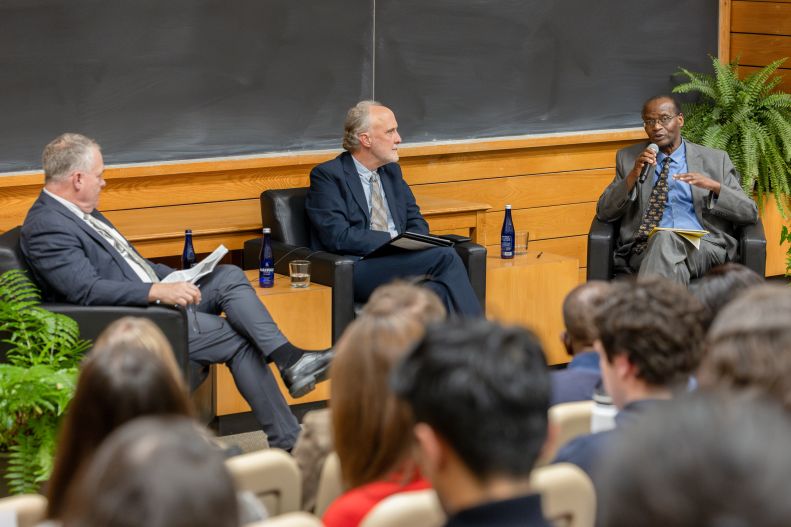
Undergraduate Global Scholars joined debaters to discuss “Is (Cutting) International Aid Good?”
For decades, international aid mainly flew under the radar of public opinion. Politicians from across the ideological spectrum lauded programs that saved lives, nurtured democracy, and promoted American values and interests. Except during wars and natural disasters, aid was rarely in the news.
That changed on January 20, 2025, when President Donald J. Trump issued an Inauguration Day executive order freezing all U.S. foreign assistance. Within weeks, Secretary of State Marco Rubio closed the headquarters of the U.S. Agency for International Development (USAID) and canceled 83% of the agency’s programs. Suddenly, foreign aid was at the center of an intense debate over national priorities and America’s place in the world.
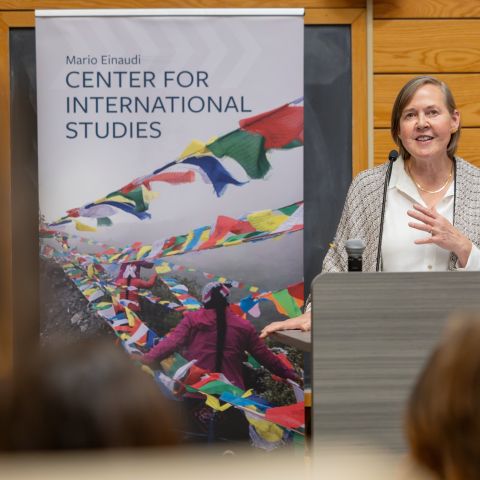
January 20 was also the day that political scientist Ellen Lust arrived at Cornell to direct the Mario Einaudi Center for International Studies as the John S. Knight Professor of International Studies. One of her first actions was selecting a theme to guide the center’s programming and provide a focus for its Undergraduate Global Scholars for the 2025–26 academic year.
Lust, who is also a professor in the Cornell Jeb E. Brooks School of Public Policy and the Department of Government in the College of Arts and Sciences, chose “Is (Cutting) International Aid Good?” She said she meant the simple, yes-or-no question to be provocative at a university where “everyone understands how complex these issues really are.”
“We have faculty, students, and staff engaged in food security, agriculture, development, public health, nutrition, education, economics, international relations, area studies, and so many other fields,” Lust said. “My hope was that this could provide an opportunity for us all to put our heads together and think about what can be done in the future.”
Lust recruited international development specialist Paul Kaiser to lead the conversation as the Einaudi Center’s practitioner in residence. Kaiser has worked on public policy and education reform in sub-Saharan Africa, South and Southeast Asia, and the Pacific Islands, with agencies including USAID, the Millennium Challenge Corporation, and the World Bank.
“There have always been legitimate questions about aid dependency and corruption and the effectiveness of aid, but we’re facing a much more existential question, which is should there be any aid at all?”
“For me, aid starts off as a moral issue, but it's also an economic issue, it's a political issue, it's a social issue,” Kaiser said. “There have always been legitimate questions about aid dependency and corruption and the effectiveness of aid, but we’re facing a much more existential question, which is should there be any aid at all?”
That question was on the table at Einaudi’s Lund Critical Debate, which Kaiser moderated on October 22 in a packed Lewis Auditorium in Goldwin Smith Hall. The debaters were Cornell faculty members Chris Barrett, an agricultural economist and food policy expert, and Muna Ndulo, an expert in international law and governance.
“We need more, not less aid,” argued Barrett, the Stephen B. and Janice G. Ashley Professor of Applied Economics and Management in the Dyson School of Applied Economics and Management and a professor in the Cornell Brooks School of Public Policy. “We need it for moral reasons, for security reasons, and for economic reasons. But it needs to be fundamentally different than it has been in the past.”
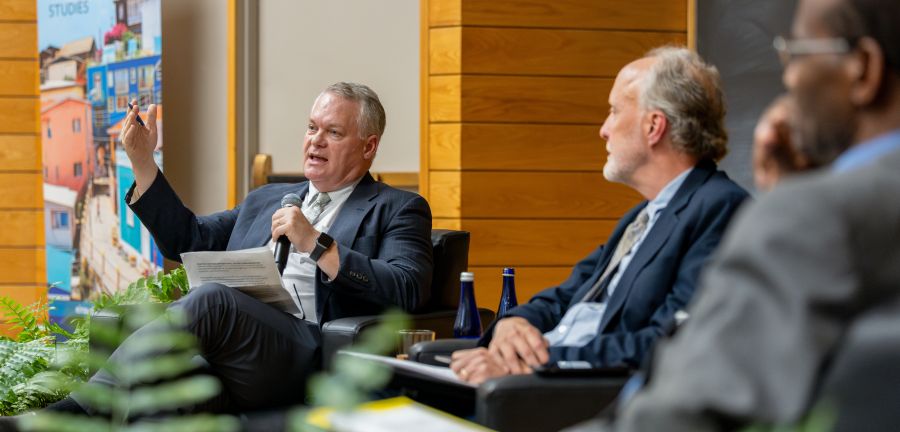
Specifically, he said, “we need less bilateral aid—that is, government-to-government aid to support country-specific things—and we need far more aid for what some of us term ‘international public goods’—for things that cut across the global community.”
“We need more, not less aid. We need it for moral reasons, for security reasons, and for economic reasons. But it needs to be fundamentally different than it has been in the past.”
Those include agricultural and biomedical research, infectious disease monitoring and prevention, emergency response, and climate change mitigation. “These are things that we underinvest in massively” despite their high long-term economic returns, Barrett said. Most are better delivered by multilateral agencies and organizations than by individual governments, he said.
Ndulo, the William Nelson Cromwell Professor of International and Comparative Law at Cornell Law School, agreed that aid can be helpful and sometimes essential, but he said it can also do damage. “A constant feature in the field of development is the firm belief that low-income countries will always be poor and desperately in need of foreign assistance,” he said. “This mentality shapes the sorts of solutions that get fostered in those countries.”
Ndulo and Barrett both observed that aid often prioritizes donor countries’ interests over those of the recipients. Increasingly, Ndulo said, donors are conditioning aid on recipients’ willingness to support their foreign policy objectives. Overall, Ndulo said, aid has less impact than international trade, foreign direct investment, or remittances from people working abroad.
“If we focus more on fairer ways of trading,” he said, “we might not need as much aid.”
The Future of Aid
Rethinking the future of aid is the assignment for the 15 Undergraduate Global Scholars selected by the Einaudi Center in October. Over the course of the year, they will meet with experts, conduct research, and take part in discussions and events.
“For me, it’s personal,” said Sarvesh Prabhu ’28, who studies entomology and environmental sustainability in the College of Agriculture and Life Sciences. As a teenager, Prabhu worked at an international agricultural research center in his native India. He could see how important agriculture was to the nation’s development, but he also saw how aid could undermine the country’s sense of self-determination.
Ariela Asllani ’26 also feels a personal connection. A public policy major in the Brooks School, she grew up in Albania with parents who housed war refugees from Kosovo in the 1990s. She said Kosovars were grateful for U.S. aid, even erecting a statue of President Bill Clinton after the war ended. But many of the programs the Americans started collapsed after they left, and she has witnessed how aid can fuel corruption and crime. “My interest is the intersection of military, intelligence, law enforcement, and humanitarian aid actors,” she said.
“I’ve noticed a change in the conversation around aid,” said Iskander Khan ’26, a government major in the College of Arts and Sciences. “People will talk about it in a humanitarian sense, then when they’re pushed, they justify it as a security issue. I thought these were two very different things. But the discussions we’ve been having make me realize that they’re a lot more intertwined than I realized.”
The Einaudi Center’s Lund Critical Debate Series is made possible by the generosity of Judith Lund Biggs ’57. Watch the video of the debate below. The future of aid will also be the subject of Einaudi’s 2026 Bartels World Affairs Lecture, to be delivered by former USAID administrator Samantha Power in April.
Story by Jonathan Miller. All photos by Simon Wheeler.
Additional Information
Map Shows States With the Highest—and Lowest—Child Care Costs

Mildred Warner, IES/LACS
Mildred Warner, professor of city and regional planning, and global development, says child care costs are higher in states with high living costs and quality standards. Prices vary by care type, rise with wages and inflation, and are driven by costs like rent and supplies.
Additional Information
European History Colloquium - Jan Burzlaff
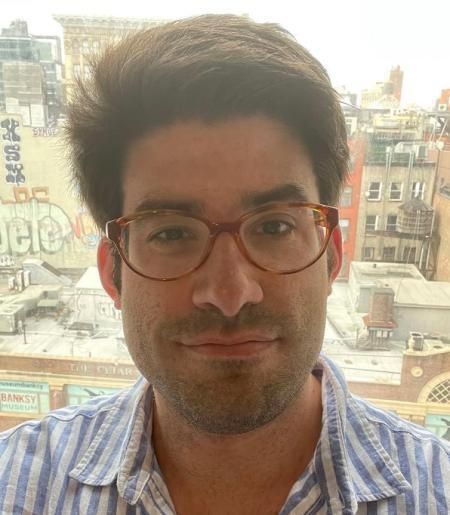
November 14, 2025
12:20 pm
Sibley Hall, 115
European History Colloquium
Jan Burzlaff, Cornell University, Jewish Studies
Relational Europeanism: Writing European Histories of WW2 and the Holocaust
November 14, 12:20 pm
Sibley Hall 115
For a copy of the paper, email cf476@cornell.edu
Additional Information
Program
Institute for European Studies
Collaboration Excavates the Ancient City of Sardis

Project Includes Einaudi Faculty Researchers
Annetta Alexandridis (IES) and Benjamin Anderson (IES/SWANA) are part of a long-term project studying Sardis, Turkey—now a UNESCO World Heritage site.
Additional Information
Semester in Seville Info Session

November 4, 2025
3:00 pm
Klarman Hall, 164
Study abroad in Spain alongside Spanish university students in the beautiful city of Seville. Open to any major with special classes focusing on health and healthcare in fall and immigration in the spring. Immerse yourself in the community through local organizations and homestays. Bartolome Miranda, Program Coordinator, and returned Cornell students will present the program and answer questions. Refreshments provided.
Additional Information
Program
Institute for European Studies