
Institute for European Studies
The West Would Harm Itself with Rash Seizures of Frozen Russia Assets

Nicholas Mulder, IES
Nicholas Mulder, assistant professor of history, authors this op-ed on Western economic pressure against Russia.
Additional Information
Peace Pedagogies in a Divided Society

February 29, 2024
12:00 pm
From local to global perspectives
This lecture aims to illustrate different modalities of teaching, curriculum, educational partnerships and pedagogies within the fields of comparative, intercultural and peace education, which comprise the collection of interdisciplinary perspectives on educating for peace in Bosnia and Herzegovina recently published in a co-edited book volume Peace Pedagogies in Bosnia and Herzegovina: Theory and Practice in Formal Education (Kasumagic-Kafedzic, L. & Clarke- Habibi, S., Editors, Springer, 2023). The book explores a range of theories, contexts, pedagogies and practices within formal education settings and draws attention to the multiple roles that educators and education institutions play in fostering socially transformative learning.
The lecture will invite for a critical exploration of peace pedagogies within the post-war educational politics and divided societies, institutional and curricular constraints, and the lived experiences and identities of teachers and students in socially and historically situated communities. Insights and recommendations on how peace pedagogies can be systematically integrated at all levels of the education system taking into account the structural uniqueness of the contexts will be explored. The lecture reflections will invite for connections to the global challenges faced by educational institutions of today in the context of raging conflicts, deep social fragmentations, political divisions, marginalization of humanities, technocratic approaches to learning and teaching, and the rise of ethnonationalist politics where the “third mission” of education institutions to remain dedicated to peace, humanity and solidarity still poses a big challenge.
Register in advance for this meeting
About the Speakers
Professor Larisa Kasumagić- Kafedžić was a 2003-04 Cornell University Hubert Humphrey Fellow Alumni and a 2022-23 Cornell University Fulbright Visiting Scholar Alumni. For the past 25 years, Larisa has been actively involved in peaceful actions, community youth development programs, the philosophy of nonviolence, teacher development, and intercultural pedagogy in language education. She is an associate professor at the Faculty of Philosophy of the University of Sarajevo. Her research interests are intercultural education, peace pedagogy, language education, teacher training, reflective pedagogies, and action research in teacher development. She is also the founder and a president of the Peace Education Hub. Her latest co-edited book volume Peace Pedagogies in Bosnia and Herzegovina: Theory and Practice in Formal Education (Springer, 2023) focuses on the importance of institutionalizing peace pedagogy in formal education and teacher training in Bosnia and Herzegovina.
Dr. Sara Clarke-Habibi has worked in the field of peacebuilding through education for over 20 years as a practitioner, researcher, curriculum developer, and trainer. She currently works in the Division for Peace at the United Nations Institute for Training and Research (UNITAR) in Geneva. Her research and teaching explore peacebuilding in relation to collective memory, trauma and healing; educational policy, curricula and textbooks; teacher education, identity and agency; formal and nonformal educational practices; and the role of youth as critical peace actors. She has published scientific articles and professional manuals on topics of intercultural dialogue and peacebuilding; peace psychology and trauma-sensitivity; dealing with the past and intergroup reconciliation. Her co-edited volume on Peace Pedagogies in Bosnia and Herzegovina: Theory and Practice in Formal Education was published by Springer in 2023.Host
Judith Reppy Institute for Peace and Conflict Studies
Co-host
Institute for European Studies
Additional Information
Program
Einaudi Center for International Studies
Reppy Institute for Peace and Conflict Studies
Institute for European Studies
Selective Solidarity? ‘Othering’, Islam, and Refugees from Ukraine

April 29, 2024
4:30 pm
Uris Hall, G08
Talk by Violeta Moreno-Lax (Professor of Law, Queen Mary University of London and the University of Barcelona)
This paper takes issue with the exclusionary understanding of solidarity underpinning the European Union (EU)’s response to the Ukrainian refugee crisis. Through a detailed examination of the Temporary Protection scheme deployed since the beginning of the Russian invasion and its surrounding context, including the EU’s response to non-Ukrainian forced migrants fleeing the conflict, I will show how solidarity has been employed as an ‘othering’ device to discriminate or, at least, stratify access to international protection. Whereas up to 6 million (white/Christian) Ukrainian refugees have been granted access to asylum in the EU since the beginning of the war, benefiting from a series of facilitation mechanisms built on the basis of (proclamations of) ‘solidarity with Ukraine’, other (brown/predominantly Muslim) forcibly displaced populations fleeing the conflict have been met with suspicion, containment, and rejection at the border. What this comparison will unveil is, therefore, the lack of a unified approach to the understanding of solidarity in this domain that has had the (indirect/unintended?) effect of institutionalizing Islamophobia – or at least a highly securitized understanding of Islam – vis-à-vis those in need (and entitled to) international protection in the EU. In this situation, reliance on a conceptualization of solidarity as an exclusion/othering tool that impedes, rather than facilitates, access to international protection for the vast majority of (non-white/non-Christian) refugees is not only at odds with the 1951 Refugee Convention, but is also contrary to the general principle of non-discrimination on grounds of race, making the whole scheme deeply problematic and incompatible with key international legal standards.
Co-sponsored with the Institute for European Studies
Additional Information
Program
Einaudi Center for International Studies
Institute for European Studies
Krzysztof Wodiczko: The Art of Un-War

March 28, 2024
7:30 pm
Willard Straight Theatre
Krzysztof Wodiczko: The Art of Un-War, a film directed and produced by Maria Niro, explores the life and work of renowned artist Krzysztof Wodiczko. It delves into Wodiczko's powerful artistic interventions created as responses to the inequities and horrors of war and injustice. The artist’s interventions throughout the narrative become powerful examples of how art can be a catalyst for social change and healing.
The screening is followed by a Q&A session with Krzysztof Wodiczko and director Maria Niro, who will also participate in the discussion via Zoom.
About the Film
"The Art of Un-War" takes viewers on a captivating journey through the life and artistic interventions of renowned artist Krzysztof Wodiczko. For over 50 years Wodiczko has explored the profound impact of violence on humanity and the transformative power of art as a medium for public discourse. The film explores Wodiczko's monumental slide and video projections on architectural facades and monuments, which serve as powerful vehicles for addressing themes such as war trauma, displacement, history, memory, and public communication.
About the Artist
Krzysztof Wodiczko is renowned for his large-scale slide and video projections on architectural facades and monuments. He has realized more than 90 such public projections in Australia, Austria, Belgium, Canada, England, Germany, Holland, Northern Ireland, Israel, Italy, Japan, Mexico, Poland, Spain, Switzerland, and the United States. Since the late 1980s, his projections have involved the active participation of marginalized and estranged city residents. Simultaneously, and also internationally, he has been designing and implementing a series of nomadic instruments, vehicles and other cultural equipment with the homeless, immigrants, alienated youth, war veterans and other operators for their survival, communication and expression in the public space.
He received the Hiroshima Art Prize "for his contribution as an international artist to the world peace", and represented Poland and Canada in Venice Biennale (Canadian Pavillion and Polish Pavilions). He is also recipient of Skowhegan Medal for Sculpture, the Georgy Kepes Award, MIT, the Katarzyna Kobro Prize, and "Gloria Artis" Golden Medal from Polish Ministry of Culture. Krzysztof Wodiczko is a Professor of Art, Design, and the Public Domain, Emeritus at Harvard’s Graduate School of Design, Visiting professor at the Media Art department at the Academy of Fine Arts in Warsaw, and a Distinguished Visiting Professor at the University of Pennsylvania in Philadelphia.
About the Film Director
Maria Niro is a New York City-based artist and filmmaker who creates films that engage and inspire viewers to create social change. Her moving image work includes long-form documentaries and short art films. Her award-winning documentary, Krzysztof Wodiczko: The Art of Un-War (2023), which chronicles the life and political work of the internationally acclaimed artist Krzysztof Wodiczko, has been broadcast on TV Ontario (TVO) and screened at festivals and museums worldwide, including the New York Jewish Film Festival at the Walter Reade Theatre at Lincoln Center, Artecinema Teatro San Carlo, National Gallery of Art in DC, MIT, and Harvard Art Museums, among others. Niro’s short art films have been shown at the Whitechapel Gallery, Microscope Gallery, Queens Museum, and Anthology Film Archives, among other venues. Niro is a member of New Day Films, a filmmaker-owned and run distribution company providing social issue documentaries to educators since 1971.
Tickets
Order your free tickets
Host
Judith Reppy Institute for Peace and Conflict Studies
Co-Hosts
Cornell Cinema
Co-Sponsors
Johnson Museum of Art
Institute for European Studies
Department of History of Art & Visual Studies
Department of Science & Technology Studies
Department of Romance Studies, Polish Language Program
Department of Performing and Media Arts
Additional Information
Program
Einaudi Center for International Studies
Reppy Institute for Peace and Conflict Studies
Institute for European Studies
Art and Architecture of Migration and Discrimination: Turkey, Pakistan, and their European Diasporas

By Our Faculty
This book brings together essays by established and emerging scholars that discuss Pakistan, Turkey, and their diasporas in Europe. Together, the contributions show the scope of diverse artistic media, including architecture, painting, postcards, film, music, and literature, responding to the partitions of the twentieth century and the Muslim diasporas in Europe.
Book
52.95
Additional Information
Program
Type
- Book
Publication Details
Publication Year: 2023
ISBN: 9781003410010
The Micro-Foundations of Norm Entrepreneurship

March 7, 2024
12:00 pm
Uris Hall, G08
Bohuslav Ečer and the Crime of Aggression
Finnemore and Sikkink’s 1998 ‘norm life cycle’ model has inspired a substantial literature investigating norms’ emergence and staying power. However, because their model hinges on Sunstein’s ‘tipping point’ theory, Adam Lerner, Associate Professor at UMass Lowell, argues it biases scholarship towards powerful actors with resources to spread norms, often overlooking the micro-foundations of norm entrepreneurship—intellectual work involved in reshaping ideas and communicating them to relevant audiences. To remedy this gap, the research team argues for a distinction within their model between norm entrepreneurs and norm popularizers and demonstrates how research into the former can promote a fruitful partnership between IR and work in the history of political thought (HPT) tracing inflection points in norms’ life cycles.
This presentation will illustrate this argument with multi-archival research (conducted in the US, UK, and Czechia) into Bohuslav Ečer, Czechoslovakia’s representative at the 1943-1948 UN War Crimes Commission. Though much of his memory has been lost to history due to both communist repression and the American bias of existing scholarship, the presentation will demonstrate Ečer was a pivotal norm entrepreneur with regards to the criminality of aggressive war. Drawing on previously uncited evidence, we show how Ečer’s ideas developed and spread, shaping US wartime policy and, ultimately, the foundational 1945 Nuremberg Charter. Appreciation of Ečer’s role both contributes to our understanding of a pivotal norm in international criminal law’s emergence and enriches our theoretical understanding of norms’ life cycles.
About the Speaker
Adam B. Lerner is Associate Professor of Political Science and Director of the Bachelor of Liberal Arts Program at UMass Lowell. His research focuses on international political theory, and he is particularly interested in the legacy of mass violence in the international system and tools for global repair and reconciliation. His first book, From the Ashes of History: Collective Trauma and the Making of International Politics (OUP, 2022) received the Peter Katzenstein Book Award from Cornell, the Edgar S. Furniss Award from Ohio State, the ISA International Ethics Book Award, and was runner up for the ISA Theory Book Prize and the ECPR Hedley Bell Book Prize. His refereed articles have appeared in International Studies Quarterly, European Journal of International Relations, Perspectives on Politics, International Affairs, International History Review, and International Theory, among other outlets. He received a BA from Cornell University and an MPhil and PhD from the University of Cambridge.
Host
Judith Reppy Institute for Peace and Conflict Studies
Co-sponsor
Institute for European Studies
Additional Information
Program
Einaudi Center for International Studies
Reppy Institute for Peace and Conflict Studies
Institute for European Studies
People Like Me: A Student Panel about Navigating Identity Abroad

March 13, 2024
5:00 pm
Statler Hall, 165
Planning for study abroad? No matter how you identify or where you're studying, early planning is the key to a successful study abroad experience.
Join us for a facilitated discussion with fellow students about navigating your intersectional identities while studying abroad. A panel of returned study abroad students will share their experiences, knowledge, and advice for expressing your whole self in a different culture. This is a great opportunity to ask questions and think about your identity in a new context—outside the norms of Cornell, your hometown, or your home country.
This global freedom of expression event is an opportunity to explore critical issues related to free expression of your identity and how you encounter the world. As a student abroad, you have a deeply personal chance to experience cultural exchange, collaborate productively in a global context, and have challenging conversations while staying true to yourself—all vital skills for successful participation in democracy.
The Office of Global Learning is here to help as you think about your identity in a global context, learn about new norms and ways of life, and find the support you need.
In-Person Event
Attend the panel in Statler Hall 165
Additional Information
Program
Einaudi Center for International Studies
Reppy Institute for Peace and Conflict Studies
East Asia Program
Southeast Asia Program
Latin American and Caribbean Studies
Institute for African Development
Institute for European Studies
South Asia Program
CO+POS Director Honored with MESA Book Prize

Mostafa Minawi has received the Middle East Studies Association's Albert Hourani Book Award for "Losing Istanbul: Arab-Ottoman Imperialists and the End of Empire."
Additional Information
Trump, the Godwin Point Has Been Reached
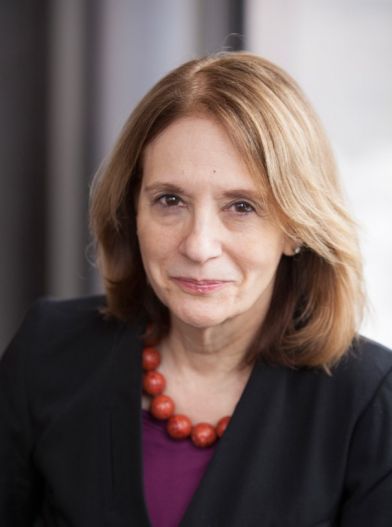
Mabel Berezin, IES Director
Mabel Berezin, IES director, on the podcast “Democracy! Démocratie!”
Additional Information
IOM: Managing Migration for the Benefit of the West

December 5, 2023
11:30 am
125 McGraw Hall
Results of a four-year team research project; featuring study author
Dr. Nidžara Ahmetašević, an award-winning journalist, scholar, and activist
Followed by
Critical Border and Refugee Studies: The Keywords Project
Featuring student research presentations from FGSS 3400/AMST3420/ANTHR 3402/GOVT 3401
Learning from Movements: Asylum, Refuge, and Activism across and beyond Borders
Lunch will be served
Additional Information
Program
Institute for European Studies