
LACS Core Faculty
Alex Nading
Director, Latin American and Caribbean Studies Program
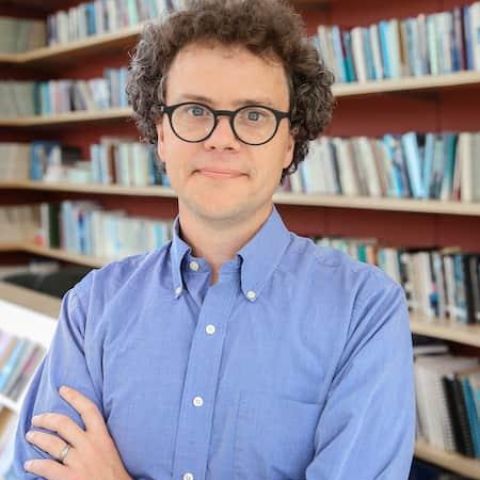
Alex Nading is a medical and environmental anthropologist in the College of Arts and Sciences. His research, mostly focused on Nicaragua, has examined transnational campaigns against dengue fever, bacterial disease, and chronic kidney disease, as well as grassroots movements to address these issues.
He is the former editor (2021-24) of Medical Anthropology Quarterly and author of two books, "Mosquito Trails: Ecology, Health, and the Politics of Entanglement" (2014) and "The Kidney and the Cane: Planetary Health and Plantation Labor in Nicaragua" (2025).
Additional Information
Program
Role
- Faculty
- LACS Core Faculty
- LACS Director
- LACS Steering Committee
- Einaudi Faculty Leadership
Contact
Email: amn242@cornell.edu
Casey Schmitt

Assistant Professor, History
Casey Schmitt is a historian of early America and the Caribbean, with particular interests in human trafficking, colonization, and illicit economies over the course of the sixteenth and seventeenth centuries. In her research and teaching, she is interested in tracing individuals who crossed imperial boundaries—by choice and by coercion—in order to understand how processes like colonialism, imperialism, slavery, and trade functioned in the interstices of early modern empires.
Additional Information
Mildred Warner

Professor, City and Regional Planning, and Global Development
Mildred Warner is an international expert on restructuring local government services, how to plan for more child- and age-friendly cities, and how to promote environmental sustainability at the local level. Her research on Latin America focuses on infrastructure, water, local fiscal stress, sustainability and rural development; rural economic development and local service delivery.
Additional Information
Wendy Wolford
Acting Director, Einaudi Center
Additional Information
Mary Jo Dudley

Director, Cornell Farmworker Program; Senior Extension Associate, Global Development
Mary Jo Dudley is the Director of the Cornell Farmworker Program (a collaborative effort of CALS, CHE and CCE), and a faculty member of the Department of Global Development. She has extensive research interests in immigrant workers, farmworkers, US-Latin American relations, migration from Latin America to the US, and immigrant communities in the US.
Additional Information
Judith Byfield
Judith and Madeline Anbinder Professor
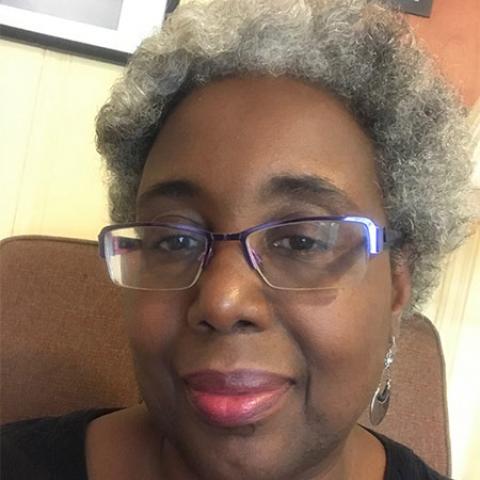
Judith Byfield’s primary research focus is women's social and economic history in Nigeria. Her research includes in-depth studies on tie-dye production, World War II, Nigerian women's political activism and nationalism.
She is currently a Fulbright Global Scholar beginning a new project, "Curry Goat and Gari: West Indian Women in 20th-Century Lagosian Society." It is inspired by the West Indian women she met during her research trips to Nigeria.
Additional Information
Viranjini Munasinghe

Associate Professor, Anthropology and Asian American Studies
Viranjini Munasinghe's research interests focus on nationalism, race and ethnicity, creolization and indigeneity, Asian American Studies, South Asian Diaspora, Labor and Political Economy of Plantation Societies, Historical Anthropology, Anthropological Theory, Comparison, Postcolonial Theory. Her geographic research area is Trinidad and the Asian Diaspora in the Americas.
Geographic Research Area: Trinidad and the Asian Diaspora in the Americas
Additional Information
Matthew Velasco
Associate Professor, Anthropology
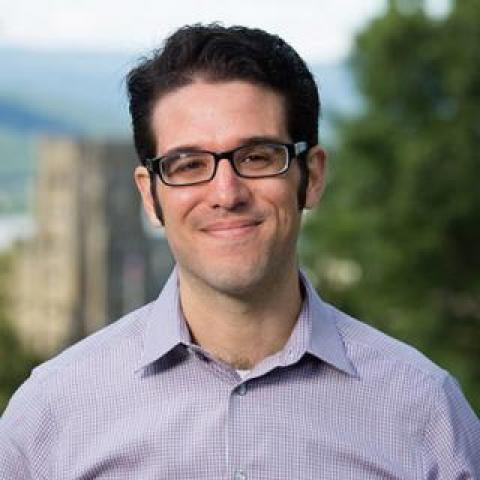
Matthew Velasco is an anthropological bioarchaeologist who studies ancient populations of the Peruvian Andes through the analysis of their skeletal remains. His research explores the emergence of novel ethnic identities and cultural traditions during the era preceding and encompassing Inka imperial expansion in the 15th century. To explore how these dynamic social transformations impacted the lived experience of the body and its treatment at death, he analyzes and interpret indicators of social identity, biological relatedness, diet, and health status written on the human skeleton.
Additional Information
Irina Troconis

Assistant Professor, Romance Studies
Irina Troconis’s areas of specialization include: Memory Studies, Venezuelan Studies, Politics and Performance, Affect Theory, and Digital Humanities. Her book project, Spectral Remains: Memory, Affect, and the State in the Afterglow of Hugo Chávez’s Bolivarian Revolution, explores through the lens of spectrality the memory narratives and practices developed around the figure of Venezuelan president Hugo Chávez in the seven years following his death. She is also working on two new research projects. The first examines the performance work of Venezuelan artists in the diaspora.
Additional Information
Amanda Rodewald

Garvin Professor of Ornithology
Amanda Rodewald’s research and interests focus on population and community responses to changes in land use, climate, invasive species, and disturbance regimes; socioecological dynamics and conservation in working landscapes; eco-evolutionary dynamics in human-dominated and urbanizing systems; sustainable management of temperate and tropical forests; conservation planning and prioritization, innovative finance and market-based instruments to support conservation and communities.