
Latin American and Caribbean Studies
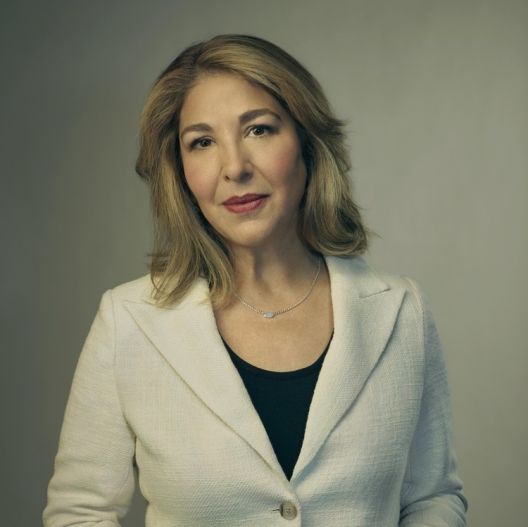
Naomi Klein: Doppelganger Politics
October 23, 2024
5:00 pm
Biotechnology Building, G10
Bartels World Affairs Lecture
The bestselling author of Doppelganger: A Trip into the Mirror World joins us for a personal journey down the conspiracy rabbit hole to explore why our political sphere has become dangerously warped.
When author and social activist Naomi Klein discovered a writer with the same first name but radically different political views was chronically mistaken for her, it seemed too ridiculous to take seriously—until suddenly it wasn’t. As the pandemic took hold, she absorbed a barrage of insults from her doppelganger’s followers.
Klein’s 2023 book Doppelganger follows Other Naomi into a digital underworld of conspiracies, anti-vaxxers, and right-wing paranoia. Klein’s journey reveals mirrored concerns and unlikely connections between well-meaning liberals and the right-wing voices that relish “owning” them.
After a talk sharing her insights, Klein joins distinguished global democracy experts from Cornell to lift the lid on this surreal election moment and examine how our politics have become so twisted and polarized. What can we do to escape our collective vertigo and get back to fighting for what really matters?
***
Panelists
Read election remarks from the panelists in Chronicle coverage of global democracy activities on campus.
Thomas Garrett, Einaudi Center Lund Practitioner in Residence, Distinguished Global Democracy Lecturer (Jeb E. Brooks School of Public Policy)Suzanne Mettler, John L. Senior Professor of American Institutions, Department of Government (College of Arts and Sciences)Kenneth Roberts (moderator), Einaudi Center Democratic Threats and Resilience faculty fellow, Richard J. Schwartz Professor, Department of Government (A&S)
***
This event is sold out.
All free tickets are reserved. If you don’t have a ticket but would like to attend, please arrive 15 minutes early to be put on our wait list.
A reception with refreshments will follow the lecture and panel.
Lecture and Panel: 5:00 | G10 Biotechology BuildingReception: 6:30-7:30 | Biotechnology Building Atrium
***
About Naomi Klein
Naomi Klein is an award-winning journalist and international bestselling author of nine books published in over 35 languages, including No Logo, The Shock Doctrine, and her most recent book Doppelganger: A Trip into the Mirror World (2023). A columnist for The Guardian, her writing has appeared in leading media around the world. She is a tenured professor of climate justice at the University of British Columbia, founding codirector of UBC’s Centre for Climate Justice, and honorary professor of media and climate at Rutgers University.
About the Bartels World Affairs Lecture
The Bartels World Affairs Lecture is a signature event of the Mario Einaudi Center for International Studies. This flagship event brings distinguished international figures to campus each academic year to speak on global topics and meet with Cornell faculty and students, particularly undergraduates. The lecture and related events are made possible by the generosity of Henry E. Bartels ’48 and Nancy Horton Bartels ’48.
Additional Information
Program
Einaudi Center for International Studies
Reppy Institute for Peace and Conflict Studies
East Asia Program
Southeast Asia Program
Latin American and Caribbean Studies
Institute for African Development
Institute for European Studies
South Asia Program
Migrations Program
Will Directly Electing Judges Help Mexico Fight Corruption in its Justice System?

Gustavo Flores-Macias, LACS
Gustavo Flores-Macias, professor of government, says “The need to tackle corruption in the Mexican judiciary is very real. The country's legal system disproportionately favors the affluent and the well-connected. It is overburdened and slow. This is true at all levels, which is why impunity is widespread in Mexico.”
Additional Information
Honeymoon for Mexico's Sheinbaum Tainted by Mentor's Reform

Gustavo Flores-Macias, LACS
Gustavo Flores-Macias, professor of government, says “The Mexican judiciary is, by most accounts, in desperate need of reform. The question is, is this really the right way to reform it?”
Additional Information
Jacqueline Gerson

Assistant Professor, Department of Biological and Environmental Engineering
Jacqueline Gerson is an aquatic biogeochemist. She is interested in understanding how human activity alters the biogeochemical cycling of nutrients and contaminants across the watershed. Her interdisciplinary approach recognizes humans as part of the ecosystem and investigates the impact of ecosystem perturbations on humans and wildlife. She has worked in vineyards in California, the Adirondack Mountains of New York, mountaintop coal mining areas of West Virginia, and gold mining areas of the Peruvian Amazon and Senegal.
Additional Information
Program
Role
- Faculty
- LACS Faculty Associate
Contact
Candelaria Garay

Associate Professor, Global Labor and Work
Candelaria Garay is an associate professor in the Department of Global Labor and Work at Cornell University’s School of Industrial and Labor Relations. Her research interests include social policy and redistribution, labor and social movements, and environmental and health policy. Her research has appeared in journals such as Comparative Political Studies, Comparative Politics, Politics & Society, Studies in Comparative International Development, and World Development.
Additional Information
Portuguese Conversation Hour

December 9, 2024
2:00 pm
Stimson Hall, G25
Come to the LRC to practice your language skills and meet new people. Conversation Hours provide an opportunity to use the target language in an informal, low-pressure atmosphere. Have fun practicing a language you are learning! Gain confidence through experience! Just using your new language skills helps you learn more than you might think. Conversation Hours are open to any learner, including the public.
Additional Information
Program
Latin American and Caribbean Studies
Spanish Conversation Hour
December 9, 2024
3:00 pm
Stimson Hall, G25
Come to the LRC to practice your language skills and meet new people. Conversation Hours provide an opportunity to use the target language in an informal, low-pressure atmosphere. Have fun practicing a language you are learning! Gain confidence through experience! Just using your new language skills helps you learn more than you might think. Conversation Hours are open to any learner, including the public.
Additional Information
Program
Latin American and Caribbean Studies
Study Abroad in Chile Information Session

September 18, 2024
4:45 pm
164 Klarman (Romance Studies Lounge)
Learn about study abroad in Chile from the Resident Director of the CASA Santiago program. Through CASA, undergraduates with advanced Spanish (one class beyond SPAN 2095) study at Chilean universities. CASA also offers a special Chilean history and culture course where you meet local experts and travel to the north and south to explore different ecosystems and meet different cultural groups.
Additional Information
Program
Latin American and Caribbean Studies
20th Anniversary Screening of Machuca with Co-Writer Roberto Brodsky

October 17, 2024
7:00 pm
Cornell Cinema
LACS Public Issues Forum
Co-sponsored by Cornell Cinema, Literatures in English and Creative Writing, History of Art and Visual Studies, Performance and Media Arts, Romance Studies, and Society of the Humanities
Chile ’73: Fifty Years Later
Machuca follows the lives, over the course of a school year in 1972/73, of two young schoolboys in Santiago, Chile. One is from an upper-middle-class family; the other from a working-class family. Both attend the private boys school St. Patrick’s, whose principal seeks reduce the class segregation typical to Chile at the time and to follow the lead of Salvador Allende’s Popular Unity government. The story follows the boys’ friendship and its relationship to the politics of the time, including the growing tensions in the city around Allende’s government and the right-wing reaction that would eventually result in a coup d’etat on September 11, 1973. Based on a screenplay written by Roberto Brodsky and director Andrés Wood whose own experiences mirror those of the protagonists, Machuca was released to wide acclaim in 2004. For the 20th anniversary of its release, this screening will include a talkback after the film with writer Roberto Brodsky.
Additional details can be found on the Cornell Cinema site.
Additional Information
Program
Einaudi Center for International Studies
Latin American and Caribbean Studies
Sports and Nation Building in Post-Independence Jamaica

November 5, 2024
12:20 pm
Uris Hall, G08
Abstract:
Sports came to play a significant role in nation building in a number of countries – especially those newly-independent states emerging on the end of decolonising movements in the middle of the twentieth century. Jamaica was no exception. Here, the process of nation-building was one that had to confront the legacies of European colonization and enslavement. It was almost inevitable that sport would play a key role in these processes. Jamaica had intimate experience with the power of sport as a political and ideological weapon in colonial times. Cricket in particular had initially served as a tool of British cultural imperialism and was one of the main ways in which agents and agencies of this mission sought to disseminate British cultural values. It was also initially an exclusive institution characterised by significant race and class prejudices. However, cricket (and other sports) became a medium of resistance to the very ideologies it was meant to inculcate, and in so doing, had by the middle of the twentieth century come to function as an ideological weapon of an anti-colonial, creole nationalism. In post-independence Jamaica, sport increasingly featured in public policy and resources were dedicated to the promotion and development of sporting activities. This presentation seeks to examine the ways in which successive Jamaican governments have employed sport to achieve various developmental objectives; but will also look more broadly at the impact of sport on nation-building on Jamaica. It argues that while sport did indeed help to achieve a number of important objectives, we must be cognisant of ways in which this influence might be overstated as well as ways in which sport served to undermine these objectives.
Bio:
Dr Julian Cresser is Lecturer in History, and Head of the Department of History and Archaeology, University of the West Indies, Mona Campus. His main research interest is sports studies – particularly, the role of sport in nation building in the Caribbean. He has authored and co-authored journal articles on the history of cricket in Jamaica and links between participation in sport and juvenile delinquency in the Caribbean. In addition, Dr Cresser has an interest in the use of digital media in the teaching and presentation of History. His courses include: Digital History, Sport in the Caribbean since 1850, and the Idea of Caribbean Nationhood. He has also taught extensively in the Department’s Heritage programmes, and has served on the board of the Jamaica National Heritage Trust. Before joining the Department, he worked as a Senior Research Fellow at the African Caribbean Institute of Jamaica/Jamaica Memory Bank, where his work involved archival and ethnographic research on Afro-Caribbean intangible cultural expressions. In 2019, Dr Cresser was the O’Connor Visiting Assistant Professor in Caribbean Studies at Colgate University, in Hamilton, New York.
Additional Information
Program
Einaudi Center for International Studies
Latin American and Caribbean Studies