
Latin American and Caribbean Studies
Art and Migration

June 9, 2023
9:00 am
Goldwin Smith Hall, G64
The often-fraught pathways of human migration come alive through art. From storytelling to innovative sculpture, theater, cartoons, and painting, students, faculty, and artists supported by the Migrations Global Grand Challenge will tell their stories and showcase their art.
Anindita Banerjee, associate professor of comparative literatureDebra A. Casillo, Emerson Hinchliff Professor of Hispanic Studies and professor of comparative literatureJuan Harmon, MFA creative writing candidatePedro Molina, Nicaraguan cartoonist and journalistNatasha Raheja, assistant professor of anthropologySharifa Sharifi, Afghan artistGemma Rodrigues (Herbert F. Johnson Art Museum) and Eric Tagliacozzo (history) will moderate.
Register now.
Additional Information
Program
Einaudi Center for International Studies
Latin American and Caribbean Studies
South Asia Program
Testimonies of Migration: International Studies Summer Institute 2023

June 27, 2023
9:00 am
A.D. White House
Registration for this event is now closed. You can ask to be put on the waitlist be emailing SBP84@Cornell.edu
The 2023 International Studies Summer Institute (ISSI) will explore testimonies of migration. The ISSI is a professional development workshop for practicing and pre-service K–12 educators hosted annually by the Mario Einaudi Center for International Studies, in collaboration with the South Asia Center at Syracuse University.
During this cross-curriculum conference, educators will engage in discussions, workshops, and lectures that explore and amplify personal narratives of migration. Professors, postdoctoral fellows and other scholars from Cornell University and Syracuse University will share their cutting-edge research on migrant experiences from across different regions of the world, including South Asia, Southeast Asia, Latin America and the Caribbean, and Sub-Saharan Africa. Speakers will focus on individual narratives, as well as systemic reasons for migration, such as politics, conflict, and climate change.
Sessions will also explore culturally responsive practices when working with migrant students and discussing migrant narratives. Teachers will gain tools for leading conversations and developing projects with their students about migrant experiences.
Teachers will leave the conference with concrete resources to use in their classrooms, a deeper awareness of how to enter into conversation with students about their own and others’ migration experiences, and an understanding of contemporary migrant experiences from across the world.
The 2023 ISSI will be applicable for elementary, middle, and high school educators from all subject areas. Participating teachers will have the option to complete a lesson plan for PD credit that incorporates content from the workshop, with the support and guidance of our outreach staff.
Conference Schedule:
8:45-9:00 Breakfast and check-in
9:00-9:15 Introductory Remarks by Rachel Beatty Riedl
9:15-10:20 Panel: "Ethical and culturally responsive engagement with migrant narratives"
Panelists: Farah Bakaari, Juhwan Seo, Rose Anderson
Moderator: Shannon Gleeson
10:20-10:30 Break
10:30-11:30 Workshop with Mary Jo Dudley, “Supporting Immigrant Families in Schools”
11:30-12:00 Networking and reflection activity
12:00-1:00 Lunch
1:00-1:45 Breakout Sessions
Focus: Project-based learning around themes of migration (same sessions offered twice)
Option 1: Nicole Thuzar Tu-Maung, “Photovoice Methodology” Option 2: Maria Gimma, “Understanding the Global Phenomenon of Migration, a Project-Based Curriculum” Option 3: Nausheen Husain, “Storytelling With Data” 1:45-1:50 Break
1:50-2:35 Breakout Sessions, repetition of above options
2:35-3:00 Break / walk to Johnson Art Museum
3:00-4:00 Workshop with Carol Hockett and Maryterese Pasquale-Bowen, “How the Light Gets In: Contemporary Art and Migration”
4:00-4:20 Introduction to Einaudi Resources with Sarah Plotkin
4:20-4:30 Closing remarks with Sarah Pattison
Sponsored by: Syracuse University, Moynihan Institute for Global Affairs, South Asia Center, Cornell University’s Mario Einaudi Center for International Studies, Southeast Asia Program, South Asia Program, Institute for African Development, East Asia Program, Latin American and Caribbean Studies, Institute for European Studies, Migrations Initiative, TST-BOCES, U.S. Department of Education Title VI Program
Additional Information
Program
Einaudi Center for International Studies
East Asia Program
Southeast Asia Program
Latin American and Caribbean Studies
Institute for African Development
Institute for European Studies
South Asia Program
Announcing 2023 Awards

Einaudi Seed Grants Finding Fertile Soil
Read about new awards and research funded in 2022, including Alex Flecker (Amazon aquaculture) and Victoria Beard (Global Survey of City Leaders).
Additional Information
13 Cornellians Awarded Fulbright U.S. Student Awards

Thirteen Cornell students have been selected to research and teach English abroad with funding from the Fulbright U.S. Student Program.
Cornell's 2023–24 Fulbright students include six graduate students and seven graduating undergraduates whose time abroad will increase mutual understanding between the people of the United States and the people of other countries.
They will join the ranks of over 500 Cornellians who have traveled across the globe as Fulbrighters since the 1940s.
Fulbright Students 2023–24
Graduate Students
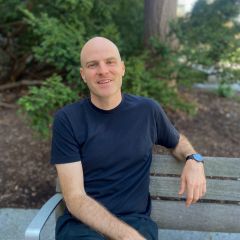
Michael Cary, Development Sociology
Paraguay
Project Title: Remaking Ñeembucú: Infrastructure, Rice Production, and Wetland Conversion in Paraguay
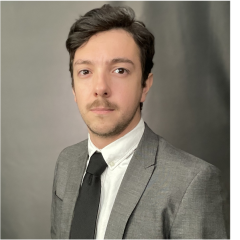
Duncan Eaton, History
Slovak Republic
Project Title: Nation-Building and Agrarian Politics in Interwar Eastern Slovakia
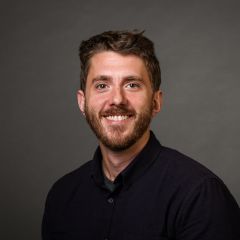
Jarvis Fisher, Development Sociology
Senegal
Project Title: Rice Production and Agroecology in the Senegal River Valley

Giselle Hobbs, Painting and Print Making
France
Project Title: The Aftermath of the Lockdown: Comparative Study of Paris, France, and the U.S.
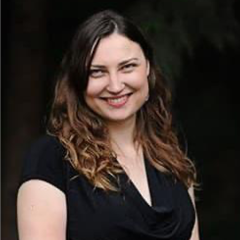
Sasha Prevost, Religious Studies
Israel
Project Title: On the Path of Two Abrahams: Contemporary Jewish Sufism in Israel
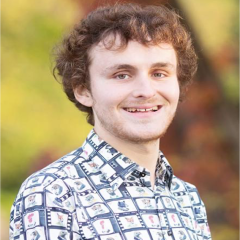
David Rubinstein, History
Poland
Project Title: Coal Town Cosmopolitanism: Jews, Germans, and Poles's Visions of Home in Postwar Walbrzych
Undergraduate Students
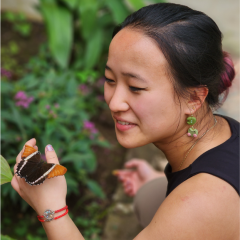
Laura Chang '23, Anthropology
Ecuador
Project Title: Intersections in Reproductive Health: The Integration of Kichwa and Western Medicines
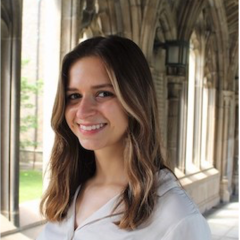
Maria DiGiovanni '23, Development Studies
Italy
Project Title: How Young Italians in Cosenza, Calabria Maintain Sustainable Rural Livelihoods
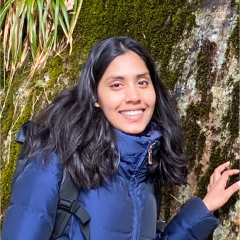
Farzana Hossain '23, Architecture
India
Project Title: Cultivated Landscapes: The Making and Remaking of Agriculture
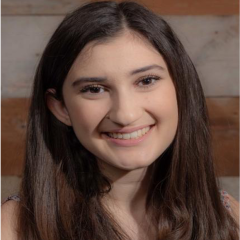
Sarah Hughner '23, Government and English
Timor-Leste
English Teaching Assistantship

Catherine Kopp '23, Applied Economics and Management
Czech Republic
English Teaching Assistantship
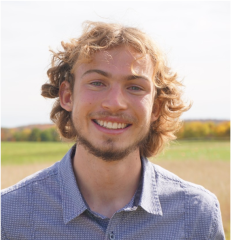
Dylan Rodgers '23, Agriculture
Nepal
Project Title: Feasibility of Small-Scale Recirculating Aquaculture Systems in Nepal
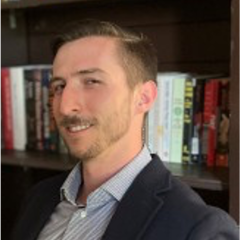
Evan Sierra '23, Government
Kazakhstan
English Teaching Assistantship
Will you be next?
Fulbright at Cornell is administered by the Einaudi Center. There are opportunities for undergraduate students, graduate students, and recent Cornell alumni to apply—Einaudi supports you throughout the process!
Additional Information
Decolonial Love: Learning to Redream Dangerously Again

May 14, 2023
11:00 am
Schwartz Center for Performing Arts, Film Forum
How might we learn to redream dangerously again?
Join us for a two-day symposium that brings together scholars, creative writers, and activists to discuss and envisage how the theories, practices, and visions of the roles of love, identity, and land are complexly intertwined with (trans)national structured challenges.
With a commitment to "learning to redream dangerously again" during a historical moment of an unceasing remonstration of the intersectional inequality and injustice entrenched in the United States and other localities, the 2023 cohort of the Einaudi Center's Global Racial Justice graduate fellows will host the "Decolonial Love" symposium. The symposium aims to reconstruct and reimagine the multifacetedness of individuals and the complexity of their ties with the self, others, and the natural world through the lens of coloniality and decoloniality.
Hosted by the Einaudi Center as part of its inequalities, identities, and justice global research priority, and co-sponsored by Migrations: A Global Grand Challenge, the American Indian and Indigenous Studies Program, and the Bronfenbrenner Center for Translational Research.
Reserve your seat today!
Saturday, May 13
Registration, 12:30 p.m. EDT
Opening Remarks, 1:00 p.m. - 1:15 p.m. EDT
Mohamed Abdou (Cornell University)Keynote Address, 1:15 p.m. - 2:30 p.m. EDT
Mariana Mora (Center for Research and Higher Studies in Social Anthropology), "Towards a politics of listening and sensorial truths, the struggle for racialized justice for the 43 disappeared students of Ayotzinapa, Mexico"Panel I - Identities, 2:45 p.m. - 4:15 p.m. EDT
Moderator: I-An "Amy" Su (Cornell University)
Alaina E. Roberts (University of Pittsburgh), "Is Black and Indigenous Reconciliation Possible?"María Elizabeth Rodríguez Beltran (Rutgers University), "Redefining Black Caribbeanness: Peripheral Relationships Decentering the Colonial Family"Michele Cheng (Cornell University), "The Aftermath of Colonization and Colonialism: Musical Identities of a 1.5 Generation Taiwanese American"Amber Starks, "The Disenfranchising of Black Indigeneity from Global Indigeneity"Alivia Moore (Cornell University), "Truth Bias and Intergroup Dynamics"Film Screenings and Discussions, 4:30 p.m. - 5:30 p.m. EDT
Moderator: Chinasa T. Okolo (Cornell University)
1000 Gifts of Decolonial LoveEgúngún (Masquerade)Counterfeit KunkooCane/CainReception, 5:30 p.m. - 6:30 p.m. EDT
***
Sunday, May 14
Registration and Lunch, 11:00 a.m. - 12:00 p.m. EDT
Poetry Reading and Color Therapy, 12:00 p.m. - 1:00 p.m. EDT
Moderator: Ariel Dela Cruz (Cornell University)
Billy-Ray Belcourt (University of British Columbia)Valeen JulesErica Violet LeePanel II - Solidarities of the Earth: Envisioning and Enacting Reparative Land Justice, 1:00 p.m. - 2:30 p.m. EDT
Moderator: Kendra Kintzi (Cornell University)
Enrique Salmón (Cal State East Bay), "We Still Need Rain Spirits: Cultivating Indigenous Land-based Relationships, Resilience, and Identity"Kristen Bos (University of Toronto), "Beads Land"shakara tyler (University of Michigan)Troy Richardson (Cornell University), "Land Labors: Smallest Gestures, Empirical Intimacies"Panel III - Decolonial Love, 2:45 p.m. - 4:15 p.m. EDT
Moderator: Karina Edouard (Cornell University)
Gina Goico (Cornell University), "Envisioning Possibilities: Naming and Archiving Memories of Love and Care from the Dominican Republic"Ariel Dela Cruz (Cornell University), "Don't You Remember?: Intergenerational Filipinx Care and Refusal"Erica Violet Lee, "Inner City Love Notes: On Street Graffit, Protest Art, and Other Signs of Blooming"Closing Remarks, 4:15 p.m. - 4:30 p.m. EDT
Mohamed Abdou (Cornell University)
Additional Information
Program
Einaudi Center for International Studies
Southeast Asia Program
Latin American and Caribbean Studies
Eco-Innovation in Brazil and US
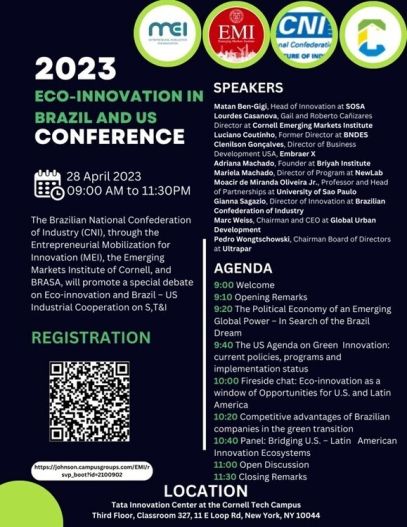
April 28, 2023
9:00 am
Tata Conference Center, Room 327
Register for free: https://johnson.campusgroups.com/EMI/rsvp_boot?id=2100902
Join us for our upcoming event: “Eco-Innovation in Brazil and US." The Cornell Emerging Markets Institute is partnering with the Brazilian National Confederation of Industry (CNI) and the Brazilian Student Association at Cornell (BRASA) to talk about industry cooperation in science, technology, and innovation. Our diverse panel of speakers includes researchers and industry leaders working in Brazil, the US, and the international community at broad.
Additional Information
Program
Einaudi Center for International Studies
Latin American and Caribbean Studies
Dairy farming in Latin America: A story of growth, sustainability, and food security

May 3, 2023
12:25 pm
Stocking Hall, 201
In Latin America, dairy production faces serious challenges such as low-quality forage, diseases (infectious, metabolic, and parasitic), climate change, and insufficient access to technology, markets, infrastructure, and resources. Nevertheless, the dairy industry directly impacts the socioeconomic status of millions of families through its contribution to income, food security, and access to protein. A review of unique pasture-based dairy systems located mainly in lowlands (valleys and plains) and highlands (Andes Mountains) will provide context for a presentation of applied field research aiming to improve dairy cows’ health and quality of life for dairy farmers in Colombia.
About the Speaker
Dr. Francisco Leal Yepes is originally from Colombia, where he obtained his DVM degree. In 2011, he moved to Ithaca, NY, and worked as a research assistant for two years. Then, he started his Ph.D. in 2013 and a residency in Ambulatory and Production Medicine in 2016 at Cornell University. From 2018 until 2020, Franco was a Clinical Instructor in Ambulatory and Production Medicine at Cornell University. Franco started as an assistant professor of Agricultural Animal Production at the College of Veterinary Medicine, Washington State University, in October 2020. He provides dairy farms with advice on primary care and preventive medicine while teaching senior veterinary students.
Additional Information
Program
Einaudi Center for International Studies
Latin American and Caribbean Studies
Panel on Indigenous-European Encounters in the Caribbean and Brazil

May 2, 2023
4:30 pm
Martha Van Rensselaer Hall, G155
A LACS 60th Anniversary Special Seminar
In this event, historians Tessa Murphy (Syracuse) and Heather Roller (Golgate) will join LACS director Ernesto Bassi in a conversation about Murphy’s and Roller’s recently published, award-winning books The Creole Archipelago: Race and Borders in the Colonial Caribbean (2021) and Contact Strategies: Histories of Native Autonomy in Brazil (2021).
Murphy and Roller will uncover the multiple ways indigenous people in the Lesser Antilles and Brazil encountered Europeans, expanding the universe of interactions beyond futile efforts of resisting European encroachment. Their books show how indigenous people in the eastern Caribbean and the Brazilian interior prevented Europeans from establishing sovereignty in what the Kalinagos, the Mura, and other indigenous groups considered their territories. Successfully deploying technology and diplomacy, strategically engaging in trade and warfare, and even developing alliances with other newcomers, were all part of the toolkit indigenous groups used to maintain their treasured autonomy.
The Creole Archipelago won the 2022 James A. Rawley Prize, granted by the American Historical Association, to recognize outstanding historical writing that explores aspects of integration of Atlantic worlds before the 20th century, as well as the 2022 FEEGI book prize, granted by the Forum on Early-Modern Empires and Global Interactions, for its groundbreaking examination of “islands beyond empires” and of local/creole and indigenous instrumentality in forging a Creole Archipelago.
Contact Strategies won the 2022 Friedrich Katz Prize, granted by the American Historical Association, to the best book published in English focusing on Latin America, including the Caribbean, as well as the 2022 Sérgio Buarque de Holanda Prize for the Best Book in Social Sciences, granted by the Brazil Section of the Latin American Studies Association (LASA).
Tessa Murphy, The Creole Archipelago: Race and Borders in the Colonial Caribbean (Philadelphia: University of Pennsylvania Press, 2021). An Associate Professor of History at Syracuse University. Her research and teaching interests lie in the history of the colonial Americas, broadly defined to include the Caribbean, Central, and South America, and what are now Canada and the United States.
Heather Roller, Contact Strategies: Histories of Native Autonomy in Brazil (Stanford: Stanford University Press, 2021). A Professor of History and Environmental Studies at Colgate University, where she teaches courses on global environmental history, Brazil and Amazonia, and the histories of Indigenous peoples in the Americas. In addition to Contact Strategies, she is the author of Amazonian Routes: Indigenous Mobility and Colonial Communities in Northern Brazil.
Additional Information
Program
Einaudi Center for International Studies
Latin American and Caribbean Studies
Here’s How Other Democracies Have Prosecuted Political Leaders

Gustavo Flores-Macias, LACS
Gustavo A. Flores-Macías, professor of government, discusses democracy in Brazil.
Additional Information
Panel: Nationalism Unsettled

April 28, 2023
3:00 pm
Uris Hall, G08
Nationalism Unsettled presents a critical exploration of national imaginaries that disturb, defy or deviate from mainstream nation-state narratives, demanding renewed consideration of the nature of nationalism. In tackling this subject, we bring to the table speakers with cross-disciplinary expertise, spanning history, sociology, geography and the arts, and consider case studies spanning the Caribbean of the late 18th century, China under Mao, and contemporary Venezuela and Russia. At a time when nationalism globally is being re-energized through shifting and newly affecting forms, we invite you to join us in taking a deep dive into this vital subject, harnessing the power of a comparative perspective.
Discussant: Begüm Adalet, Department of Government
Format: 10 minute talk by each panelist on their individual research topic, followed by a 20 minute talk by the discussant, and up to 60 minutes for responses to the discussant and Q&A.
Presentations:
Ernesto Bassi, Department of History: Economic proto-nationalism or creole patriotism? Eighteenth-century visions of prosperity and the broken promises of empire
Mara Yue Du, Department of History: What Was Loving China: Revolutionizing Patriotism under Mao
Irina R. Troconis, Department of Romance Studies: Nation, Unsettled: Translucency, Memory, and Materiality in the Venezuelan Diaspora
Leila Wilmers, Department of Sociology: The myth of national resilience and non-statist imaginaries of the Russian nation
Register for viewing on Zoom.
This event is hosted by the Institute for European Studies as part of the Einaudi Center's democratic threats and resilience research priority. It is co-sponsored by Latin American and Caribbean Studies and the East Asia Program.
Additional Information
Program
Einaudi Center for International Studies
East Asia Program
Latin American and Caribbean Studies
Institute for European Studies