
Latin American and Caribbean Studies
Representation and Resistance: The History of Chinese Coolies in 19th-Century Cuba (LACS Weekly Seminar Series)

May 2, 2022
1:00 pm
G-01 Stimson Hall
This talk by Mey-Yen Moriuchi (LaSalle University) explores the history of Chinese migration to Cuba, which began with the coolie trade in the mid-nineteenth century. Between 1847 and 1874, approximately 150,000 Chinese were brought to Cuba under termed contracts to fulfill a labor shortage on the sugarcane plantations. They suffered harsh conditions and were treated severely.
Chinese coolies were generally viewed as dutiful and submissive, and their voices have largely been confined to the margins of literature and history. However, the 19th-century testimonies and illustrations of Chinese coolies denounce the savagery and cruelty of the Spanish overseers, while simultaneously revealing that the coolies were not passive victims. The coolies demonstrated agency, courage, and resistance in the act of migrating, in their words, and rebellions.
Coolie labor played a major role in reshaping Cuba’s sugar economy and its existing systems of production. In addition, the amplified presence of the Chinese in Cuba challenged existing paradigms of race and nation. Cuban society was no longer black and white. The growing Chinese population forced a reconsideration of this traditional binary vision of society and, in the formation of a new Chinese-Cuban identity, complicated notions of what constituted cubanidad.
This event is co-sponsored by the Einaudi Center's East Asia Program.
Additional Information
Program
Einaudi Center for International Studies
Latin American and Caribbean Studies
East Asia Program
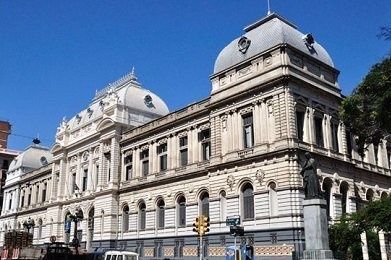
“Culture, Nation and the People: a Century of University Extension in Latin America,” by Agustin Cano, LACS Seminar Series
March 14, 2022
1:00 pm
Stimson Hall, G01
The European university extension tradition started in the decade of 1870 in Cambridge and Oxford universities, and rapidly spread through Europe in the form of conferences of cultural diffusion and “Popular University”. In its origin, university extension is the result of two interconnected processes: the European university reform under the German model and the concern of modern states to build national systems of general literacy. In the beginning, extension practices expressed the pedagogical optimism of Enlightenment, the hygienist influence, and the democratization of knowledge and culture, particularly among two groups of people excluded from a university education: workers and women. University extension was conceived as a “movement”, and that is why it has transformative potential.
This university extension tradition arrived in Latin America in the early Twentieth Century. By the connection with the university, social, and political processes in Latin America, and by being part of the program of the University Reform Movement, known as “La Reforma de Córdoba”, university extension suffered a deep transformation, and now we can talk about a Latin American extension, from a reformist tradition. From these processes, university extension gained conceptual complexity and depth, ample and rich repertoire of practices, and, at the same time, a deeper ambiguity in its meanings and definitions. As a concept located in the unstable frontiers that the university generates with its surroundings, our reflection on extension requires us to go beyond the academic field and consider the historical, social, and political processes that overdetermine them.
The presentation will cover this topic and answer the following questions: What subjects, pedagogical conceptions, and political orientations articulated the Latin American university extension in different historical times, from the Twentieth Century to the present? What subjects, pedagogical and epistemological conceptions, and what meanings and political orientations were challenged, tensioned, or articulated in the production of university extension in Latin America? What lessons can we draw to think around the challenges of the relationship between university and society today?
Agustín Cano Menoni received his BA in Psicology from Universidad de la República (Uruguay), his Master in Social Project Management from LUMSA-Università (Rome, Italy) and his Ph.D. in Pedagogy from Universidad Nacional Autónoma de México (UNAM). He is currently a professor, extensionist, and researcher at the Universidad de la República de Uruguay (UDELAR), where coordinates the Núcleo de Intervención e Investigación en Educación y Territorio of the Programa Integral Metropolitano of UDELAR. He is a undergraduate and graduate professor at the Institute of Education of the Faculty of Humanities and Education Sciences of UDELAR, and a member of the National System and Researchers of Uruguay. He is the author of the book "Cultura, Nación y Pueblo: la extensión universitaria en la UNAM (1910-2015)", published in 2019 in Mexico by the UNAM, as well as numerous articles and chapters of books on topics of university extension and Latin American University.
Additional Information
Program
Einaudi Center for International Studies
Latin American and Caribbean Studies
"Football/Soccer: The Fiction Machine" by MartÍn Caparrós (A.D. White Professor-at-Large), LACS Public Issues Forum

March 7, 2022
1:00 pm
Stimson Hall, G01
This is a hybrid lecture. Professor Caparrós will be speaking in-person at G01 Stimson Hall as well as virtually, use the link below to register to attend virtually.
MartÍn Caparrós is a distinguished Argentine author, writer, and narrative journalist, and one of the fundamental Latin American voices of our time. In 2017, he was awarded the prestigious Maria Moors Cabot award by the Columbia Graduate School of Journalism, for outstanding reporting on America; specifying work on his nonfiction book-length work El Hambre (Hunger: The Mortal Crisis of Our Time, 2016), in which the author visits both the richest and poorest people of the earth in order to explore why hunger is one of today’s big unresolved issues. The book has been translated into 14 languages.
He was the recipient of the prestigious Herralde Prize (2011) for his novel, Living; the Planeta Prize (2004) for his novel, Valfierno; and the Guggenheim Fellowship (1994). He also writes biweekly columns for The New York Times and Spain’s El País. His expertise interconnects with a range of cross-disciplinary topics including inter-American dialogue, food insecurity, and climate change.
This event is part of Caparrós’s first visit as an A.D. White Professor-at-Large (ADW-PAL) to Cornell. His on-campus residency runs March 7-11, 2022. He was elected as an ADW-PAL in 2019. His appointment runs through 2025.
Additional Information
Program
Einaudi Center for International Studies
Latin American and Caribbean Studies
"Fragile Knowledge: Owning the Scars of Second Generation Holocaust Survivors in Latin America" by Annette Levine, LACS Seminar Series

February 14, 2022
1:00 pm
Stimson Hall, G01
Co-Sponsor: Jewish Studies Program
This presentation will explore various ways in which second generation Holocaust survivors in Argentina have witnessed the wound transmitted by their parents. This talk will consider issues of representation and agency while citing instances where second generation survivors have gained access to that which has been frozen in silence.
Annette Prekker Levine is Associate Professor at Ithaca College where she teaches courses on Latin American literature, theatre, and translation. She has written about issues of memory and representation associated with the Argentine military dictatorship of 1976-83 and has been engaged in ongoing research about collective memory and injustice in the aftermath of the 1994 terrorist attack on the Jewish cultural center, the AMIA, in Buenos Aires. Her current ethnographic work is focused on the transmission of traumatic memory among second generation Holocaust survivors in Argentina.
Additional Information
Program
Einaudi Center for International Studies
Latin American and Caribbean Studies
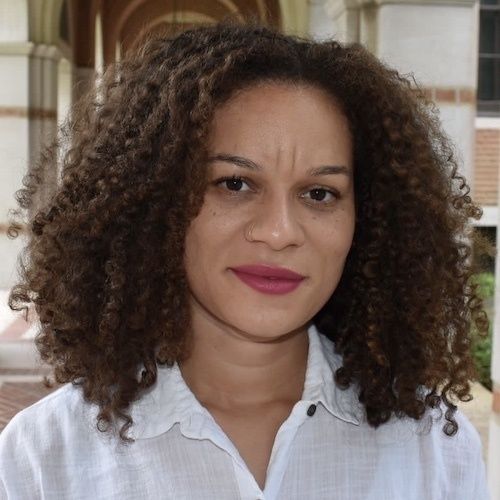
"Interrogating Intimacies: Black Feminist Desahogos in Antiracist Activism" by Amarilys Estrella, Rice University, LACS Seminar Series
March 28, 2022
1:00 pm
Stimson Hall, G01
In-person viewing: G01 Stimson Hall
Zoom Viewing upon registration:
Cosponsors: Africana Studies and Research Center/Feminist, Gender and Sexuality Studies (FGSS)
In this talk, Amarilys Estrella (Rice University) explores the everyday negotiations that Black Dominican women of Haitian descent within the Reconoci.do movement face as they fight against systemic racism in the Dominican Republic.
While noting the gendered dimensions of state sanctioned violence and denationalization policies, Estrella also interrogates the intimate spaces that Black women who form part of the movement inhabit, in which they are often confronted with gender-based violence. By engaging in local and transnational encounters where they share their stories and build with other women, Black Dominican women of Haitian descent are reimagining and transforming intimate relationships on a personal and communal level.
Additional Information
Program
Einaudi Center for International Studies
Latin American and Caribbean Studies
Julie Ficarra

Associate Teaching Professor
Julie Ficarra specializes in critically examining global issues of migration, social inclusion, and sustainable development, focusing on comparative and ethical frameworks to foster cross-cultural understanding, social policy analysis, and community engagement. She is interested in the role of education in the development of global citizenship, peace, and reconciliation in post-conflict regions.
Additional Information
Program
Role
- Faculty
- LACS Core Faculty
- LACS Steering Committee
- PACS Faculty Associate
- SEAP Faculty Associate
Contact
Email: jmf389@cornell.edu
Border Environments: Filming Im/Permeability - Idrissou Mora-Kpai
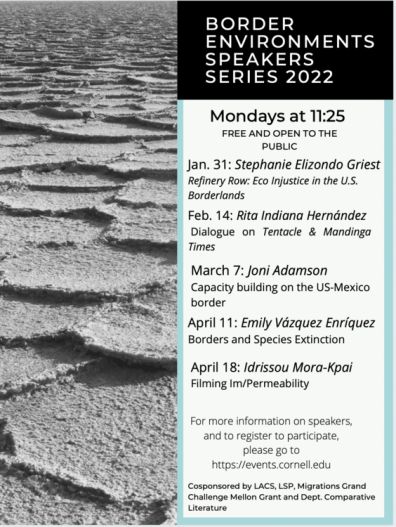
April 18, 2022
11:25 am
On-campus location TBD
Idrissou Mora-Kpai is Assistant Professor in the Department of Media Arts, Sciences and Studies at Ithaca College and an award winning filmmaker whose films have been screened world-wide at numerous prestigious festivals, such as Berlin, Rotterdam, Vienna, Milano, Busan, Sheffield, and garnered many international accolades. Born in Benin, West Africa, Idrissou has made a name for himself with his social documentaries tackling post-colonial African societies, African migrations and diasporas. Idrissou’s most recent film, America Street explores the daily struggles of an African-American community in a quickly gentrifying historical black neighborhood in downtown Charleston, South Carolina, just after the 2015 Walter Scott killing.
Co-Sponsored by: LACS, Latina/o Studies Program, the Migrations Grand Challenge Mellon Grant, and Department of Comparative Literature.
Additional Information
Program
Latin American and Caribbean Studies
Border Environments: Borders and Species Extinction - Emily Vázquez Enríquez
April 11, 2022
11:25 am
Emily Vázquez Enríquez writes at the intersection of the environmental humanities and the fields of border and migration studies. Her first book project theorizes the concept of border biomes to think about the mutual entanglement between human and nonhuman entities in relation to border settings and migration flows in the Americas. In my work, she examines questions of ecopolitics in transnational settings, the relationships between migrants and border communities with border ecologies, and queries regarding the different forms of environmental racism faced by immigrants.
Co-Sponsored by: LACS, Latina/o Studies Program, the Migrations Grand Challenge Mellon Grant, and Department of Comparative Literature.
Additional Information
Program
Latin American and Caribbean Studies
Border Environments: Capacity Building on the U.S.-Mexico Border - Joni Adamson
March 7, 2022
11:25 am
Joni Adamson is President's Professor of Environmental Humanities in the Department of English and Director of the Environmental Humanities Initiative (EHI) at the Julie Ann Wrigley Global Institute of Sustainability at Arizona State University. She writes on the centrality of the environmental humanities to the sustainability sciences, the design of desirable futures, climate fiction and film, Indigenous literatures and scientific literacies, the rights of nature movement, and the food justice movement. Her research has been supported by many awards and grants, including the 2019 Benjamin N. Duke Fellowship at the National Humanities Center. She is the author and/or co-editor of eight books and special issues and 80 articles, chapters, reviews and blog posts which have been widely cited, reprinted, and translated into Mandarin and Spanish. She has been invited to keynote conferences and lecture in Australia, China, England, Italy, France, Germany, Hong Kong, Scotland, South Africa, Spain, Sweden, Taiwan and throughout the U.S. Her organizational activities helped lay the foundations for transnational environmental American Studies and the environmental humanities.
Co-Sponsored by: LACS, Latina/o Studies Program, the Migrations Grand Challenge Mellon Grant, and Department of Comparative Literature.
Additional Information
Program
Latin American and Caribbean Studies
Border Environments: Dialogue on Tentacle and Mandinga Times - Rita Indiana Hernández
February 14, 2022
11:25 am
Rita Indiana Hernández is a Dominican writer, musician, and performer. In addition to her popularity as a singer-songwriter, she is widely regarded as one of the most important Dominican authors of her generation. Her viral music success has made Rita a household name in the Dominican Republic where she is popularly referred to as "La Montra" (the monster). Her literary career began in the 1990s with short works included in zines such as Vetas. Around the time she published her second novel, Papi, she began experimenting with musical and visual projects as part of different performance groups, such as Casifull and Miti Miti. Her popularity as a musician grew even more after the 2010 release of the album El juidero, recorded with her band Rita Indiana y los Misterios. She subsequently published two more novels, Nombres y animales (2013) and her science fiction experimental novel, La mucama de Omicunlé (Tentacle 2015). Her focus on dismantling mythologies and rebuilding from the rubble appears in her most recent novel, Made in Saturn (2020). She was also named one of the one hundred most influential Latino/a personalities by the Spanish newspaper El País. Daniel Alarcón describes her 2021 album "Mandinga Times" as “apocalyptic” in his New Yorker review; she calls it a songbook for the end of the world
Co-Sponsored by: LACS, Latina/o Studies Program, the Migrations Grand Challenge Mellon Grant, and Department of Comparative Literature.
Additional Information
Program
Latin American and Caribbean Studies