
Latin American and Caribbean Studies
Tammo Steenhuis

Professor, Biological and Environmental Engineering
Tammo Steenhuis’s research is carried out over a trillion-fold scale range, from the transport of micro particles in soil pores to the effect of human interventions in the landscape on transport of water and sediment in large river basins. He is also one of the faculty members leading the dynamic and innovative Soil and Water Group.
Additional Information
Margaret Smith

Professor, Integrative Plant Science, Plant Breeding and Genetics Section
Since August 2020, Margaret Smith has served as the director of the Cornell Agricultural Experiment Station and associate dean of the College of Agriculture and Life Sciences. Her research is primarily on field corn, but also includes work on sweet corn.
Additional Information
Eloy Rodriguez

Professor Emeritus
Eloy Rodriguez is a research scientist of chemical biology, ecology and medicinal chemistry, and toxicology of natural small molecules and glycoproteins from plants and arthropods that are important in ecological and biological interactions and human and animal health and medicine.
Additional Information
Nilsa B. Maldonado-Mendez

Senior Lecturer, Spanish and Romance Studies
Nilsa Maldonado-Mendez's interests include feminism and religion in Spanish-speaking countries, teaching Spanish to heritage speakers, history, and women writers in the Spanish-speaking Americas.
Additional Information
Angela Gonzales

Retired Associate Professor
Additional Information
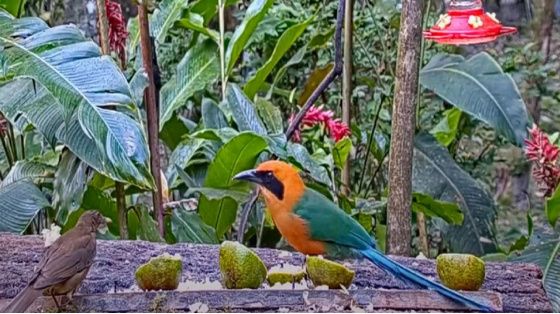
Free Webinar: Study Battling Birds in Panama with Bird Cams Lab
January 28, 2021
12:00 pm
Learn how you can turn observations into scientific data using the live Bird Cams Panama Fruit Feeder Cam hosted by the Cornell Lab of Ornithology. The Bird Cams Lab project uses the power of audience participation to make new discoveries about bird behavior using Bird Cams footage. The current investigation is called Battling Birds: Panama Edition. Watch as tropical birds vie for food and position against the backdrop of a lush cloud forest. Anyone can participate in Bird Cams Lab. Learn how by tuning into our conversation with Project Leader Rachael Mady and Bird Cams Communications Specialist Ben Walters.
Register to attend on Zoom
Image: Clay-colored Thrush and Rufous Motmot © Cornell Lab Bird Cams
Additional Information
Program
Einaudi Center for International Studies
Latin American and Caribbean Studies
Is Democracy in Danger?

Riedl and Roberts in Washington Post
Einaudi director Rachel Beatty Riedl and LASP director Ken Roberts explain how democracies around the world resist authoritarian factions.
Additional Information
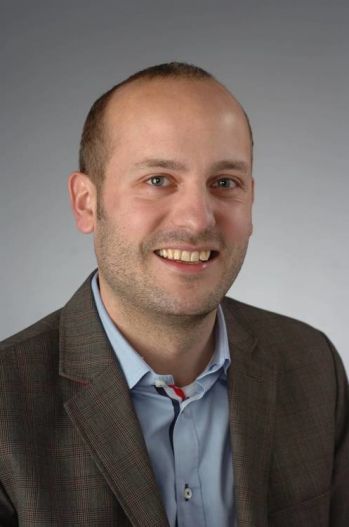
"Hurricane Maria in Puerto Rican Comics," by Paul Humphrey, Border Environments, A Special Events Series
March 4, 2021
1:00 pm
Sponsored by the Central New York Humanities Corridor from an award by the Andrew W. Mellon Foundation
Paul Humphrey received his PhD in Modern Languages from the University of Birmingham (2013), and his research focuses on gender, sexuality and African-derived religions in Caribbean literature. His monograph, Santería, Vodou and Resistance in Caribbean Literature: Daughters of the Spirits (2019), was published in the Studies in Hispanic and Lusophone Cultures Series at Legenda (Cambridge, UK), an imprint of the Modern Humanities Research Association. Paul has published peer-reviewed articles in Sargasso, Studies in Comics, Journal of Haitian Studies, International Journal of Francophone Studies, Bulletin of Hispanic Studies and in the edited volume Capital Culture: Perspectives in Ethnic Studies II (2019).
Paul has taught courses on Caribbean and Latin American literature and cultural studies, gender studies, and Spanish and French language. His current research project focuses on identity, gender and sexuality in Caribbean speculative fiction and comics, a topic featured in the September 2019 issue of Colgate Research.
Co-Sponsored by: Latin American Studies Program, Latina/o Studies Program, Department of Comparative Literature, Cornell Cinema, and the Migrations Initiative
Additional Information
Program
Einaudi Center for International Studies
Latin American and Caribbean Studies
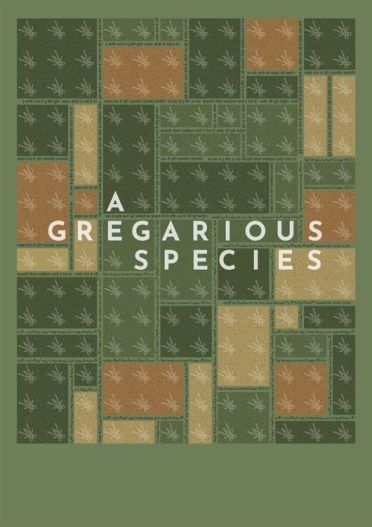
"Visual Anthropology Project: 'A Gregarious Species'," by Natasha Raheja, Border Environments, A Special Events Series
February 18, 2021
1:00 pm
Sponsored by the Central New York Humanities Corridor from an award by the Andrew W. Mellon Foundation
This found footage, single-channel video installation contemplates borders, migration, and human-animal relations in the context of bilateral management of “transboundary pests,” particularly gregarious desert locust swarms in South Asia. The piece brings together mobile phone videos of a series of desert locust swarms in 2019 shot by Indian Plant Protection Officers with rumors and allegations that Pakistan (an “enemy state”) sends swarms of locusts across the border to destroy Indian crops. The title, “Gregarious Species” is at once a celebration of the profuse force of human-animal sociality and also a critique of the ways border regimes deny a cross-border sociality to human migrants.
Natasha Raheja is an anthropologist working in the areas of migration, citizenship, and ethnographic film. Her current documentary video project, Kitne Passports? (How many Passports?), visualizes the migration trajectories of Pakistani Hindu families in India from different caste backgrounds. The documentary is a companion to her book manuscript, From Minority to Majority: Pakistani Hindu Claims to Indian Citizenship. The book is an ethnographic account of Pakistani Hindu migration to India and theorizes the flexibility of the religious minority form and the endurance of caste across state borders in South Asia. Together, this work explores the relationships between religious nationalism, state machinery, and modes of cross-border belonging in the context of majority-minority relations in liberal democracies. Extending her interest in uneven mobilities and borders, she is also completing an experimental short film series on the movement of non-human animals and everyday objects across the India-Pakistan border. Films in the series include: A Gregarious Species, Kaagaz ke chakkar, and Enemy Property. As part of her fieldwork, she has conducted collaborative documentary filmmaking workshops with Pakistani Hindu middle-school students to understand and amplify their perspectives on life in India. Professor Raheja’s scholarship has received generous support from the Fulbright Commission, the Wenner-Gren Foundation for Anthropological Research, the American Institute for Indian Studies, the NYU Vice Provost’s office and several other endowments. Her films have screened at colleges and festivals nationally and internationally and my publications have featured in the Journal of Refugee Studies, American Anthropologist, and Visual Anthropology Review.
Co-Sponsored by: Latin American Studies Program, Latina/o Studies Program, Department of Comparative Literature, Cornell Cinema, and the Migrations Initiative
Additional Information
Program
Einaudi Center for International Studies
Latin American and Caribbean Studies
South Asia Program
“‘They brought them from the Palenque in Jamaica’: Human Trafficking and the Conquest of Jamaica,” by Casey Schmitt, LASP Weekly Seminar Series

March 8, 2021
4:00 pm
Following the 1655 invasion of Spanish Jamaica, English forces waged guerilla warfare on two fronts. The first was against a small Spanish resistance that maintained a toehold on the island despite the initial Spanish surrender. The defeat of that beleaguered resistance, however, depended on the outcome of the second front, a conflict waged between the English and several autonomous communities of African descent. Far deadlier and more threatening for the English, that front waged on until the leader of one of these communities, Juan Lubolo, switched sides, forcing the remaining Spanish resistance to abandon Jamaica and giving the English an invaluable ally in the continuing war against the palenques that continued to fight for autonomy on the island. In this presentation, I will trace the history of the Afro-descended captives seized by Lubolo and his forces. Securing Jamaica for English settlement depended on transforming these captive enemies into enslaved people through inter- and intra-imperial human trafficking. Africans and Afro-Jamaicans, the majority of Spanish Jamaica’s population on the eve of the invasion, proved too dangerous for the English to enslave, in part due to their knowledge of the topography, flora, and fauna of the island as well as their likely connections to armed, autonomous communities. In order to transform Lubolo’s prisoners of war into enslaved laborers, English officials in Jamaica used human traffickers to smuggle the Afro-Jamaican captives into neighboring Spanish colonies. The goal was to create wealth that English colonists, in turn, could use to purchase enslaved Africans from the transatlantic slave trade. And, by 1671, English Jamaican lawmakers codified this practice of trafficking “dangerous” captives “to foreign parts” into law, turning an illicit, wartime practice into a method of social control in Jamaica’s burgeoning slave society.
Professor Schmitt a historian of early America and the Caribbean, with particular interests in human trafficking, colonization, and illicit economies over the course of the sixteenth and seventeenth centuries. In her research and her teaching, she is interested in tracing individuals who crossed imperial boundaries—by choice and by coercion—in order to understand how processes like colonialism, imperialism, slavery, and trade functioned in the interstices of early modern empires. Professor Schmitt is currently at work on her book manuscript, tentatively titled The Predatory Sea: Human Trafficking, Colonization, and Trade in the Greater Caribbean, 1530-1690, which analyzes the ubiquity of human trafficking and captivity in the greater Caribbean and North America from the 1530s until the 1690s and what that meant for colonization, trade, and warfare in the region. At Cornell, she teaches classes on colonialism, imperialism, slavery, and corruption.
Additional Information
Program
Einaudi Center for International Studies
Latin American and Caribbean Studies