Migrations Program

Challenging Ideas of Crisis at International Borders

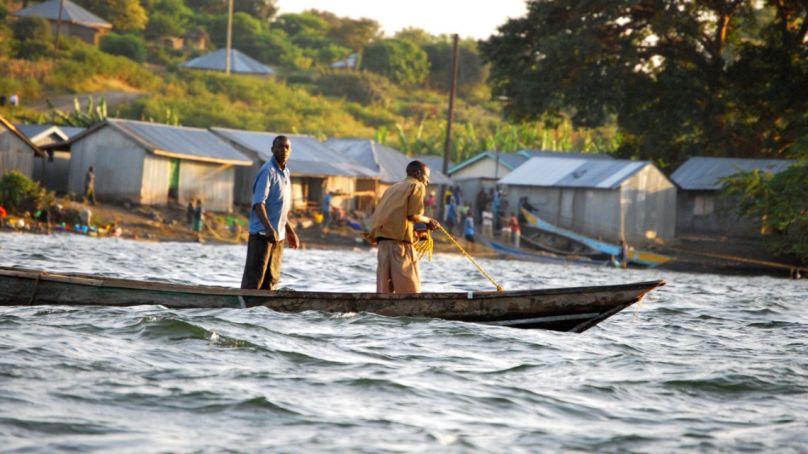
A boat arrives on the Italian island of Lampedusa in 2008.
December 3, 2024

Eleanor Paynter in World in Focus

Eleanor Paynter, Migrations postdoctoral fellow from 2019–22, has published a book on the so-called “migration crisis,” with a focus on migrants crossing the Mediterranean Sea to Italy.

In Emergency in Transit: Witnessing Migration in the Colonial Present, Paynter gathers the accounts of survivors of Mediterranean crossings and compares migrants' journeys to public debates, government policies, and a range of media. She finds that narrative framings of “crisis” and “emergency” do not align with the lived experiences of people on the move.

A majority of people, Paynter finds, moved around from country to country to seek new and better opportunities. They did not move directly to Italy from their home countries. “These accounts challenge the idea we have that migration is a movement from point A to point B. Very few journeys fit that linear narrative,” she says.

“One key point my research confirms is that the way we often hear about migration in dominant discourse doesn't match the way people crossing borders describe their experiences.”

Yet a pervasive narrative in Italy paints migration to the country as an emergency, reflecting the idea that arrival in a new country is sudden and unforeseen. People do experience extreme risk during their journeys on the Mediterranean Sea, but “crisis is not an inherent quality of migration or of borders,” she says. 

It often gets treated that way—to very differing ends—by people across the political spectrum and in different roles. But emergency is not an inherent fact. It's produced and reproduced in narratives, policies, images, interactions (often in contradictory ways), and all of that has material consequences.”

Cover art of "Emergency in Transit: Witnessing Migration in the Colonial Present" with crumpled clothes in front of body of water.

This is especially true in the case of migration from Africa to Europe, the major focus of the book. “The idea that migration is a crisis reproduces older colonial ideas about Africa as an unknowable space of chaos and crisis, Paynter says. 

The testimonials I discuss in my book explicitly challenge the idea that the movements and presence of Africans in Europe constitute a crisis, Paynter explains. Migrant and racial justice are intertwined, and working towards a just future requires imagining beyond these narrow emergency framings of migration.”

Eleanor Paynter was a postdoctoral fellow for Cornell's first Global Grand Challenge, now the Migrations Program, from 2019–22. She is currently an assistant professor of Italian, migration, and global media studies at the University of Oregon. Read more about her contributions to Migrations.

Read Emergency in Transit

Featured in World in Focus Briefs

Additional Information

Topic

  • World in Focus

Program

Archives in Transit: Todosomos and the Venezuelan Migration Crisis

April 18, 2025

10:00 am

A.D. White House, Guerlac Room

In this event, we will be officially launching the archive Todosomos, a collection of handwritten testimonies by Venezuelan migrants who crossed the border from Venezuela to Colombia between 2019 and 2021. The event will have several panels and include interventions by the founders of Todosomos, the library team in charge of the processing and transcription of the archive, Venezuelan artists and writers, a representative of the NGO Ithaca Welcomes Refugees, and a talk by Professor Zeb Tortorici (NYU). It will also include a lunch, a reception, and a pop-up exhibit of the handwritten notebooks. This event is free and open to the public.

View the event program

Additional Information

Program

Einaudi Center for International Studies

Latin American and Caribbean Studies

Migrations Program

Shifting Landscapes: A Conversation with the Cornell Community on Migration and Trump-Era Policy Changes

November 21, 2024

12:00 pm

The recent U.S. election is likely to have significant impacts on immigration policy and practices. Based on experience with the previous Trump administration and standing efforts among Republicans in Congress, these changes may impact Cornell students, staff, and faculty. Join Cornell’s Migrations Program in a conversation about the current state of immigration policy.

This is a virtual-only meeting open to Cornell faculty, staff, and students. Registration is required.

Panelists

Shannon Gleeson, School of Industrial and Labor Relations and Brooks School of Public PolicyLaura Taylor, Director of International ServicesStephen Yale-Loehr, Cornell Law SchoolModerator

Wendy Wolford, Vice Provost for International Affairs and Robert A. and Ruth E. Polson Professor of Global Development in the College of Agriculture and Life SciencesHost and Sponsors

The Migrations Program, part of the Mario Einaudi Center for International Studies, builds upon the work of Migrations: A Global Grand Challenge to inform real-world policies and outcomes for populations that migrate.

Additional Information

Program

Einaudi Center for International Studies

Migrations Program

Reppy Institute for Peace and Conflict Studies

East Asia Program

Southeast Asia Program

Latin American and Caribbean Studies

Institute for African Development

Institute for European Studies

South Asia Program

Black Monserrat: Race, Migration, and Real Estate in Nineteenth-Century Buenos Aires

April 8, 2025

12:20 pm

Uris Hall, G08

The global history of the interrelationship between race, migration, and real estate is still in its infancy, even as it promises a particularly rewarding angle on histories of how mobility and inequality have been intertwined. The Argentine capital of Buenos Aires, which during the second half of the nineteenth century received large numbers of European immigrants and underwent spectacular urban transformations, offers a window onto these problems. In recent decades, historians have increasingly viewed this migration through the lens of Argentine elites’ discourses of “whitening,” but they have rarely examined the concrete urban effects that European immigration had for the city’s Afro-descendants, who in the 1830s still constituted more than a quarter of the population. This talk attempts to do as much by looking at the formation of a Black neighborhood through real estate acquisition as well as the ensuing process of dispossession. While the empirical focus is micro-historical, the explanatory horizon is broader: The paper ultimately seeks to derive more general findings about the history of capitalism and inequality in the nineteenth-century Atlantic.

Michael Goebel is the Einstein Professor of Global History at Freie Universität Berlin and co-director of the university’s Center for French Studies. Since his Ph.D. (University College London, 2006) he has also worked at the European University Institute, Harvard University, and the Geneva Graduate Institute. Following his 2015 book Anti-Imperial Metropolis, which won the Jerry Bentley Prize in World History, he has increasingly grown interested in the emerging field of global urban history. He is currently the Principal Investigator of the SNSF-funded project Patchwork Cities, which explores the history of segregation in port cities in the nineteenth and twentieth centuries.

On Monday, April 9, Michael Goebel will be giving another lecture, "Contagion, Inevitability, and Teleology: Imperial Disintegration and Nation-State Formation in Global History."

Co-Sponsored by the Department of Government, Department of History, Institute for Comparative Modernities, and Institute for European Studies.

Additional Information

Program

Einaudi Center for International Studies

Latin American and Caribbean Studies

Institute for European Studies

Migrations Program

Migrations Creative Writing and Art Competition 2023 Winners

January 1, 2024

View the winning submissions of the 2023 Migrations Creative Writing and Art Competition.

À la République

Victoria Abunaw '24, Earth and Atmospheric Sciences

A la Republique

This piece was inspired by the sculpture Le Marron Inconnu, "the unknown Maroon." This sculpture once stood in front of the presidential residence in Haiti before the earthquake of 2010. It depicts a formerly enslaved man with shackles bound to his ankles, his limbs flexible and stretched out as he blows into a conch skyward. It is widely considered the preeminent symbol of the Haiti Revolution and post-independence resistance efforts against colonial powers. 

As for À la République, it was envisioned as a response to its predecessor. Indeed, the struggle of our ancestors against a colonial past and continued poverty has not yet ceased; rather, it has taken a new form, sprung from the tribulations of the contemporaneous generation. The man gazes outward, but not at the viewer, with the conch just at his lips. 

The colors used for the background are a subtle allusion to the flag of Haiti, which is red on the bottom and blue at the top. In the sky is a special constellation which represents liberation from enslavement and the shared heritage of the African diaspora, especially those which arose during the trans-Atlantic slave trade; but the sky (depicted as outer space) also represents progress—a state which extends above and beyond the limits of earthly existence—the fruit of our progeny. It is futurity—the continued survival of Haiti and her people.

From Darkness to Destiny: A Migrant's "Mangaranto" of Identity, Education, and Cultural Resilience

Trifosa Simamora, Graduate student in Natural Resources and the Environment

The recollections of my past are etched in the vivid moments when my parents, amidst a power outage, in a city shrouded in darkness with closed shops, urged me to pursue my studies. The feeble glow of a lamp, fueled by a small wick and kerosene, became my guiding light during those blackout hours when I diligently tackled the homework I had been assigned that day at elementary school. The proximity to the flickering lamp left my nose tinged black from inhaling its darkened smoke. Although the day had long worn into night, my father persisted in his late-night labor, while my mother prepared fried snacks for the next day's sale. Their toil aimed at shaping the destiny of their offspring through education. 

Hailing from the rich traditions of the Batak, one of the ethnic groups in Sumatra Island in Indonesia—with our own language and alphabet—my parents had long embraced the ethos of "Mangaranto”[sailing from place to place], a quest for a better life, leading them towards the flourishing island of Java, where progress and education were booming. Despite the move for enhanced opportunities, they steadfastly clung to their identity, always identifying themselves as proud members of the Batak tribe. They instilled the values and cultural essence of Batak within the family. I often pondered why education held such a profound place in their hearts, why we had to hit the books every night while our peers indulged in the latest TV shows, music, and news. Their response, "Metmetpesihapor dijungjung do siman jujungna, metmet pejolma dijungjung do baringinna"[like a tiny grasshopper lifts its head high, so should humans], a value that teaches us that despite limitations, one can uphold dignity through benevolence and responsibility. Unbeknown to me then, my mother's own unfulfilled pursuit of higher education fueled her determination to ensure that my two siblings and I would achieve a better life through college. 

As an adherent of a minority religion, I encountered taunts and mockery from peers, with my faith becoming the target of ridicule. Disheartened by the unfairness, I once faced a rowdy friend's harsh tirade. In silence, I absorbed the insults, recalling my parents' teachings of "Pantun hangoluan, tois hamagoan" [politeness brings life, arrogance brings disaster], underscoring the vitality of a genial attitude and the perils of hubris. This unfair treatment fueled my resolve to fight through achievements. I toiled industriously, securing admission to high school, consistently acing my studies, and proudly earning the title of class champion. All are driven by the conviction that hard work yields success. Supportive friends and teachers surrounded me, propelling my journey as the eldest child, commencing my personal Mangaranto by seeking education in a larger city. 

Finishing high school years, I was accepted into a state university in Indonesia. I vividly recall my father escorting me to the university gate, where the welcoming words proclaimed, "Welcome, the best sons and daughters of the nation."A proud smile adorned my father's face as he wished me, "Good luck, the best daughter of the nation." Those words ignited a surge of pride within me, marking the commencement of over a decade away from my parents, navigating a migratory existence. I realized that in larger and modern cities, respect for others was paramount. My experiences from childhood, which were concealed in smaller towns, found expression through academic excellence and unwavering integrity on the campus —a reflection of the Batak values "Hasangapon"[dignity and honor] embodying nobility and dignity, and mitigating the "fear of difference." 

Securing a scholarship for studies abroad posed formidable challenges, even facing opposition from my parents at one point. Acceptance into a master's program in the U.S.triggered trepidation as I commenced my education in 2021 amid the rampant COVID-19 pandemic and physical distancing. The events surrounding the murder of George Floyd further heightened concerns about the educational landscape in the U.S. Despite the initial fears, life in the U.S. unfolded as an opportunity to explore diverse cultures, forge friendships with individuals from various countries, and delve into the uniqueness of global societies. The marginalization I experienced in my youth fostered empathy for friends facing similar challenges. Upholding the Batak value of "Marsisarian"[mutual understanding and assistance in conflict situations], I found solace in the efforts of individuals and institutions to foster diversity, equity, inclusion, and belonging in U.S. higher education. The marginalized perspective instilled a profound appreciation for the depth beyond superficial labels, appearances, and accessories—an understanding that every human deserves respect and honor.

Upon completing my master's degree, I returned to Indonesia, where my parents beamed with delight. Yet, I recognize that my Mangaranto journey remains. Acceptance into Cornell evoked profound emotions of gratitude, a reality surpassing my wildest dreams. Excitement overwhelms me as I acknowledge the continued opportunity for further education. Practicing the Batak value of "Hamajuon"[progress to enhance competence], I realized that my migratory journey is the mixture of personal aspirations along with the pervasive influence of my family's strong Batak culture. The journey has intertwined my personality with a myriad of values, and every new destination offers lessons in shaping my evolving identity. An Indonesian proverb, "Dimana bumi dipijak, disitu langit dijunjung"[wherever on earth you tread, the same sky is being upheld] underscores the importance ofrespecting local customs, a belief that the virtues we carry from our culture contribute positively to the communities we encounter, enriching our shared society

In essence, my journey encapsulates not only personal growth but also the collective progression of embracing diversity, fostering inclusion, and upholding mutual respect across borders. Each chapter adds a layer to the narrative, emphasizing the interconnec edness of cultures and the richness derived from understanding and honoring one another. As I navigate my path, the values instilled by my parents and the Batak traditions continue to guide me, urging me to contribute to a world where differences are celebrated, and unity prevails.

Returning to Nothing: Migration and Displacement from the 2022 Floods in Pakistan

Tabindah Anwar, Graduate student in Global Development

Anwar took all the photographs included in this essay during their fieldwork in some of the worst flood-impacted districts in Pakistan in 2022.

Women searching for documents and essential items after the flash flood destroyed their houses. Location: Gilgit-Baltistan, Pakistan

Women searching for documents and essential items after the flash flood destroyed their houses. Location: Gilgit-Baltistan, Pakistan

Climate disasters weaken social structures and exacerbate existing inequalities. In 2022, Pakistan was hit by one of the worst floods in decades, where more than 33 million people were impacted. And nearly 8 million people, a population almost the size of New York City, were internally displaced. 

These nationwide floods occurred as a result of unusually extreme monsoon rainfalls.“Screams of people woke me up,” said Yasmeen, a 28-year-old woman who lived in a valley in the northern mountains of Pakistan. The torrential rain and forceful gushes of water down the mountain ridges destroyed everything on its way, including houses and farmlands, and killed thousands of livestock. With only the clothes left on their bodies, Yasmeen and her family rushed to find shelter in the nearest village. 

In rural areas, livestock and agricultural produce are sources of food and income for people. Even if their houses are reconstructed, it would take several years for Yasmeen’s family, and many others like them, to recover from the loss of livestock and crop damage. 

Laila with her children. Location: Balochistan, Pakistan

Meanwhile, thousands of miles southwards in Balochistan, Laila, a young mother of four children, explains the terror she felt when carrying her children to a safe location during the flood. "One of my children has a hearing impairment, and she froze with confusion," said Laila. Laila’s husband farmed on leased land, and their source of income was from selling the harvest. Their wheat crop was destroyed, and with the standing water in the field, there were no prospects of sowing for the next season. Already poverty-stricken, Laila’s husband had no choice but to migrate to the nearby urban center to find work and a daily wage. Laila was left behind, taking care of her children alone, as she took temporary shelter in a relative’s home.

Displacement due to climate disasters and migration to revive the livelihoods weaken a family unit and the social structure. The families are forced by their conditions to split up, where the male members of the family, including the father and the elder son, move to an urban center for a daily wage. Women are responsible for agriculture, caring for the livestock, and raising their children alone. There is immense pressure on them, and the responsibilities are many. With that, they cannot send their children to school, especially the female child, who is usually helping the mother out.

Women provide most of the labor in taking care of livestock. Location: Gilgit-Baltistan, Pakistan

Women provide most of the labor in taking care of livestock. Location: Gilgit-Baltistan, Pakistan

Political displacement and climate displacement can have compounding effects on people’s resilience to cope with disasters. Pakistan’s former Federally Administered Tribal Areas (FATA), a region that also borders Afghanistan, has Afghan refugees and internally displaced communities from the aftermath of decades of militancy and terrorism in these areas. In recent history, these areas were merged with the Khyber Pakhtunkhwa Province of Pakistan for better economic integration ofthe local communities. With existing precarious economic conditions, when the floods hit this area in 2022, many Afghan families who had fled the Taliban takeover in August 2021 were displaced again. Many did not have legal documentation or refugee cards, so they had trouble accessing social services in their host country.

Mehr, a village in the southernmost part of the country, was one of the many submerged areas during the floods. Sumaya, a local woman, shares the agony of escaping on a boat while being heavily pregnant. With most of their belongings destroyed, and their animals killed, families took their remaining livestock with them on fishermen's boats to the nearest dry area. If lucky, families would find camps, but most live in the open air without shelter from the cold or the mosquitos. Women had no privacy, they had to defecate openly, and a few even gave birth while living on the campsites. People lived in these conditions for more than two months, and as the water receded, they returned to their villages to rebuild their homes. These families have fallen into the vicious cycle of poverty, and relying on the government’s meager social support is their only hope to make ends meet.

A campsite of families displaced due to the floods. Location: Sindh, Pakistan

The increased uncertainty due to migration and displacement means losing resilience and agency, which leads to increasing reliance and dependence on social services and humanitarian aid. However, not everyone impacted by a disaster can access social services equally.A woman-headed household living on a campsite will face more constraints in reviving their lost identity documentation and accessing social support. This exacerbates and reinforces inequalities.

People at the frontline of the impacts of climate change are often already vulnerable and poor and rely on subsistence farming and animal herding as a source of income and food. These communities have not contributed towards climate change, yet they face a heavy brunt. This is a form of environmental injustice. The perspectives of the climate-vulnerable communities should be voiced in our academic and policy work so we can meaningfully advocate for those communities struggling to build resilience after being displaced.

What Freedom Was

Rachel Friedland '25, Human Biology, Health, and Society

Freedom was the shoebox apartment on Orchard Street 
With white voile curtains and mismatched chairs
Hot concrete on the balls of his feet in the summer 
Weaving through pant legs looking for his mother 
Peddlers and pushcarts and mangoes and pears 

Freedom was three cots on the kitchen floor 
Splintering planks that complained and groaned 
One couch and one bed shared by nine 
A window mooring the end of a clothesline 
Tethering families adrift from home 

Freedom was the first two candles on the windowsill 
Lighting a life that was forced into shade 
A fist of sweet bread and small cup of wine 
His belly of hope that here we’d be fine 
To pray and to laugh and to sing unafraid 

But freedom was not. 
Six nieces and four cousins killed naked 
Two brothers lost in the fight overseas 
The newsstand he opened on Delancey 
A hotbox of headlines 
He carried a gun 

Freedom was his great granddaughter studying biology 
In a university library eyes glued to a screen 
Biting her tongue while she unraveled thread 
Students in her classes wanting her dead 
No, freedom was not what he thought it would mean.

We Live We Judge We Lie

Inae Kim '27, Landscape Architecture

Let me check my phone to know you

"let me check my phone to know you"

We always pull up our phones to know about each other, for example, trading phone numbers, social media, or text. I felt like people these days judge and look at others through their phones. The monster in the drawing has iPhone camera eyes instead of regular eyes.

"Don't come to me"

"Don't come to me"

People hurt each other even when they do not mean to. The hand in the drawing is trying to pet the cat, but the cat is offending the hand. This shows the unparalleled intentions of approach to each other

Additional Information

Information Session: Laidlaw Research and Leadership Program

December 4, 2024

5:00 pm

Uris Hall, G08

The Laidlaw Undergraduate Leadership and Research Program promotes ethical leadership and international research around the world—starting with the passionate leaders and learners found on campuses like Cornell. Open to first- and second-year students, the two-year Laidlaw program provides generous support to carry out internationally focused research, develop leadership skills, engage with community projects overseas, and become part of a global network of like-minded scholars from more than a dozen universities. We’ll also share tips for approaching potential faculty research mentors and writing a successful application.

Can’t attend? Contact laidlaw.scholars@cornell.edu.

***

The Mario Einaudi Center for International Studies hosts info sessions for graduate and for undergraduate students to learn more about funding opportunities, international travel, research, and internships. View the full calendar of fall semester sessions.

Additional Information

Program

Einaudi Center for International Studies

Reppy Institute for Peace and Conflict Studies

East Asia Program

Southeast Asia Program

Latin American and Caribbean Studies

Institute for African Development

Institute for European Studies

South Asia Program

Migrations Program

Migrations Creative Writing and Art Competition

Application Deadline: February 15, 2026
Application Timeframe: Fall
A la Republique

Details

Submit your creative work to this year's creative writing and art competition. Open to Cornell students and staff, the competition asks you to reflect on migration in your own life and the life of your community. 

Winning submissions will receive a cash prize and be published on our website. View the work of last year's winners

The photo displayed on this page is À la République by Victoria Abunaw '24, Earth and Atmospheric Sciences. Her work is one of the winning submissions of the 2023 creative writing and art competition

Eligibility

The competition is open to currently enrolled students at any level and non-faculty staff members. Your submission should answer the question: How does migration shape life in your community?

Our Stories in Motion

You can view past winners of the creative competition in the lobby of Mann Library this fall. Our exhibit tells the stories of students and staff whose lives have been influenced by migration. Migrations influence the food they eat, the languages they speak, where their families live, and how they view the world.

People view the "Our Stories in Motion" exhibit.
"Our Stories in Motion" exhibit in Mann Library lobby.
Students enter their migration stories into the "Our Stories in Motion" exhibit.

How to Submit

Complete the submission form below by February 15, 2026. 

Requirements

Please use the project title as the file name. Do not use your name as the file name. Submission limited to one person and netID. 

Questions? Email the Migrations Program.

Additional Information

Funding Type

  • Award

Role

  • Staff
    • Student

Program

Keynote Address by Dr. Elizabeth Campbell, Deputy Assistant Secretary of State for Population, Refugees, and Migration

December 3, 2024

2:30 pm

Plant Sciences, 404

As part of the day-long Refugee Pathways Symposium, organized as part of the community-engaged course, PUBPOL 3050/5050: Refugee Pathways and Resettlement Policy, in collaboration with Cornell Law School and the Migrations Program, Dr. Elizabeth Campbell, Deputy Assistant Secretary of State for Population, Refugees and Migration will give a keynote address.

Additional Information

Program

Einaudi Center for International Studies

Migrations Program

Subscribe to Migrations Program