
Migrations Program
Ancestral Migrations Stopped at Fencelines

Wildlife Veterinarian Builds One Health Partnerships—and Solutions
The Land-Use Conundrum
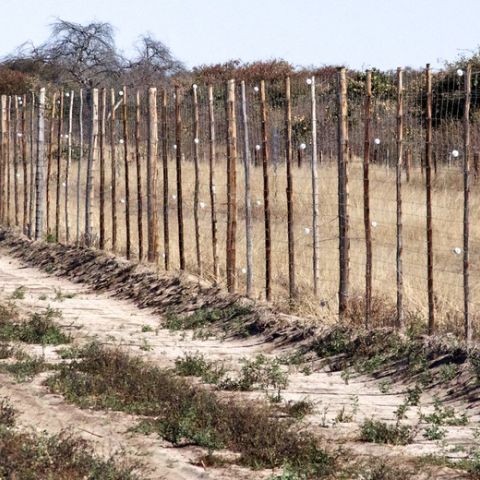
In the early 1990s, Steven A. Osofsky was a young wildlife veterinarian recently graduated from Cornell University and headed for southern Africa. One of the first things he noticed when he got there were the thousands of miles of fences covering the land. They were there to keep domestic beef cattle separated from wild buffalo because buffalo carry the virus for foot-and-mouth disease (FMD), which can sicken cattle and cause trade embargoes on beef from affected countries.
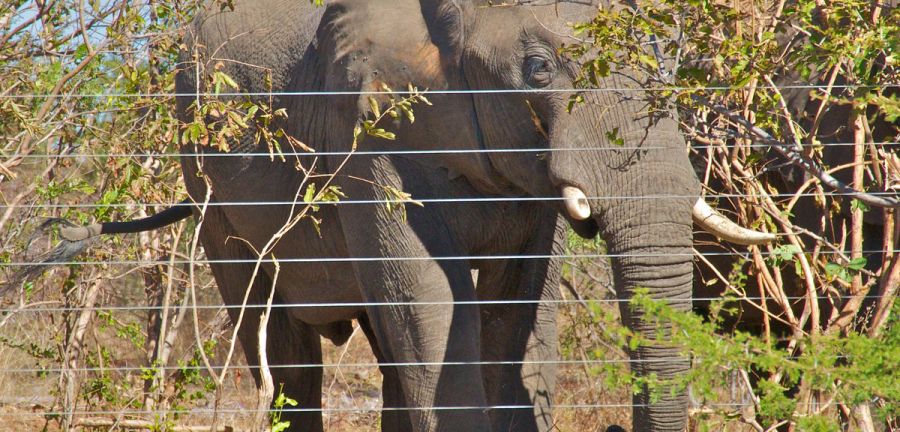
The fences also cut across the ancient migratory routes of the region’s historically vast ungulate herds, with devastating consequences.

“Hundreds of thousands, if not millions, of animals have died along these fences since the 1950s because they couldn’t get access to seasonal grazing and fresh water,” Osofsky says. There was intense conflict between the livestock and wildlife sectors, and as Botswana’s first official wildlife veterinarian, he saw it firsthand.
“Botswana is one of the last great places on earth for free-ranging wildlife,” says Osofsky, who now is a wildlife health and health policy professor at Cornell. “But fences are a barrier to the habitat connectivity these species evolved with over millennia, and they’ve significantly impacted the region’s wildlife. I’ve spent a lot of time since the 1990s thinking about this land-use conundrum, wherein two sectors have been seen as impacting each other in such dramatically negative ways.”
The One Health Strategy
Osofsky’s concerns for wildlife and human wellbeing drove him to help catalyze an approach called One Health. “This is the overriding theme of most of my work,” he says. “My focus is very much on wildlife conservation and the ways in which we can be better stewards of the environment and how that relates back to the health of wildlife, domestic animals, and people.”
The One Health approach led to Osofsky facilitating dialogue with southern African governments, international donors, the World Organization for Animal Health (OIE), the Food and Agriculture Organization of the United Nations, small farmers and farming communities, and others with a stake in the clash between the needs of wildlife and those of beef farmers in the region. He and his team worked with colleagues in the Southern African Development Community to identify the crux of the problem.
The international rules regarding the management of animal diseases were based on geography. The OIE’s regulatory framework had long required any aspiring beef-exporting country or region where FMD was present in wildlife to physically separate wildlife from livestock. This led governments in southern Africa to erect extensive fences.
With today’s scientific understanding and sophisticated food safety protocols, Osofsky and his colleagues concluded that the OIE’s goals could be equally well served by focusing on the beef production process. Osofsky says, “Whether you’re talking about E. coli or FMD or a parasite, how you deal with the product from a biosafety viewpoint is what you really need to worry about.”
Osofsky continues, “You can process meat, vegetables, or any food by using standardized approaches based on good science, farm to fork, as they say, to make sure the end products are safe for human consumption, while at the same time ensuring that a product like beef doesn’t spread an animal disease. It took many years of dialogue before the OIE acknowledged that what is essentially a food safety approach is equivalent to the geographic, fence-based approach.” In 2015 the OIE’s World Animal Health Assembly updated OIE guidelines so that fences were no longer the only option for managing FMD in southern Africa.
“Fences are a barrier to the habitat connectivity these species evolved with over millennia.”
Planetary Health: Innovation via Integration
As Osofsky worked on the fence problem in southern Africa as well as other environmental and wildlife conservation issues, he was able to utilize health concerns to gain policy traction. Eventually, he brought together a diverse array of colleagues to help develop a new field subsequently dubbed Planetary Health by The Rockefeller Foundation.
“Planetary Health is about improving both our understanding of the public health impacts of anthropogenic environmental change and our ability to measure them,” he says. “This can then improve decision-making in the realms of land-use planning, ocean-use planning, environmental conservation, and public health policy. If governments want to dam the Amazon River’s tributaries for hydroelectric energy, for example, but project assessments neglect to look at the millions of people who depend on migratory fish in that freshwater basin for protein and micronutrient nutrition, then we could be missing one of the largest real costs resulting from the dams. Many infrastructure projects have both positive and negative public health impacts. If we do a more thorough job assessing these impacts, we should make better-informed, more sustainable decisions.”
The New Cornell Wildlife Health Center
In 2016 Osofsky came full circle and joined the faculty of Cornell’s College of Veterinary Medicine. He brought with him a vision of the college as a leader in wildlife health. One of his first steps was to help develop a flagship program called Wildlife Health Cornell, a College of Veterinary Medicine Center of Excellence—recently renamed the Cornell Wildlife Health Center.
“The array of exciting wildlife health work underway across the veterinary college, much of it involving other parts of the university as well as external partners, creates a window of opportunity to build a real community of practice,” Osofsky says. “The Cornell Wildlife Health Center is a way to capture all of the neat things the college is doing—and can do, going forward—to make sure we share what we’re learning across campus and around the world.”
In March 2017, the College of Veterinary Medicine received a $1.7 million grant from The Rockefeller Foundation (which runs through December 2020) to support Osofsky’s work. He is also actively fundraising for 2021 and beyond, given the ongoing needs in the southern Africa program and more broadly for growing the Cornell Wildlife Health Center’s domestic and international programs.
With part of the current funding, Osofsky and team have been evaluating the potential impact that could be leveraged by combining traditional Environmental Impact Assessment of, for example, complex infrastructure projects with the concept of Health Impact Assessment. Their recommendations recently were published in the flagship journal, The Lancet Planetary Health. This work will help inform policymakers at a range of scales so that certain issues—such as the public health and wellbeing impacts of alterations to natural systems people depend on — are taken into account more proactively.
“A successful outcome for both the livestock and wildlife sectors could be a real boost for transfrontier conservation and the sustainable development it is meant to engender.”
The other portion of the grant—as well as additional funding from the Academic Venture Fund at Cornell’s Atkinson Center for a Sustainable Future—has been assisting local beef farmers living with wildlife in southern Africa. The grant is being used to help them undertake the next steps toward being able to sell their beef on the world market while supporting the enabling environment needed for official reevaluation of some of the fences impacting key wildlife migration corridors.
Given the new land-use opportunities that improved FMD risk management represents, in 2019 the government of Botswana restarted what is called the National Committee on Cordon Fences, a high-level multi-agency effort that had been abandoned more than 20 years ago. The rejuvenated committee is charged with advising on wildlife-friendly fencing options and alternatives to fences, as well as on the management of transboundary wildlife, including the need for migratory corridors.
“This action is a huge milestone,” Osofsky says, “one that reinforces Botswana’s regional leadership in integrating conservation and development.”
KAZA, Global Treasure
Osofsky's focus is on the Kavango Zambezi (KAZA) Transfrontier Conservation Area, a conservation and development initiative that spans five countries — Botswana, Namibia, Angola, Zambia, and Zimbabwe. KAZA’s wilderness is a global treasure and is home to more than half of all remaining African elephants, and many other endangered and threatened species.

Osofsky says countries like Botswana want to move the new approach to beef production forward. They have welcomed Cornell’s technical support. He and his team of Cornell and regional experts have been together in southern Africa frequently to help progress key technical steps that Botswana needs to take to ensure FMD-free beef can be successfully produced and marketed from the northern part of the country, where buffalo are the natural reservoir of FMD viruses. Botswana’s Department of Veterinary Services has welcomed the guidance, and the new president of Botswana even discussed the importance of this “commodity-based trade of beef” (CBT) approach in his first State of the Nation address at the end of 2018.
Beyond Botswana, Osofsky’s team was asked by the official KAZA Secretariat to help bring the livestock and wildlife veterinarians of all five KAZA countries together to discuss CBT and other issues related to transboundary disease management and conservation. The new KAZA Animal Health Working Group has now been convened several times with Cornell’s technical assistance, most recently in Victoria Falls, Zimbabwe in June 2019.
“My staff lead Shirley Atkinson and I feel deeply honored to have been invited to facilitate the important cross-sectoral work of this international body,” Osofsky says.
Osofsky is seeing evidence, on the ground and in the policy arena, that this new approach to beef-trade disease risk management is truly taking hold.
In June 2019, the Southern African Development Community (SADC) Council of Ministers formally adopted as an official SADC document his team’s Guidelines on Commodity-Based Trade Approaches for Managing Foot-and-Mouth Disease Risk in Beef in Southern Africa. The Ministers are urging SADC Member States to implement the guidelines, which will improve the livestock sector’s access to markets while facilitating land-use planning that has the potential to address conflicts at the livestock/wildlife interface that have been unresolved for the past 70 years.
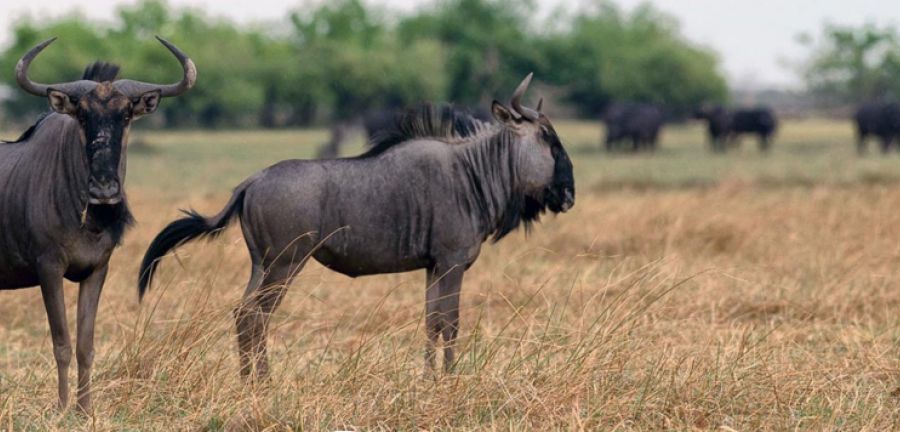
With all of this work having led to a new way to manage FMD risk in southern Africa, the most problematic veterinary fences, Osofsky explains, potentially can be realigned or taken down, allowing the historic migrations to return. A successful outcome for both the livestock and wildlife sectors could be a real boost for transfrontier conservation and the sustainable development it is meant to engender.
“There was an old fence line in Botswana that got opened up a few years ago,” Osofsky says. “There were no living zebras that had ever made their ancestral migration across the region. And yet, as soon as the fence was no longer a barrier, the migration was restored. The zebras followed the same route used by previous generations. That tells me it’s not too late.”
Updated and edited by Jeri Wall, from the original story “Cattle, Conservation, and Collaboration” by Jackie Swift, published by Cornell Research

Steven A. Osofsky (DVM, Cornell University) is the Jay Hyman Professor of Wildlife Health and Health Policy at the College of Veterinary Medicine at Cornell. He is a faculty fellow at Cornell’s Atkinson Center for a Sustainable Future and a faculty associate at the Institute for African Development in the Mario Einaudi Center for International Studies. He is a member of six Cornell graduate fields: zoology and wildlife conservation, natural resources, regional science, global development, public affairs, ecology, and evolutionary biology. He is also a member of the Migrations Taskforce.
Osofsky is a prolific author of peer-reviewed journal articles and an expert spokesperson on conservation and health-related issues. Several highlights:
- “Human Health Impacts of Ecosystem Alteration,” Proceedings of the National Academy of Sciences of the United States of America, vol. 110 (47), with Myers, S. S.; Gaffikin, L.; Golden, C. D.; Ostfeld, R. S.; Redford, K. H.; Ricketts, T. H.; Turner, W. R. (2013).
- "Balancing Livestock Production and Wildlife Conservation in and around Southern Africa's Transfrontier Conservation Areas," Transboundary and Emerging Diseases, vol. 60 (6), with Thompson, G.R.; Penrith, M-L; Atkinson, M.W.; Atkinson, S.J.; Cassidy, D. (2013).
- "The Global Burden of (How We Manage) Animal Disease: Learning Lessons from Southern Africa," Journal of Wildlife Diseases, vol. 55 (4), (2019).
Additional Information
Program
In Place of Mobility: Railroads, Rebels, and Migrants in an Argentine-Chilean Borderland

March 18, 2025
12:20 pm
Uris, G08
In the mid-nineteenth century, decades after independence in Latin America, borderlands presented existential challenges to consolidating nation-states. This talk examines how and why these spaces became challenging to governments and what their meaningfulness is for our understanding of the development of a global world by examining one of those spaces: the Trans-Andean, an Argentine-Chilean borderland connected by the Andes mountains and centered on the Argentine region of Cuyo. It answers these questions by interweaving three narratives: Chilean migration to western Argentina; mountain-crossing Argentine rebels; and the formation of plans for railroads to cross the mountains.
Out of these narratives emerges a twofold argument that, on the one hand, locates the causes and stakes of foundational national conflicts in Argentina in a Pacific-facing Trans-Andean and, on the other hand, sees the Trans-Andean as part of mid-nineteenth-century globalization, thus connecting national conflicts, non-national geographies, and globalization. As a result, this history challenges dominant narratives about social and political conflicts at this formative moment in Argentine and Latin American history while opening up discussion on the methodologies and meaningfulness of transnational, borderlands, and global histories.
Kyle E. Harvey is an Assistant Professor of History at Western Carolina University. He is a social historian whose current research focuses on spatial histories of Argentina and Chile. His research engages with broad questions of historical geography, human mobility, capitalism, technology and expertise, and materialist interpretations of history. He received his BA in History from the University of Michigan and his MA and PhD from Cornell University. His research has been published in the Journal of Latin American Studies and Historia Crítica. His book, In Place of Mobility: Railroads, Rebels, and Migrants in an Argentine-Chilean Borderland, was published in 2024 by the University of North Carolina Press as part of its David J. Weber Series in the New Borderlands History.
Additional Information
Program
Einaudi Center for International Studies
Latin American and Caribbean Studies
Migrations Program
Selecting Refugees for Resettlement to Norway and Canada: Vulnerability, Integration and Discretion
October 31, 2024
3:00 pm
Uris Hall, G08
This lecture examines how the concept of vulnerability is “translated” from legal bureaucratic discourses into actual policy and practice in the refugee resettlement context. In particular, we trace how the integration potential of refugees continues to be weighed against their vulnerabilities in the process. While resettlement is a voluntary commitment and not legally binding, states that have signed the 1951 Geneva Convention have agreed to share the responsibility of providing protection and solutions for refugees who cannot return to their country of origin. Through a comparative discussion of refugee resettlement in Canada and Norway, we shed light on some mechanisms through which the humanitarian focus on prioritizing the most vulnerable comes under pressure from competing political considerations and rationales. By examining instances of what we call the political or ‘tactical’ uses of resettlement, we aim not only to highlight its partisan and domestic political dynamics but also to open up questions of who is ultimately left behind and considered ‘too vulnerable’ for resettlement.
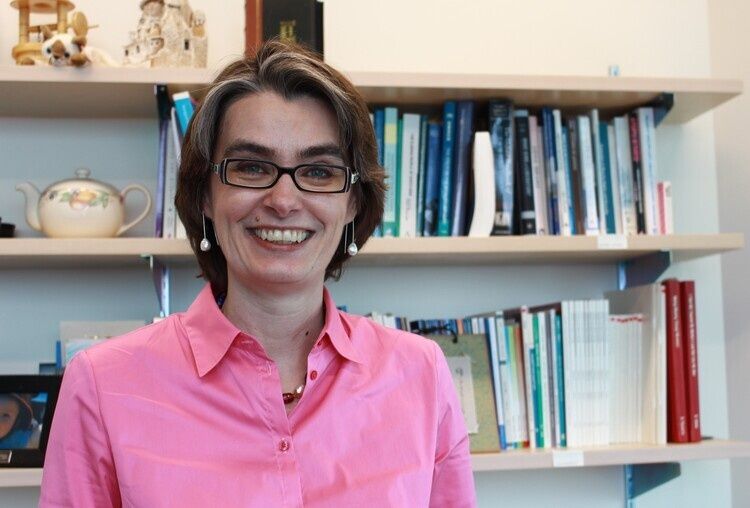
Dagmar Soennecken is an Associate Professor in the School of Public Policy & Administration at York University (Toronto, Canada). She is also cross-appointed to the Law & Society Program there. Her research focuses on comparative public policy in the EU and North America. She is particularly interested in questions concerning law and the courts as well as citizenship and migration, including refugees. In 2019, she became the Editor-in-Chief of Refuge: Canada’s Journal on Refugees. Her work has been published in Comparative Migration Studies, Law & Policy, Droit et Société, Politics and Governance among others. She was one of the three Canadian co-investigators on the recently concluded VULNER project team.
Hosted by the Institute for European Studies and cosponsored by the Migrations Program, part of the Mario Einaudi Center for International Studies, and funded by the Mellon Foundation's Just Futures Initiative.
Additional Information
Program
Einaudi Center for International Studies
Institute for European Studies
Migrations Program
Postdoc Spotlight: Sabrina Axster
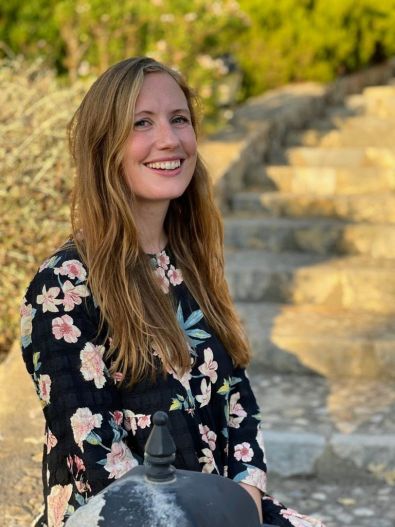
Sabrina Axster is a postdoc for the Migrations Program in the Mario Einaudi Center for International Studies from Dusseldorf, Germany, who has called New York City home since 2011. She holds a Ph.D. from Johns Hopkins University, and her research focuses on the colonial and racial logics of contemporary border controls and policing in Western Europe and the U.S. She is a recipient of a Postdoc Achievement Award for Excellence in Leadership as part of Cornell’s celebration of National Postdoc Appreciation Week 2024.
Additional Information
Alp Demiroglu and Veronika Varga: hydro-POWER: State and Energy in Central Asia
October 17, 2024
12:00 am
Bibliowicz Family Gallery, Milstein Hall
Exhibition Description
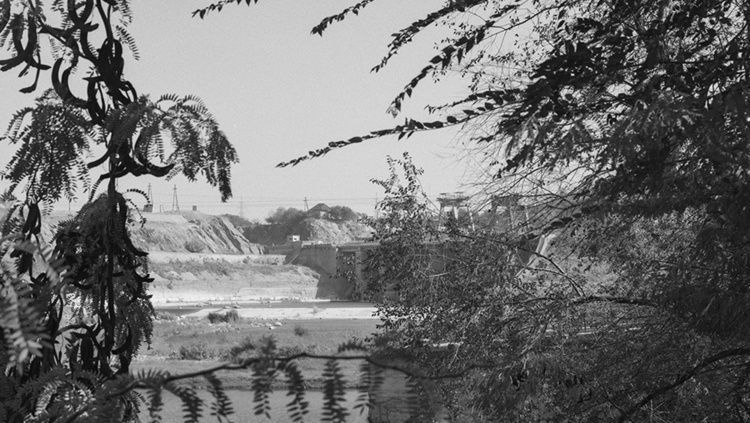
hydro-POWER: State and Energy in Central Asia interrogates water infrastructure and strategic resource development as an instrument of imperial and colonial expansion. The industrial objects at the focus of this analysis controlled not only the distribution of water but also of regional power. The construction of irrigation infrastructure and hydroelectric dams was instrumental in the internal colonialism of the USSR. Following the collapse of the Soviet Union in 1991, its formerly federated states gained independence. During this process of decolonization, the centralized system of resource management and distribution ceased to exist, which led to the intensification of tensions between the new neighboring nation-states.
Today, the image of hydroelectric dams—both existing and speculative—is mobilized to exert symbolic regional power through the production of scarcities. Studying the Kyrgyz and Uzbek hydro-industrial landscape, this project traces colonial and de-colonial arrangements of power through these objects. Drawing on the feminist scholarship of Michelle Murphy and Nancy Hiemstra, the exhibitors employ a methodology of studying the technopolitical qualities of infrastructures that remain obscured from the public by mapping access and in-access. This project aims to demonstrate that when infrastructures produced by a politics of domination remain untouched in the process of decolonization, the objects are predestined to reproduce the same hierarchies of (social) relation.
Alp Demiroglu and Veronika Varga (both B.Arch. '21) received the Robert James Eidlitz Travel Fellowship in 2022-23. The aim of their research trip was to produce a counter-archival method for studying infrastructural objects and how they are situated within the broader physical and political landscapes. Through this exhibition, Demiroglu and Varga animate the materials of their research by bringing them into dialogue with one another. The visual materials include digital photographs, medium-format and small-format film photographs, as well as moving images. The visual materials are complemented by rich field notes written by both researchers, expanding on the sites by including what they did not have visual access to.
Biographies
Alp Demiroglu (B.Arch. '21) is a designer at Robert A. M. Stern Architects in New York City. He completed his architecture degree at Cornell with minors in History of Architecture, European Studies, and Migration Studies. Demiroglu recently researched hydro-infrastructural impacts on society and landscapes throughout Central Asia. He won the 2021 RAMSA Prize, exploring ideas of architectural translation and migration in Miami's early modernisms. He was recognized as a Cornell Tradition Fellow and has exhibited in the Turkish Pavilion at the 2018 Venice Biennale. His paper, "Reparative Borderscapes: Dreams After Nightmares," was published in the Dutch arts and culture magazine Simulacrum, Vol.32 No.1.
Veronika Varga (B.Arch. '21) is a trained architectural designer and a researcher of contemporary spatial conflicts. She completed her architecture degree at Cornell, after which she spent some time practicing as a designer in Budapest, Hungary. She continued her studies at the postgraduate program of the Centre for Research Architecture at Goldsmiths University so that she could pursue a career as a researcher. She recently completed fieldwork regarding how political power is enacted through water infrastructure in Central Asia. Besides working as a freelance designer, she is a volunteer geolocation specialist at Airwars, and she is also developing a binaural soundwalk about the history of land reclamation in Canary Wharf with her collective, PALs Research Group. Varga's practice is situated at the intersection of (environmental) justice, post-industrial rivers, and radical imagination. She is currently developing a feminist research methodology through leakage to produce a map of changing legal thresholds as a result of transgressions in the nuclear industry. She presented the most recent iteration of this work at Leakage: Inaugural Conference of STSing at TU Dresden. Through collaborations that emerged from the Centre for Research Architecture at Goldsmiths University, she remains dedicated to furthering this work.
Additional Information
Program
Migrations Program
Migrations Postdoc Wins Award for Excellence in Leadership

Congratulations to Sabrina Axster, who has been recognized for her innovative, initiative-driven leadership at Cornell.
Additional Information
Climate Change Leaves Some Migrating Birds 'Out of Sync' and Hungry

Andrew Farnsworth, Migrations
Andrew Farnsworth, visiting scientist at the Lab of Ornithology, talks about the impact of climate change on migrating birds.
Additional Information
Professor’s Feature-Length Documentary Film Debuts at Cornell Cinema
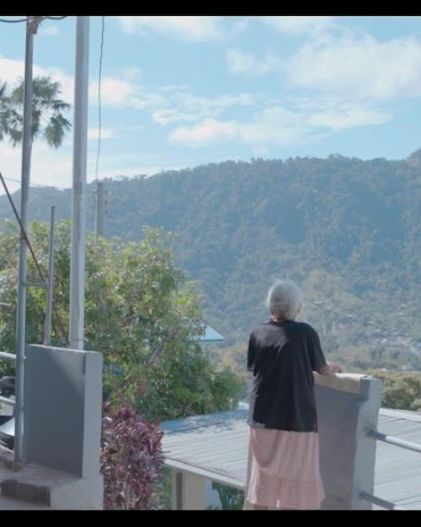
“Possible Landscapes,” a new feature-length documentary film exploring the lived experience of landscapes and environments in the Caribbean islands of Trinidad and Tobago, will have its debut screening on Sept. 25 at Cornell Cinema.
“Possible Landscapes,” a new feature-length documentary film exploring the lived experience of landscapes and environments in the Caribbean islands of Trinidad and Tobago, will have its debut screening on Wednesday, Sept. 25, 7 p.m. at Cornell Cinema. A reception will follow. The event is free and the public is invited.
The film is a cross-disciplinary collaboration between Natalie Melas, professor of comparative literature in the College of Arts and Sciences, who works on Caribbean literature and thought, and Tao DuFour, former assistant professor in the College of Architecture, Art and Planning, and currently Fellow in Architecture at Trinity College Cambridge. The film was directed by professional documentary filmmaker Kannan Arunasalam.
The film seeks to “query the formation of environmental and climate imaginaries, with a view to getting at larger historical questions—of migration, plantation societies, extractivism, race, and the legacies of colonialism—that inform everyday practices in ways that are difficult to identify and to articulate, because they are concretely lived,” write the researchers.
“Possible Landscapes” joins seven people in seven different regions of the islands in the course of their daily lives: Kevin, a fisherman on the east coast suffering the recent loss of one of his crew members at sea; four generations of the Joseph family in the steep hillsides of the northern range; Captain “Spaceman” Philips and his glass-bottomed boat in Tobago, from which he has witnessed the decline of the coral reefs; Crystal, a trade unionist active in supporting workers who lost their jobs when a major oil refinery was closed; Romulas, known as the “last sugar cane farmer” in the central plains and his Venezuelan workers; Stephanie, a nurse who worked in the oil fields in the south starting just after World War II; and Tony, originally from Jamaica, a climate change analyst, agriculturalist and rabbit farmer in St Joseph.
The two-year research project that resulted in the film, “Possible Landscapes: Documenting Environmental Experience in Trinidad and Tobago,” was funded by a two-year team research grant from Cornell’s Migrations: A Global Grand Challenge and the Mellon Foundation’s Just Futures Initiative.
“The project grows from a Mellon Expanded Practice Seminar DuFour and I taught in fall of 2019, which led to the making of an award-winning documentary short, ‘We Love We Self Up Here,’ which debuted at Cornell in November 2021,” said Melas. “That short was a kind of draft and inspiration for ‘Possible Landscape,’ which is significantly more expansive and ambitious, entailing field work and archival research over a two-year span and the dedicated work of two talented research assistants, both students in the architecture department, Carla de Haro and Keiron Curn de Nobriga.”
In addition to the screening, two of the team’s Trinidadian collaborators will be on campus to present on their work:
- Deborah Villarroel-Lamb, an engineering professor at University of the West Indies, St Augustine, and an expert in flooding and coastal erosion, will present on “Towards Caribbean Coastal Resilience: Challenges & Opportunities” on Tues., Sept. 24 for the Environmental Fluid Mechanics and Hydrology Seminar in Hollister Hall, room B52, at 4:15 p.m.
- Mario Lewis, Trinidadian artist and agroforester, will give an artist’s talk titled "Forest Notebooks: The Interaction Between Art, Community, and Ecology" on Sept. 25 at 4:45 p.m. at the Toboggan Lodge, 38 Forest Home Drive.
The screening of “Possible Landscapes” is co-sponsored by The Society for the Humanities, the Arts and Sciences Dean’s Office, the Africana Studies and Research Center, the Institute for Comparative Modernities, the Departments of Comparative Literature, Literatures in English and Romance Studies (all A&S); Architecture (AAP), Environment and Sustainability (CALS/A&S); and Latin American and Caribbean Studies (Einaudi).
Linda B. Glaser is news and media relations manager for the College of Arts and Sciences.
Additional Information
MexicanEast Conference: Transit

September 21, 2024
9:00 am
A. D. White House
The 2024 MexicanEast conference, held at Cornell University from September 20-21, 2024, brings scholars together to discuss transit through the lens of Mexican cultural studies. We welcome discussion about migration, movement, transition, trade, and trans and queer issues, as well as any other meaningful engagement with the topic of transit.
Additional Information
Program
Einaudi Center for International Studies
Latin American and Caribbean Studies
Migrations Program