
Reppy Institute for Peace and Conflict Studies
Afghanistan One Year Later: Reflections on Life Under the Taliban

August 25, 2022
5:30 pm
Uris hall, Terrace
One year ago, on August 15, 2021, the Taliban entered the Arg (Presidential palace) in Kabul, completing their astonishingly rapid takeover of Afghanistan. At the end of that same month, US forces completed withdrawal from Afghanistan – marking an end to the longest war in American history. One year later, our speakers reflect on Afghanistan’s recent history, life under the Taliban regime, and what we might expect in the near future as the Taliban engages with the international community. We welcome attendees to join us for a fireside conversation about this critical geopolitical topic.
Speakers
Zinab Zhra Attai, Reppy Institute Director’s Fellow, Ph.D. student in Comparative Politics, Cornell University
Sharif Hozoori, Visiting Scholar, South Asia Program & IIE-SRF Fellow
Maryam Amini, Global Development, Cornell CALS
Moderator
Sabrina Karim, Hardis Family Assistant Professor for Teaching Excellence, Associate Director, Reppy Institute for Peace and Conflict Studies
***
Presented by the Reppy Institute for Peace and Conflict Studies. Co-sponsored by the South Asia Program and the Gender and Security Sector Lab.
Additional Information
Program
Einaudi Center for International Studies
Reppy Institute for Peace and Conflict Studies
South Asia Program
When Soldiers Rebel

October 13, 2022
11:25 am
Professor Kristen Harkness will discuss her book When Soldiers Rebel: Ethnic Armies and Political Instability in Africa (Cambridge University Press, 2018). The book argues that the processes of creating and dismantling ethnically exclusionary state institutions engender organized and violent political resistance. This explains both the motivations and timing of rebellion: while exclusionary institutions and group grievances may persist over many years, it is in brief and rare intervals that entire systems of ethnic privilege and disadvantage are created or destroyed.
Focusing on African militaries and when soldiers rebel against the state on ethnic grounds, it is shown that when leaders attempt to build ethnic armies, or dismantle those created by their predecessors, they provoke violent resistance from military officers. This poses a deep challenge to democratization, which has brought new leaders to power who threaten Africa’s legacy of ethnic armies.
Please join us for this virtual conversation. Register here.
About the Speaker
Dr. Kristen A. Harkness is a Senior Lecturer in the School of International Relations at the University of St. Andrews. Her research focuses on understanding how ethnicity shapes the loyalty and behavior of military institutions in Africa and has been funded by the British Academy.
***
Presented by the Reppy Institute for Peace and Conflict Studies. Co-sponsored by the Institute for African Development and the Gender and Security Sector Lab.
Additional Information
Program
Einaudi Center for International Studies
Reppy Institute for Peace and Conflict Studies
Institute for African Development
Fighting Yesterday's War: Soviet Influences in Putin's Foreign Policy
October 6, 2022
11:25 am
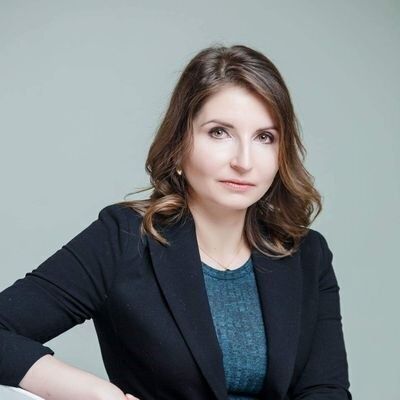
Dr. Maria Snegovaya examines the drivers of Russian revanchism. Russia’s behavior has thrown into doubt the purported strength of international norms regarding territorial integrity, not least because Putin himself has spoken of seeking to ‘re-gather’ adjacent territory deemed ‘lost’—as they had been once under possession by Imperial Russia or the Soviet Union—through military means.
While recognizing that decisions to go to war and to reclaim lost territory are complex and multifaceted, the speaker argues that many analyses overlook—ironically—the nature of the political regime that rules Russia. If domestic political variables do matter for observers of Russia, the emphasis is on how Russia is institutionally autocratic such that it will pursue a foreign policy more aggressive than what would have been the case if it were democratic.
Maria Snegovaya and her co-author define a political regime in both institutional and behavioral terms to acknowledge the structural organization of power as well as the qualities of the elites that exercise influence. They show a strictly institutional definition of political regimes neglects the elite continuity that ties together the Soviet and the Russian leadership. This elite continuity across the two systems matter because the political regime still privileged particular beliefs about the use of force to settle international disputes, the intentions of the United States, and the relationship that certain nations should have vis-à-vis Russia. These beliefs, which they show to hold sway, had their Soviet antecedents.
Please join us for this virtual conversation. Register here.
About Speaker
Maria Snegovaya is a Postdoctoral Fellow in Political Science at Georgetown University's Walsh School of Foreign Service, a Visiting Scholar at the Institute for European, Russian, and Eurasian Studies at George Washington University, and Adjunct Senior Fellow at the Center for New American Security. She is a comparative politics, international relations, and statistical methods specialist. The key focus of her research is democratic backsliding in Central and Eastern Europe, as well as Russia’s domestic and foreign policy.
***
Presented by the Reppy Institute for Peace and Conflict Studies. Co-sponsored by the Institute for European Studies and the Gender and Security Sector Lab.
Additional Information
Program
Einaudi Center for International Studies
Reppy Institute for Peace and Conflict Studies
Institute for European Studies
Built to Fail: How Bureaucratic and Institutional Origins Undermined State Building in Afghanistan
September 8, 2022
11:25 am
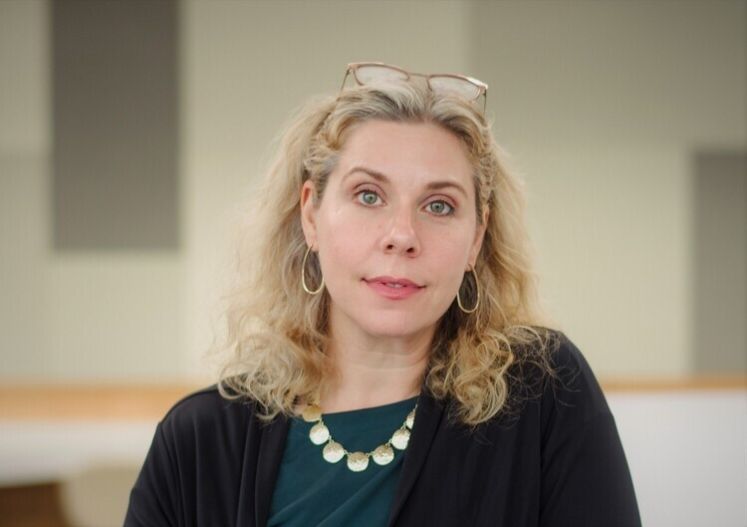
Jennifer Brick Murtazashvili presents evidence from Afghanistan to illustrate how failure to break from Soviet-era centralized public administration undermined the massive state-building project and perpetuated a wedge between Afghan civil society and a state that failed to deliver on its promise.
Liberal state building continues to fall short of its promise of political order and economic development. The persistence of bureaucratic legacies in states seeking to recover from conflict, especially the persistence of centralized administrative structures, help explain these failures. These institutions are often the source of state collapse yet are often reinforced by the international community once the dust of war settles. This leads to a vicious cycle of centralization that reinforces rigidity through influxes of foreign aid. Elections often serve as a smokescreen that detract from meaningful administrative reform. The desire to concentrate power is at odds with societies that have governed without the state, or have become deeply distrustful of it, during conflict.
Please join us for this virtual conversation. Register here.
About the Speaker
Jennifer Brick Murtazashvili is an Associate Professor of Public and International Affairs, at the University of Pittsburgh.
***
Presented by the Reppy Institute for Peace and Conflict Studies. Co-sponsored by the South Asia Program and the Gender and Security Sector Lab.
Additional Information
Program
Einaudi Center for International Studies
Reppy Institute for Peace and Conflict Studies
South Asia Program
Graduate Fellowship Recipients
These fellowships are made possible by the generous support of the Marion and Frank Long family, the Jesse F. and Dora H. Bluestone family, and an anonymous donor. Learn more about the Reppy Institute’s graduate fellowship program.
Nicole T. Venker
Recipient of Jesse F. and Dora H. Bluestone Peace Studies Fellowship, 2024-25
Freeman Fellowship Recipient
The Reppy Institute offers the Harrop and Ruth Freeman Fellowships to encourage Cornell undergraduates to pursue summer work related to peace studies and conflict resolution in an otherwise unpaid position with a not-for-profit organization.
Harrop and Ruth Freeman Prize in Peace Studies
The 2024-25 Freeman Prize goes to Cornell seniors who have demonstrated a commitment to working for world peace. McKenzie Carrier is this year’s winner for her achievements and continuing work in peace activities.
Italy’s Government Is in Turmoil. Here’s How It Got There – and What’s Next

Christopher Way, IES/PACS
"Mario Draghi was such a trusted pair of hands across Europe," says Christopher Way, associate professor of government. "He was so respected for his competence that it's a loss no matter who replaces him."
Additional Information
PACS faculty, Professor Karim-Aly Kassam, awarded the Kendall S. Carpenter Memorial Advising Award
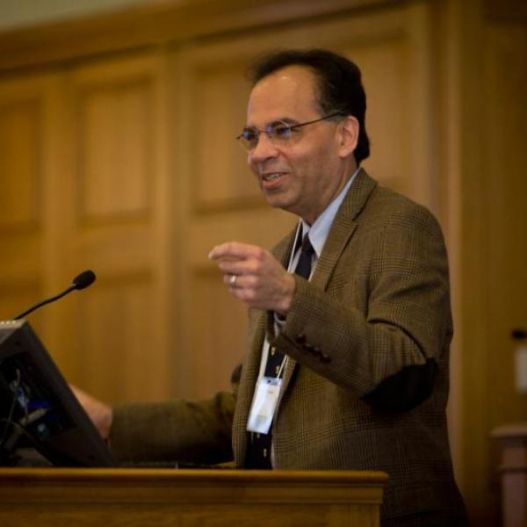
Karim-Aly Kassam, Ph.D. ’05, helps students learn fundamental academic skills that they carry with them into graduate school and their careers.
Additional Information
Evidence in Governance and Politics (EGAP) Meeting

October 29, 2022
8:30 am
ILR Conference Center
Evidence in Governance and Politics (EGAP) in collaboration with the Reppy Institute for Peace and Conflict Studies, the Institute of Politics and Global Affairs, the Gender and the Security Sector Lab, Department of Government, and the Brooks School of Public Policy will be hosting a two-day meeting at Cornell University on October 28th and 29th. Sabrina M. Karim, Hardis Assistant Professor in the Department of Government and member of the EGAP network, will head the organization of the event, which will focus on two thematic areas:
Crime Reduction & Police AccountabilityDemocracy, Conflict, & Polarization
This closed event will bring together invited scholars and practitioners from the EGAP network, along with other experts in these two thematic areas, to showcase findings, identify research questions and promising interventions, and provide opportunities for matchmaking between researchers and practitioners.
For more information, please contact Sabrina Karim at smk349@cornell.edu or Ayuko Picot, Administrative Assistant, EGAP at ayukopicot@berkeley.edu.
Additional Information
Program
Einaudi Center for International Studies
Reppy Institute for Peace and Conflict Studies