South Asia Program

Eric Tagliacozzo

Eric Tagliacozzo headshot

Director, Southeast Asia Program

Eric Tagliacozzo is the John Stambaugh Professor of History at Cornell University. He is the director of the Einaudi Center's Southeast Asia Program, and a core faculty member of the Southeast Asia Program and South Asia Program.

His research centers on the history of people, ideas, and material in motion in and around Southeast Asia, especially in the late colonial age.

Geographic Research Area: Southeast Asia, South Asia

Teaching/Research Interests: Migration and trade, material history, Silk Road, Indian Ocean

Additional Information

Program

Role

  • Faculty
  • SAP Core Faculty
    • SEAP Core Faculty
      • SEAP Director
        • Einaudi Faculty Leadership
          • Executive Committee

Contact

Iftikhar Dadi

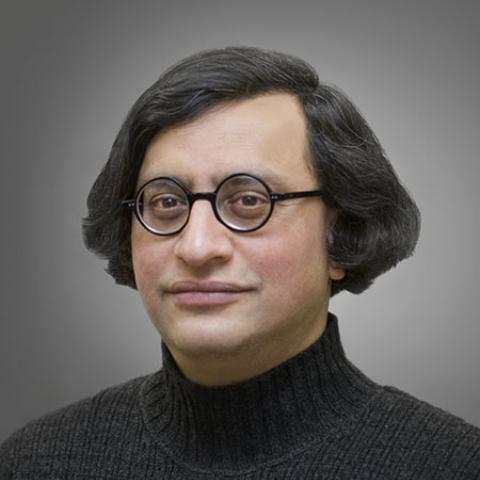
Iftikhar Dadi headshot

John H. Burris Professor in the Department of the History of Art and Visual Studies

Geographic Research Area: Pakistan, India, Bangladesh, Sri Lanka, and Middle East

Teaching/Research Interests: Modern and contemporary art, methodology and intellectual history, and film, media, and popular cultures

Additional Information

Program

Role

  • Faculty
  • SAP Core Faculty
    • SAP Steering Committee
      • SAP Advisory Council
        • Executive Committee

Contact

Speculative Fiction from South Asia: A Conversation with Vajra Chandrasekera

March 19, 2026

4:45 pm

A. D. White House, Guerlac Room

Nebula and Ursula K. Le Guin Award winning author Vajra Chandrasekera discusses his writing with Anindita Banerjee, Associate Professor of Comparative Literature, and Suman Seth, Stephen H. Weiss Presidential Fellow and Marie Underhill Noll Professor of the History of Science.

Vajra Chandrasekera is from Colombo, Sri Lanka. His novels The Saint of Bright Doors and Rakesfall have between them won Nebula, Le Guin, Ignyte, Locus, Crawford, and Otherwise awards, been selected as New York Times Notable Books of 2023 and 2024, and been nominated for Dragon and Lamda Awards, among others. He is one of the 2025-2026 Fellows of the Dorothy and Lewis B. Cullman Center for Scholars and Writers at the New York Public Library. His short stories, poems, and articles have appeared in many publications including Clarkesworld, West Branch, and The Los Angeles Times. He has worked as a fiction editor for Strange Horizons, The Deadlands, and Afterlives: The Year’s Best Death Stories, and as a contest judge for the Dream Foundry and the Salam Award. He is online at vajra.me and probably on whatever social media still exists at the time you’re reading this.

Books will be available for sale and signing after the lecture, from Odyssey Bookstore.

Additional Information

Program

Einaudi Center for International Studies

South Asia Program

Information Session: Laidlaw Scholars Leadership & Research Program

January 6, 2026

11:00 am

The Laidlaw Scholars Leadership and Research Program promotes ethical leadership and international research around the world—starting with the passionate leaders and learners found on campuses like Cornell. Open to first- and second-year students, the two-year Laidlaw program provides generous support to carry out internationally focused research, develop leadership skills, engage with community projects overseas, and become part of a global network of like-minded scholars from twenty universities worldwide.

At this session, we'll share more information about the program, including independent international projects with the Einaudi Center’s trusted partners around the world for the summer 2026 leadership-in-action portion of the program, and tips for writing a successful application. Applications are due January 12, 2026.

Register here. Can’t attend? Contact programs@einaudi.cornell.edu.

Additional Information

Program

Einaudi Center for International Studies

Reppy Institute for Peace and Conflict Studies

East Asia Program

Southeast Asia Program

Latin American and Caribbean Studies

Institute for African Development

Institute for European Studies

South Asia Program

Southwest Asia and North Africa Program

Information Session: Laidlaw Scholars Leadership & Research Program

December 16, 2025

2:00 pm

The Laidlaw Scholars Leadership and Research Program promotes ethical leadership and international research around the world—starting with the passionate leaders and learners found on campuses like Cornell. Open to first- and second-year students, the two-year Laidlaw program provides generous support to carry out internationally focused research, develop leadership skills, engage with community projects overseas, and become part of a global network of like-minded scholars from twenty universities worldwide.

At this session, we'll share more information about the program, including independent international projects with the Einaudi Center’s trusted partners around the world for the summer 2026 leadership-in-action portion of the program, and tips for writing a successful application. Applications are due January 12, 2026.

Register here. Can’t attend? Contact programs@einaudi.cornell.edu.

Additional Information

Program

Einaudi Center for International Studies

Reppy Institute for Peace and Conflict Studies

East Asia Program

Southeast Asia Program

Latin American and Caribbean Studies

Institute for African Development

Institute for European Studies

South Asia Program

Southwest Asia and North Africa Program

Allure and Ambivalence: The Indian Aesthetic in Contemporary Thai Religious Worlds

February 9, 2026

12:15 pm

Uris Hall, G08

Talk by Aditya Bhattacharjee (Asian Studies, Cornell University)

The cultural affinities that have long connected South and Southeast Asia are particularly visible in Thailand, one of the first countries to recognize India after independence and a nation that occupies a prominent place both in India’s cultural diplomacy efforts and in the itineraries of internationally bound Indian tourists. My talk turns from these well-known forms of state-level and civilizational interaction to the popular and everyday textures of lived, religious worldmaking in which ordinary Thais encounter and make sense of Indian-ness. Drawing on longstanding ethnographic fieldwork that moves fluidly between temples, social media platforms, and unplanned interactions on city streets, I consider how Thai Buddhists in varied settings engage Indian-ness less as a living South Asian tradition than as an aesthetic vocabulary that can be refracted and reinterpreted through a Buddhist grammar of their own.

In practice, this refractive process produces visual and ritual fields in which Indian themes appear in unexpected combinations and take on meanings shaped by local contexts. In these settings, Indian motifs are woven into wider Asian assemblages that combine Buddhist imagery, Chinese prosperity figures, and local protective spirits. Taken together, the talk’s case studies illuminate a distinct Thai Hindu modality whose allure and ambivalence, as perceived by both participants and observers, invite a reconsideration of how Indian-ness travels, settles, and is remade across Asia. In doing so, the talk reframes notions of a global Hinduism through an intra-Asian lens that decenters India as the singular vehicle of religious innovation within its study.

Aditya Bhattacharjee is a Mellon Postdoctoral Fellow jointly appointed in the Department of Asian Studies and the Society for the Humanities at Cornell University. His research examines how Hindu identities and ritual practices take shape across diverse cultural worlds, from urban Thailand to diasporic communities in North America. He is currently developing his first book, Global Ganesh: Mapping a Divine Diaspora, based on his dissertation at the University of Pennsylvania. The project traces how Thai Buddhist laypeople and monastics engage Indian deities such as Ganesha, Shiva, Vishnu, and various Hindu goddesses in suburban Bangkok and in the American Northeast, using these cases to reconsider how borrowing and appropriation are defined within interreligious encounters. Bringing together insights from material and visual culture, diaspora studies, and theories of ritual creativity, the book challenges India-centered models of Hindu mobility and offers globally informed perspectives on religious circulation in Asia. Before coming to Cornell, Bhattacharjee taught at the Rhode Island School of Design, where he developed interdisciplinary courses on Asian philosophy, diaspora, and religious art.

Additional Information

Program

Einaudi Center for International Studies

South Asia Program

Southeast Asia Program

“I am saying take the medicine”: Psychopharmaceutical Subjectivities in Contemporary Maldives

March 23, 2026

12:15 pm

Uris Hall, G08

Talk by Anu Ahmed (Anthropology, University of Rochester)

The Republic of Maldives has been undergoing rapid social transformations since the country’s democratization in 2008. A decade later yielded the Maldives’ ‘psy’ turn when, starting at the end of 2018, the incoming President prioritized mental health care as the focus of his modernization project. Public and private services offering psychiatry have since proliferated, and psychopharmaceuticals today circulate rapidly through formal and informal networks. How is this state-sponsored “biotechnical embrace” (Delvecchio Good 2007) lived? Many Sunni-Maldivian individuals describe psychopharmaceuticals as a medical technology that assists in containing what are deemed excessive subjectivities, while many others criticize psychopharmaceuticals as producing the very excesses that it is meant to contain. Drawing on fieldwork conducted in the Greater Male’ Region of the Maldives from mid-2020 through 2021, this talk explores how patients and kin navigate these competing discourses in an urban landscape that is unevenly marred by histories of dispossession and structural violence. Through person-centered narratives, this talk shows how the institutionalization of psychopharmaceuticals has reconfigured what counts as illness and care in the present as well as in the proximate and distant past. Attending to these entangled temporalities in individuals’ narratives illuminates how psychopharmaceutical technologies provide “ethical affordances” (Keane 2015) through which people posit themselves and others as moral persons in the contemporary moment.

Anu Ahmed is an Assistant Professor of Anthropology at the University of Rochester. She is a medical and psychological anthropologist who examines how people understand and experience subjective distress, such as madness, and how emergent institutions and cultural discourses shape new moral and phenomenological worlds. Her work is situated in the Greater Male’ Region of the Maldives, where she was born and raised.

Additional Information

Program

Einaudi Center for International Studies

South Asia Program

Sepehra Azami

Woman in green blazer stands in stone hallway.

Graduate Student

Sepehra is a graduate student at Cornell’s Jeb E. Brooks School of Public Policy with interests in environmental sustainability, climate change, and agricultural policy. She is also an Environmental Finance and Impact Investing (EFII) Fellow. Sepehra currently serves as the Public Relations Chair for the graduate student–led Women in Public Policy (WIPP) organization. A big nature enthusiast, she loves hiking and running in her free time.

Language: Farsi/Dari

Additional Information

Program

Role

  • Student
  • Graduate Student

Contact

Lunglen: Writing with Community

March 16, 2026

12:15 pm

Uris Hall, G08

Talk by Karen Donoghue (Journalism and Mass Communication at North Eastern Hill University)

In an era marked by migration, identity and community dynamics are constantly remade, throwing into sharp relief questions of belonging that must be addressed through a post-nationalist lens. My own scholarly focus was sharpened by a personal catalyst, directing my attention to the period of uprising in the state of Mizoram against the Indian government, called Rambuai-“troubled or disturbed land", that spanned approximately two decades, from 1966 to 1986. A body of works known as Rambuai literature serves as a cultural anchor, tying Mizo memory to this traumatic conflict.

This talk extends Rambuai literature beyond its conventional borders into the overlooked, narrow streets of Happy Valley, Shillong, in the neighbouring state of Meghalaya, where a diasporic Mizo community settled. Through their stories, I explore how identity and homeland are rebuilt in the quiet, domestic spaces of displacement. I discuss how unique perspectives emerge when narratives are analyzed through Mizo/ indigenous philosophical frameworks. Specifically, I examine how lunglen, which I loosely translate as “the inability to imagine oneself without the other,” becomes the embodied virtue underpinning the Mizo diaspora’s unique migration and rebuilding experience. I show how this community-centric approach, using oral history and photography, uncovers novel ways to look at migration experiences and the ideas of home and belonging. I will conclude by reflecting on my own positionality as a diasporic researcher and how it directly informs my current project on the Mizo diaspora in the United States.

Karen Lalrindiki Donoghue teaches in the Department of Journalism and Mass Communication at North Eastern Hill University, Shillong, India. She holds a PhD from the same university, which critically examines media representation of Northeast India in mainstream Indian media. Her research interests include media representation, media and culture, and oral history. She is currently a member of the executive committee of the Oral History Association of India. Her previous work includes co-leading "Stories from the Valley," an oral history project that documented the experiences of the Mizo diaspora in Shillong, culminating in a published book. She is part of the "Rambuai Archives" initiative, which seeks to record first-hand testimonies from a period of conflict in Mizoram and create a sustainable digital repository for these memories. Driven by the urgency to preserve vanishing histories, her scholarship extends to her current project on the Mizo diaspora in the United States, which investigates themes of transnational identity and community. Beyond her academic work, she is a published poet, with her work featured in the anthology "We Come From Mist: Writings from Meghalaya."

Additional Information

Program

Einaudi Center for International Studies

South Asia Program

Assembling India’s Constitution: A New Democratic History

February 23, 2026

12:15 pm

Uris Hall, G08

Book talk by Shani Rohit De (History, Yale University) and Ornit Shani (Asian Studies, University of Haifa)

In this paradigm-shifting history, Rohit De and Ornit Shani re-examine the making of the Indian constitution from the perspective of the country's people. In a departure from dominant approaches that foreground the framing of the text within the Constituent Assembly, they instead demonstrate how it was shaped by diverse publics across India and beyond. They reveal multiple, parallel constitution-making processes underway across the subcontinent, highlighting how individuals and groups transformed constitutionalism into a medium of struggle and a tool for transformation. The book presents a rich tapestry of these interactions, describing how many of the 500 princely states adopted constitutional documents establishing forms of representative government; discussing the contributions received by the Constituent Assembly from associations of women, Dalits, upper and lower castes, and religious groups of every faith and denomination; outlining the contributions from provincial legislatures, the judiciary and the civil service, and finally reviewing the important demands made by some tribal communities. De and Shani argue that the deep sense of ownership the public assumed over the constitution became pivotal to the formation, legitimacy, and endurance of India's democracy against arduous challenges and many odds. In highlighting the Indian case as a model for thinking through constitution-making in plural societies, this is a vital contribution to constitutional and democratic history.

Rohit De is an Associate Professor of History at Yale University and a historian of South Asia and the British common law world. He is the author of A People's Constitution: The Everyday Law in the Indian Republic (2018).

Ornit Shani is an Associate Professor in the history of India’s democracy and South Asia politics at the University of Haifa and is the Henry Hart Rice Visiting Professor at Yale University in Spring 2025. She is the author of How India Became Democratic: Citizenship and the Making of the Universal Franchise (2018)

Additional Information

Program

Einaudi Center for International Studies

South Asia Program

Subscribe to South Asia Program