
South Asia Program
Immigrants, Health, and the Coronavirus Crisis

August 12, 2020
1:00 pm
Learn how the coronavirus crisis is affecting immigrants, asylum seekers, and refugees, including new healthcare, public benefits, and detention policies these populations face. Einaudi Center Migrations faculty fellows Steve Yale-Loehr and Gunisha Kaur will discuss Weill Cornell and Cornell University’s efforts to assist immigrants through Migrations: A Global Grand Challenge, part of Global Cornell.
Moderator: Eleanor Paynter, Einaudi Center Migrations Postdoctoral Fellow
Register now!
Additional Information
Program
Einaudi Center for International Studies
Reppy Institute for Peace and Conflict Studies
East Asia Program
Southeast Asia Program
Latin American and Caribbean Studies
Institute for African Development
Institute for European Studies
South Asia Program
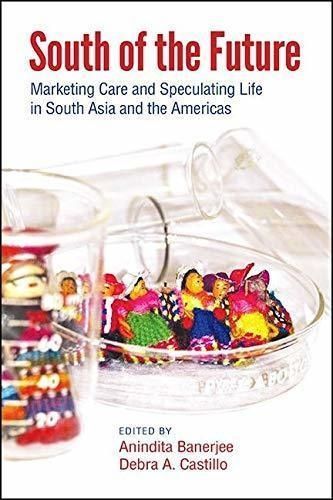
South of the Future: Marketing Care and Speculating Life in South Asia and the Americas, by Anindita Banerjee & Debra Castillo
November 9, 2020
11:15 am
South Asia and Latin America represent two epicenters of migrant care work and the globalized reproductive market. Yet scholars and the media continue to examine them in geographical and conceptual isolation. South of the Future closes both these gaps. It investigates nannying, elder care, domestic work, and other forms of migrant labor in the Americas together with the emerging “Wild West” of biotechnology and surrogacy in the Indian subcontinent. The volume is profoundly interdisciplinary and includes both prominent and emerging scholars from a wide variety of fields, including anthropology, law, literary and cultural studies, science and technology studies, and social policy. These contributors speak to the dynamic, continually changing facets of the nexus of care and value across these two key regions of the global south. By mobilizing specific locations and techno-economics and putting them into dialogue with one another, South of the Future rematerializes the gendered, racialized bodies that are far too often rendered invisible in structural analyses of the global south, or else are confined to particular geo- and biopolitical paradigms of emerging markets. Instead, these bodies occupy the center of a global, highly financialized economy of creating and sustaining life.
This book is based on presentations and conversations at the South Asia Program symposium, “Gujarat/Guatemala: Marketing Care and Speculating Life,” held May 6-7, 2016 at Cornell University. Several videos of interviews with conference participants are now vailable for online viewing.
Anindita Banerjee is Associate Professor of Comparative Literature at Cornell University. Her research focuses on science fiction and technocultural studies, environmental humanities, media studies, and migration studies across Russia, Central Asia, the Indian subcontinent, and Latin and African Americas. Her first book, We Modern People: Science Fiction and the Making of Russian Modernity won the Science Fiction and Technoculture Studies book prize from the University of California. She is an editor of three other books, South of the Future: Marketing Care and Speculating Life in South Asia and the Americas (with Debra Castillo), Science Fiction Circuits of the South and East (with Sonja Fritzsche), and Russian Science Fiction Literature and Cinema: A Critical Reader.
Debra A. Castillo is Stephen H. Weiss Presidential Fellow, Emerson Hinchliff Professor of Hispanic Studies, and Professor of Comparative Literature at Cornell University. She is past president of the international Latin American Studies Association. She specializes in contemporary narrative and performance from the Spanish-speaking world (including the United States), gender studies, comparative border studies, and cultural theory. Her most recent books include South of the Future: Speculative Biotechnologies and Care Markets in South Asia and Latin America (with Anindita Banerjee) and The Scholar as Human (with Anna Sims Bartel).
Registration is required for this virtual event
Additional Information
Program
Einaudi Center for International Studies
Latin American and Caribbean Studies
South Asia Program
The U.S.-China Trade Deal Risks Falling Victim to Spiraling Ties

SAP faculty Eswar Prasad quoted in Bloomberg: "“The phase-one trade deal between the U.S. and China hangs by a thread."
Additional Information
India Must Not Make the Mistake of Most Failed Nations

An interview with SAP's Kaushik Basu: "India’s sharp slowdown had begun two years before the pandemic and the way the lockdown was executed has given a further downward jolt to the economy."
Additional Information
“A-typical Muslims: A Discourse of ‘True’ and ‘Integrated’ Islam Among Young Italian-Bangladeshis Living in Rome (Italy),” by Andrea Priori, CMS Seminar Series

November 18, 2020
4:30 pm
‘Our parents couldn’t teach us what Islam actually is!’ This assertion, made by a 24-year-old youth, epitomizes the critical stance of second-generation Italian-Bangladeshis towards the religiosity of first-generation migrants. Based on ethnographic research within the Bangladeshi community in Rome, this presentation illustrates the apparently oxymoronic characteristics of a discourse of Muslim-ness which, despite stressing the importance of a return to the primary sources of Islam, combines this revivalist attitude with a peculiar emphasis on ‘integration’, and with modernist positions. In fact, for these youths, the religion practiced by the adults is both ‘impure’, i.e. an Islam too much influenced by the ‘Bangladeshi culture’, and ‘not integrated’ in the European context, i.e. an Islam incapable of offering to the Italian society a modern, and reassuring, image of Muslim people, and consequently unable to cope with a growing Islamophobia. I will show how this counter-intuitive combination is not only inspired by the teachings of Tariq Ramadan, and by his idea of a ‘European Islam’, but first and foremost it is grounded in the concrete life conditions of Muslim youths who are both well-integrated in the Italian society and animated by religious zeal. In this way, I seek to shed light on the mutual entanglement of religious stances and life experiences, and to highlight the limits of what Samuli Schielke calls ‘exceptionalist’ and ‘literalist’ approaches to the study of religion.
Additional Information
Program
Einaudi Center for International Studies
Institute for European Studies
South Asia Program
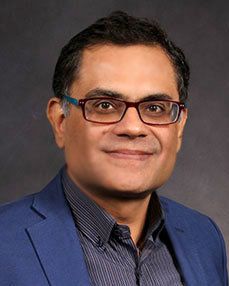
“In Search of a Modern Muslim: The Life and Works of Sayyid Ahmad Khan,” by Raza Ahmad Rumi, CMS Seminar Series
October 7, 2020
4:30 pm
Sir Sayyid Ahmad Khan (1817-1898) was a major Muslim figure in nineteenth century colonial India whose critical work on religion, education, archaeology and science influenced generations. While his work is viewed as an effort to bring Muslims out of their isolation, seek modern western education, his writings addressed key issues of faith, identity and knowledge. In a speech delivered in 1884, Khan said, "Today we are, as before, in need of modern 'ilm-al-kalam', by which we should either refute the doctrines of the modern sciences or undermine their foundations, or show that they are in conformity with the articles of Islamic faith.” My talk will focus on Khan’s calls for only ijtehad (re-interpretation) and seeking a new conceptual framework to review the Sharia. His work remains relevant in the 21st century for not just South Asian Muslims but for the Muslim world at large.
Additional Information
Program
Einaudi Center for International Studies
South Asia Program
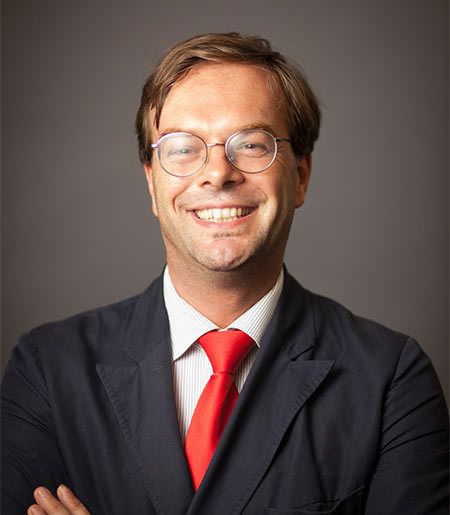
“Islamic Libraries from Spain to India (ca. 900-ca. 1730),” by Laurent Ferri, CMS Seminar Series
September 16, 2020
3:00 pm
This event has been rescheduled from Wednesday, September 9, to Wednesday, September 16.
While Muslim societies are very diverse, a common feature is the high status of the written word, and the centrality of libraries. During our entire period, the authority of the ulamas derived from their ability to derive the law from the foundational books. On the other hand, individuals were encouraged to read, memorize, and follow the Qur’an as well as the important commentaries and fatwas. The library culture had other roots. Wealthy bibliophiles were mostly concerned with prestige and with the esthetics of calligraphy and illumination. An administrative book culture also emerged in the thirteenth century, and flourished with the Ottoman State elite. Finally, Nelly Hanna speaks of the different perspectives of the middle-class of Cairo or Damascus, once it owned its own books. In any case, each new social-cultural dynamic reinforced the central role played by public and private libraries in Islam.
Additional Information
Program
Einaudi Center for International Studies
South Asia Program
Natasha Raheja

Assistant Professor, Anthropology
Geographic Research Interest: India-Pakistan
Teaching/Research Interest: Anthropology of the state, ethnographic film, minority citizenship, religious nationalism.
Additional Information
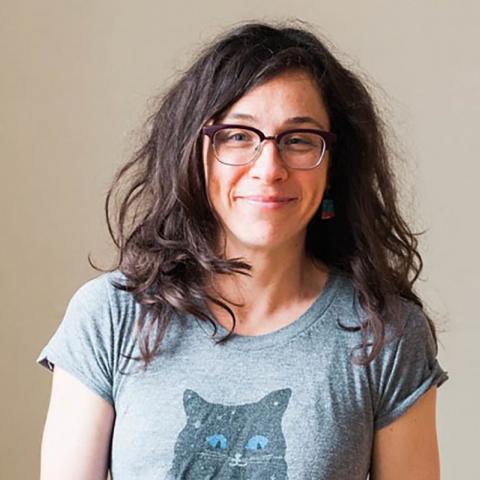
Sarah Besky
Binenkorb Director, South Asia Program
Additional Information
Program
Role
- Faculty
- SAP Core Faculty
- SAP Director
- SAP Steering Committee
- Einaudi Faculty Leadership
Contact
Email: sb2626@cornell.edu
Global Approaches to Race, Ethnicity, and Inequality
July 24, 2020
12:00 pm
Across the world, injustice perpetuates racial and ethnic inequalities, including policing practices, census and identity card categorizations, access to healthcare, education, employment, mobility, and political representation. Racial and ethnic inequalities are fundamentally about differential access to power, resources, protections, and rights. These injustices share common elements, but different histories and contexts shape them.
In this session of our webinar series, four experts on race and ethnicity will analyze global inequalities as they are experienced in local and regional forms, and analyze the implications of the contemporary moment for transformative change.
Moderator:
Rachel Beatty Riedl, Director of the Einaudi Center and Professor, Government Department, Cornell University.
Riedl teaches comparative and African politics, with an emphasis on political parties, democracy, and authoritarianism.
Panelists:
Prerna Singh, Political Science, Brown University.
Singh's research focuses on the intersection of ethnic conflict and competition, and the improvement of human well-being, particularly in the promotion of social welfare in South Asia.
Pap Ndiaye, History, Sciences Po (Paris).
Ndiaye's research focuses on transnational philosophies of race that draw both from American and French political thought, especially as they apply to the African diaspora populations of both countries.
Alisha Holland, Government, Harvard University.
Holland researches the comparative political economy of development with a focus on urban politics, social policy, and Latin America.
Leo Arriola, Political Science, University of California Berkeley.
Arriola studies comparative politics with a focus on democratization and governance in Africa.
Additional Information
Program
Einaudi Center for International Studies
Reppy Institute for Peace and Conflict Studies
East Asia Program
Southeast Asia Program
Latin American and Caribbean Studies
Institute for African Development
Institute for European Studies
South Asia Program