
South Asia Program
Governing the Unknown

Kaushik Basu, SAP
"Major advances in AI are raising a raft of concerns about education, work, warfare, and other risks that could destabilize human civilization," writes professor of economics Kaushik Basu. "While policy responses are urgently needed, they also must be guided by the right principles."
Additional Information
International Fair 2023

August 30, 2023
11:00 am
Uris Hall, Uris Hall Terrace
The annual International Fair showcases Cornell's global opportunities for undergraduate and graduate students. Explore the fair and find out about international majors and minors, language study, study abroad, funding opportunities, global internships, Cornell Global Hubs, and more.
The International Fair is sponsored by the Mario Einaudi Center for International Studies and Office of Global Learning (both part of Global Cornell), with Cornell's Language Resource Center.
Register for the event on Campus Groups.
Additional Information
Program
Einaudi Center for International Studies
Reppy Institute for Peace and Conflict Studies
East Asia Program
Southeast Asia Program
Latin American and Caribbean Studies
Institute for African Development
Institute for European Studies
South Asia Program
How Damage from a US Debt Default Could Cascade across the Global Economy

Eswar Prasad, SAP/Einaudi
"A debt default would be a cataclysmic event, with an unpredictable but probably dramatic fallout on U.S. and global financial markets,” says Eswar Prasad, professor of international trade policy.
Additional Information
How One Alumna Is Assisting Many Afghans

Part of the Scholars Under Threat Initiative
A group of Afghan scholars and students have found refuge at Cornell with support from sources including generous Cornell alumni.
Additional Information
Art and Migration

June 9, 2023
9:00 am
Goldwin Smith Hall, G64
The often-fraught pathways of human migration come alive through art. From storytelling to innovative sculpture, theater, cartoons, and painting, students, faculty, and artists supported by the Migrations Global Grand Challenge will tell their stories and showcase their art.
Anindita Banerjee, associate professor of comparative literatureDebra A. Casillo, Emerson Hinchliff Professor of Hispanic Studies and professor of comparative literatureJuan Harmon, MFA creative writing candidatePedro Molina, Nicaraguan cartoonist and journalistNatasha Raheja, assistant professor of anthropologySharifa Sharifi, Afghan artistGemma Rodrigues (Herbert F. Johnson Art Museum) and Eric Tagliacozzo (history) will moderate.
Register now.
Additional Information
Program
Einaudi Center for International Studies
Latin American and Caribbean Studies
South Asia Program
Testimonies of Migration: International Studies Summer Institute 2023

June 27, 2023
9:00 am
A.D. White House
Registration for this event is now closed. You can ask to be put on the waitlist be emailing SBP84@Cornell.edu
The 2023 International Studies Summer Institute (ISSI) will explore testimonies of migration. The ISSI is a professional development workshop for practicing and pre-service K–12 educators hosted annually by the Mario Einaudi Center for International Studies, in collaboration with the South Asia Center at Syracuse University.
During this cross-curriculum conference, educators will engage in discussions, workshops, and lectures that explore and amplify personal narratives of migration. Professors, postdoctoral fellows and other scholars from Cornell University and Syracuse University will share their cutting-edge research on migrant experiences from across different regions of the world, including South Asia, Southeast Asia, Latin America and the Caribbean, and Sub-Saharan Africa. Speakers will focus on individual narratives, as well as systemic reasons for migration, such as politics, conflict, and climate change.
Sessions will also explore culturally responsive practices when working with migrant students and discussing migrant narratives. Teachers will gain tools for leading conversations and developing projects with their students about migrant experiences.
Teachers will leave the conference with concrete resources to use in their classrooms, a deeper awareness of how to enter into conversation with students about their own and others’ migration experiences, and an understanding of contemporary migrant experiences from across the world.
The 2023 ISSI will be applicable for elementary, middle, and high school educators from all subject areas. Participating teachers will have the option to complete a lesson plan for PD credit that incorporates content from the workshop, with the support and guidance of our outreach staff.
Conference Schedule:
8:45-9:00 Breakfast and check-in
9:00-9:15 Introductory Remarks by Rachel Beatty Riedl
9:15-10:20 Panel: "Ethical and culturally responsive engagement with migrant narratives"
Panelists: Farah Bakaari, Juhwan Seo, Rose Anderson
Moderator: Shannon Gleeson
10:20-10:30 Break
10:30-11:30 Workshop with Mary Jo Dudley, “Supporting Immigrant Families in Schools”
11:30-12:00 Networking and reflection activity
12:00-1:00 Lunch
1:00-1:45 Breakout Sessions
Focus: Project-based learning around themes of migration (same sessions offered twice)
Option 1: Nicole Thuzar Tu-Maung, “Photovoice Methodology” Option 2: Maria Gimma, “Understanding the Global Phenomenon of Migration, a Project-Based Curriculum” Option 3: Nausheen Husain, “Storytelling With Data” 1:45-1:50 Break
1:50-2:35 Breakout Sessions, repetition of above options
2:35-3:00 Break / walk to Johnson Art Museum
3:00-4:00 Workshop with Carol Hockett and Maryterese Pasquale-Bowen, “How the Light Gets In: Contemporary Art and Migration”
4:00-4:20 Introduction to Einaudi Resources with Sarah Plotkin
4:20-4:30 Closing remarks with Sarah Pattison
Sponsored by: Syracuse University, Moynihan Institute for Global Affairs, South Asia Center, Cornell University’s Mario Einaudi Center for International Studies, Southeast Asia Program, South Asia Program, Institute for African Development, East Asia Program, Latin American and Caribbean Studies, Institute for European Studies, Migrations Initiative, TST-BOCES, U.S. Department of Education Title VI Program
Additional Information
Program
Einaudi Center for International Studies
East Asia Program
Southeast Asia Program
Latin American and Caribbean Studies
Institute for African Development
Institute for European Studies
South Asia Program
Announcing 2023 Awards

Einaudi Seed Grants Finding Fertile Soil
Read about new awards and research funded in 2022, including Alex Flecker (Amazon aquaculture) and Victoria Beard (Global Survey of City Leaders).
Additional Information
13 Cornellians Awarded Fulbright U.S. Student Awards

Thirteen Cornell students have been selected to research and teach English abroad with funding from the Fulbright U.S. Student Program.
Cornell's 2023–24 Fulbright students include six graduate students and seven graduating undergraduates whose time abroad will increase mutual understanding between the people of the United States and the people of other countries.
They will join the ranks of over 500 Cornellians who have traveled across the globe as Fulbrighters since the 1940s.
Fulbright Students 2023–24
Graduate Students
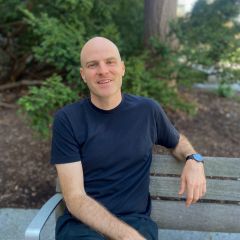
Michael Cary, Development Sociology
Paraguay
Project Title: Remaking Ñeembucú: Infrastructure, Rice Production, and Wetland Conversion in Paraguay
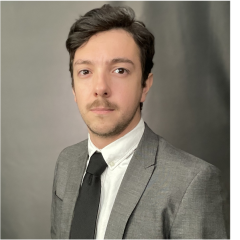
Duncan Eaton, History
Slovak Republic
Project Title: Nation-Building and Agrarian Politics in Interwar Eastern Slovakia

Jarvis Fisher, Development Sociology
Senegal
Project Title: Rice Production and Agroecology in the Senegal River Valley

Giselle Hobbs, Painting and Print Making
France
Project Title: The Aftermath of the Lockdown: Comparative Study of Paris, France, and the U.S.

Sasha Prevost, Religious Studies
Israel
Project Title: On the Path of Two Abrahams: Contemporary Jewish Sufism in Israel
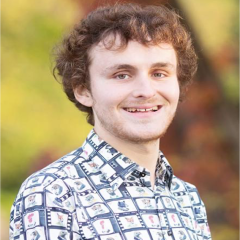
David Rubinstein, History
Poland
Project Title: Coal Town Cosmopolitanism: Jews, Germans, and Poles's Visions of Home in Postwar Walbrzych
Undergraduate Students
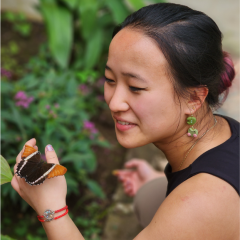
Laura Chang '23, Anthropology
Ecuador
Project Title: Intersections in Reproductive Health: The Integration of Kichwa and Western Medicines
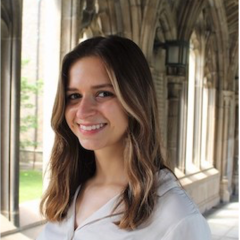
Maria DiGiovanni '23, Development Studies
Italy
Project Title: How Young Italians in Cosenza, Calabria Maintain Sustainable Rural Livelihoods
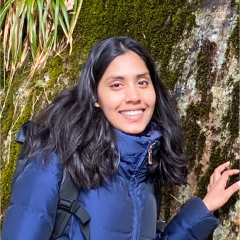
Farzana Hossain '23, Architecture
India
Project Title: Cultivated Landscapes: The Making and Remaking of Agriculture
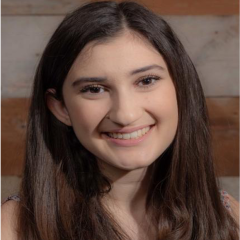
Sarah Hughner '23, Government and English
Timor-Leste
English Teaching Assistantship

Catherine Kopp '23, Applied Economics and Management
Czech Republic
English Teaching Assistantship
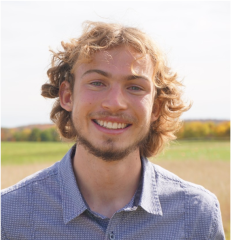
Dylan Rodgers '23, Agriculture
Nepal
Project Title: Feasibility of Small-Scale Recirculating Aquaculture Systems in Nepal
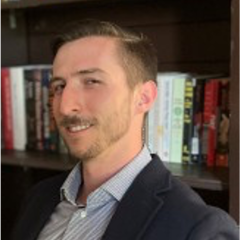
Evan Sierra '23, Government
Kazakhstan
English Teaching Assistantship
Will you be next?
Fulbright at Cornell is administered by the Einaudi Center. There are opportunities for undergraduate students, graduate students, and recent Cornell alumni to apply—Einaudi supports you throughout the process!
Additional Information
China’s Tightening Grip on Foreign Firms Risks Hitting Investment

Eswar Prasad, SAP
Eswar Prasad, professor of trade policy and economics, notes, “China does not yet have the capacity to generate a great deal of innovation.”
Additional Information
Afghanistan Ranks Most Insecure Country in the World

Sharif Hozoori, SAP
Sharif Hozoori, an Afghan political historian, writes on Taliban rule since August 2021. He is an IIE-SRF fellow and visiting scholar based in Einaudi’s South Asia Program.