
South Asia Program
Tanuj Chawla
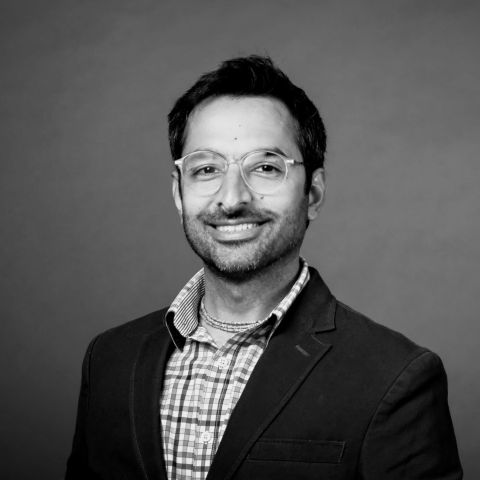
Graduate Student
Tanuj Chawla is a Tata-Cornell Scholar and a graduate student at the Bowers College of Computing and Information Science. He has been working with the Tata-Cornell Institute since 2019 and has developed India's first and only Database of Farmer Producer Organizations. Utilizing new research in the domain of HCI and ICT4D, his goal is to connect the millions of farmers in India and contribute to the growth story of the country, one FPO at a time.
Additional Information
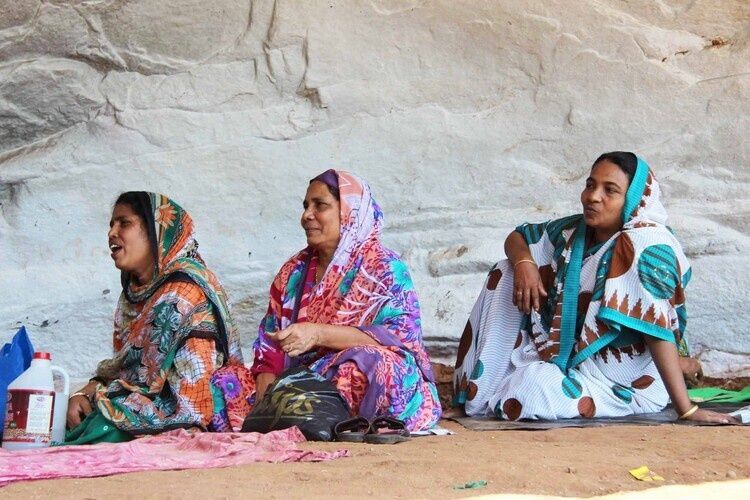
Community, Context, Critique: Sri Lanka Graduate Student Conference
April 22, 2023
9:00 am
Kahin Center
As in years prior, this conference provides an opportunity for graduate students to critically engage with the particularities of Sri Lanka and its diasporas; particularities often sacrificed to make our work speak clearly to non-specialist audiences. While we acknowledge the many benefits of such generalized engagement, we also recognize a keen need to build community around a shared sense of context. If there is something unique about the field of Sri Lankan Studies, then gathering in a common space to discuss the specificities of a local context offers opportunities to consider not only how this material contributes to the academic conversations in which it tends to be subsumed, but also how conventions of rigor, generosity, and accountability might best be achieved amongst scholars most intimately familiar with the conditions of producing this material. The conference will include students from within Sri Lanka; papers that engage with contemporary Sri Lankan scholarship, recognizing that the study of Sri Lanka within Sri Lanka often finds nuances lost in generalized or comparative disciplines around the globe; and reflections on the ways in which our institutional locations determine our approach to the study of Sri Lanka. The graduate conference aims to enhance intellectual exchange on Sri Lanka, emphasize the production of empirical and non-sectarian knowledge, build a new cohort of researchers across disciplines and institutions, and strengthen research and mentoring relationships across geographic, linguistic, and institutional borders.
CONFERENCE SCHEDULE
9:00-9:15 am Welcome
Iftikhar Dadi (History of Art & South Asia Program, Cornell University)
9:15-10:30 am Community and Context of the Nation
Theorising Internal Colonisation Through Resettlement Policy Pasan Jayasinghe (Political Science, University College London)
Making National Art Relationally in Postcolonial Sri Lanka: Case Study of Ediriweera Sarachchandra and Charles de Silva Gurunnanse Chamila Somirathna (Sinhala, University of Kelaniya)
Discussant: Anindita Banerjee (Comparative Literature, Cornell University)
10:45 am-12:00 pm Digital Archives of Sri Lanka
Crystal Baines (Programme Consultant, American Institute of Sri Lankan Studies)
Thamilini Jothilingam (Digital Asset Archivist, University of the Fraser Valley)
Kartik Amarnath (Archival Creators Fellow, South Asian American Digital Archive)
Chair: Anne M. Blackburn (Asian Studies, Cornell University)
1:30-2:00 pm Resources for Sri Lankan Studies
Bandara Herath (Asian Studies, Cornell University)
Daniel Bass (South Asia Program, Cornell University)
2:00-3:15 pm Eastern Communities and Contexts
The Tricky Work of Living: Everyday Life of Hill Country Tamils in Postwar Eastern Sri Lanka Shalini Mariyathas (Geography and Planning, University of Toronto)
Storytelling Brahmins: Migration, Marriage, and Caste in Sri Lanka’s East Senthujan Senkaiahliyan (Health Sciences, University of Toronto)
Discussant: Elizabeth Bittel (Sociology, SUNY-Cortland)
Additional Information
Program
Einaudi Center for International Studies
South Asia Program
On Refugee Grief: An Intergenerational Remembrance

April 20, 2023
4:30 pm
Physical Sciences Building, 401
A Keynote Event for Displaced. Detained. Undeterred: A Critical/Creative Symposium
Thursday, April 20, 2023, Physical Sciences Building 401
4.30 Opening Remarks
Saida Hodžić (Cornell University)
4.45 KEYNOTE DIALOGUE
In this keynote, speakers Evyn Lê Espiritu Gandhi and Yến Lê Espiritu offer an intergenerational remembrance of Đại Tá [Colonel] HồNgọc Cẩn,our cậu hai [oldest maternal uncle] and ông hai[oldest granduncle] respectively, an Army of the Republic of Vietnam officer who was publicly executed by a Communist firing squad. This remembrance is a portal toa discussion on refugee grief, not as a private or depoliticized sentiment but as a resource forenacting a politics that confronts the conditions under which certain lives are considered moregrievable than others. Focusing on quotidian memory places, particularly Internet memorialsconstructed by the Vietnamese diasporic community, they will discuss how and why South Vietnam’swar dead have become so central to the refugees’ retellings of South Vietnamese losses in theUnited States. At the same time, they point out that these commemoration efforts can and dolead to harsh and unrelenting attacks against the living, especially those who harbor morecritical visions of the diasporic community.
The keynote will be followed by a reception.
To attend the keynote in person, register here. To attend the keynote virtually, register here.
Speakers
Evyn Lê Espiritu Gandhi is an assistant professor of Asian American Studies at the University of California, Los Angeles (Tovaangar). Author of Archipelago of Resettlement: Vietnamese Refugee Settlers and Decolonization across Guam and Israel-Palestine, Dr. Gandhi is the co-editor with Vinh Nguyen of The Routledge Handbook of Refugee Narratives.
Yến Lê Espiritu is Distinguished Professor of Ethnic Studies at the University of California, San Diego. Her books Body Counts: The Vietnam War and Militarized Refuge(es) and Departures: An Introduction to Critical Refugee Studies (co-editor) have charted an interdisciplinary field of critical refugee studies, which reconceptualizes “the refugee” not as an object of rescue but as a site of social and political critiques. Dr. Espiritu is also an inaugural member of The Critical Refugee Studies Collective.
Additional Information
Program
Southeast Asia Program
Einaudi Center for International Studies
Reppy Institute for Peace and Conflict Studies
Institute for European Studies
South Asia Program
Latin American and Caribbean Studies
Summer Program in India Info Session
February 13, 2023
5:00 pm
Rockefeller Hall, 183
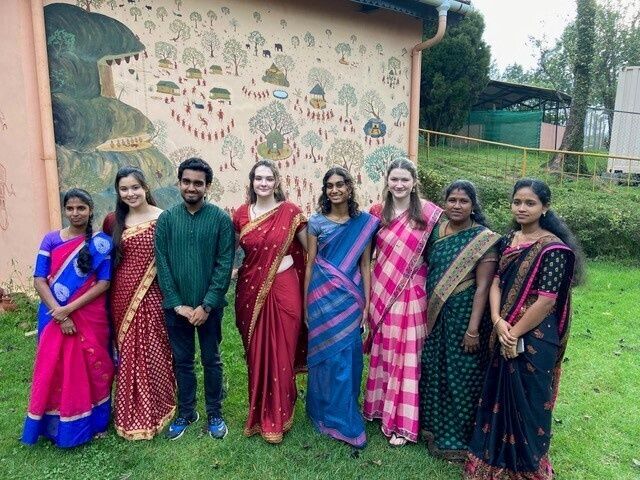
Are you interested in the intersection of mental health and culture, global health, and community engagement? Do you want to gain field research skills and learn about indigenous communities in South India’s beautiful and fragile Nilgiris Biosphere Reserve? If so, the Cornell-Keystone Nilgiris Field Learning Program might be for you!
Additional Information
Program
Einaudi Center for International Studies
South Asia Program
Summer Program in India Info Session
January 30, 2023
5:00 pm
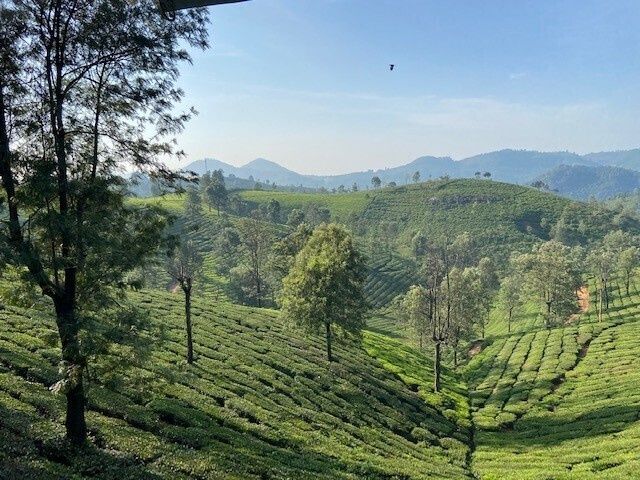
Are you interested in the intersection of mental health and culture, global health, and community engagement? Do you want to gain field research skills and learn about indigenous communities in South India’s beautiful and fragile Nilgiris Biosphere Reserve? If so, the Cornell-Keystone Nilgiris Field Learning Program might be for you!
Additional Information
Program
Einaudi Center for International Studies
South Asia Program
Mobs and Megaprojects: Infrastructural Populism in Bangladesh

April 10, 2023
12:15 pm
Uris Hall, G08
Talk by Nusrat S Chowdhury (Anthropology, Amherst College)
This paper contemplates the postcolonial trajectories of development and democracy by focusing on a river bridge in Bangladesh which is by far the country’s most high-profile infrastructural project. While the Padma Bridge was inaugurated only in 2022, its status as a populist project and an index of postcolonial corruption dates back more than a decade. In 2011, the World Bank voiced concern over possible corruption and decided to withdraw funding. In 2013 a Canadian court dismissed the case in absence of acceptable evidence. In 2019, multiple people in Bangladesh were killed based on a rumor that the Padma Bridge needed children’s heads for timely completion. In light of these entangled set of events, along with the fetishistic attachments that the bridge has unearthed, my paper aims to situate megaprojects as articulating a specific imagination of development. Analytically, I propose that while infrastructural development thrives on and energizes visibiliites, language is often seen as a supplement to the visual. I want to rethink this relationship to argue that language, as much as visibility, is constitutive of the connections that Padma Bridge brings to our attention.
Nusrat S. Chowdhury is a political anthropologist who focuses on questions of political communication and popular sovereignty. Her first book, Paradoxes of the Popular is an ethnography of the crowd. Her current book is a meditation on populism as mediated through infrastructure. This work also privileges language as integral to the way in which infrastructure is accommodated in everyday life that goes beyond the spectacular visuals that development megaprojects thrive on and promise.
Additional Information
Program
Einaudi Center for International Studies
South Asia Program
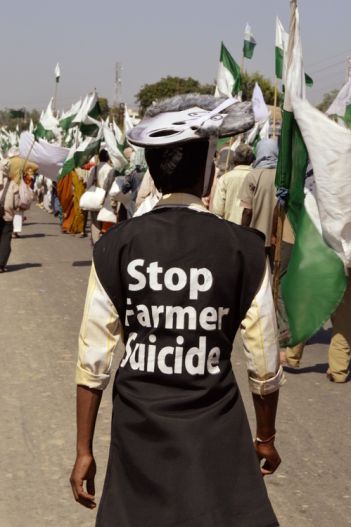
Dying to be Read: Suicide Notes of Indian Farmers as Public Texts
March 27, 2023
12:15 pm
Uris Hall, G08
Talk by Jomy Abraham
Wars, pogroms, environmental catastrophes, and resulting refugee crises turn certain geographies into killing fields. We are witnessing ‘unproductive’ geographies and population groups being abandoned to perish. The contemporary world is seeing new modes of narratives and texts emerging from such death-worlds which demand scholarly attention. Agricultural lands in India have turned into death-worlds where a massive number of suicides have been reported since the mid-1990s. Economic policies implemented by consecutive governments, the introduction of GM crops with inadequate research along with changing climate patterns have pushed a vast population into great distress and the agricultural sector as a whole into a crisis. Situating the suicide notes of farmers from India as texts emerging from a geography of abandonment and death, this paper intends to understand how the act of writing and the text, when the self is anticipating to cease, become ‘the political’ act. A suicide note is the final, desperate means for a ‘suiciding’ farmer to speak in a political voice. Having been written at the cusp of life and death, these texts open up a multiplicity of styles, forms, and materiality to acquire the characteristics of ‘public texts’ with the potential to unsettle the state narratives. Discussing these texts in their singularity within the larger context of the continuing agrarian crisis, the paper will argue how the suicide notes as public texts negotiate for the farming community in the age of necro-power.
Dr. Jomy Abraham is a Visiting Scholar at the South Asia Program, Mario Einaudi Center for International Studies, Cornell University. She received her Ph.D. from the Centre for English Studies, Jawaharlal Nehru University, India, in 2021. Her thesis titled Thanatowritings: Death, Self and Writing in the Farmers’ Suicide Notes from Vidarbha Region, Maharashtra is an interdisciplinary work that draws from literary philosophy, environmental humanities, political theory, and critical suicidology studies to understand texts and authors emerging from geographies where death is ubiquitously present. She obtained her MPhil degree from the Department of English, University of Hyderabad, India. Her dissertation titled De/reterritorialising the Nation: Gender Politics in the Short Stories of Contemporary Women Writers in Kerala tries to understand the shift in the gender politics in the stories of women writers from Kerala to problematise the idea of a nation. She is a literary studies scholar interested in the philosophy of literature, death and literature, death and contemporary cultures, environmental humanities, gender and literature, and Indian English fiction. She has published both peer-reviewed and popular articles. She is currently working towards publishing her book titled Suicide Studies: Philosophy, History, and Politics (a rough English translation) in Malayalam, her first language.
Additional Information
Program
Einaudi Center for International Studies
South Asia Program
Climate Change, Water Resources, and Renewable Energy in Afghanistan

February 20, 2023
12:15 pm
Uris Hall, G08
Talk by Noor Ahmad Akhundzadah (South Asia Program & Natural Resources and the Environment, Cornell University)
Climate change and insecurity are the main threats to Afghanistan's water resources and socioeconomic sustainability. Afghanistan's contribution to Greenhouse Gases emissions is negligible on a global scale; nonetheless, Afghanistan is adversely affected by climate change. Climate changes deeply affected Afghanistan's natural resources, including water, agriculture, forests, pastures, rangeland, and ecosystems. People's livelihoods depend on water resources and agriculture, which is the basis of the country's economy. Based on the geological structure and hydrological systems, the surface water of Afghanistan is divided into five major river basins, including Kabul, Helmand, Harirud-Murghab, Northern, and Amu-Darya River Basins. Four of these river basins flow into the neighboring countries of Uzbekistan, Turkmenistan, Iran, and Pakistan. Through the major river basins, Afghanistan has a significant volume of water resources fed by precipitation in the high mountains. The total annual renewable water potential is estimated at 75 Billion Cubic Meters (BCM), of which 57 BCM is surface water and 18 BCM is groundwater. Total hydroelectric capacity is estimated at 23000 Mega Watt (MW). These neighboring countries are struggling to secure enough water to grow their economy. Afghanistan's protracted insecurity and political instability damaged the socioeconomic and environmental infrastructure. In addition, the transboundary water is of great interest to the regional countries, which directly and indirectly often leads to violent conflicts. Furthermore, Afghanistan's renewable energy sources, including hydropower, solar, wind power, and biomass, are abundant, and their potential is much more than the national energy and electricity demands. Therefore, water resources management, renewable energy resources development, and utilization are integral to Afghanistan's socioeconomic development and environmental restoration. This presentation will discuss the role of water and renewable energy resources in Afghanistan's socioeconomic development and environmental restoration. Climate change and the country's protracted insecurity and conflict are potential threats to sustainable development.
Noor Ahmad Akhundzadah received a bachelor's in geology from Kabul University, a Master's in Agriculture, and a Ph.D. in Geotechnical Engineering from Tokyo University of Agriculture and Technology of Japan. Akhundzadah's area of research is groundwater resources investigation, climate change impacts on water resources, climate change mitigation through renewable energy resources, peacebuilding, climate change, and migration. He is an AGU Global Engagement Committee member.
Additional Information
Program
Einaudi Center for International Studies
South Asia Program
Grad Chats: Beyond the IRB: Ethics and International Research

March 29, 2023
4:30 pm
Uris Hall, G-08
Current calls to decolonize global research renew the institutional and personal scrutiny of our “best practices” in conducting field research. Beyond formal adherence to the Belmont principles of “respect, beneficence, and justice,” researchers must reexamine some of the hidden (and not so hidden) costs borne by the local community in the research effort. Panelists will discuss ethical considerations of international research and ethnography in a variety of methodological practices: randomized control trials, focus group discussions, essay competitions, and selective summer camps.
Moderator
Rachel Beatty Riedl (Government, A&S; Einaudi Center)Panelists
Arnab Basu (Dyson School)Alex Nading (Anthropology, A&S)Sarah Thompson (South Asia Program, Einaudi Center)***
Grad Chats: Conversations on International Research and Practice is a series hosted by the Mario Einaudi Center for International Studies to support graduate students with interdisciplinary training and planning around conducting international research.
Spring 2023 Schedule
From Plan A to Plan B: Designing Research for a Changing World (Thursday, February 16, 4:30 pm – 6:00 pm, Uris Hall G02)Beyond the IRB: Ethics and International Research (Wednesday, March 29, 4:30 pm – 6:00 pm, Uris Hall G08)Best Practices and Challenges in International Field Research (Thursday, March 30, 4:30 pm – 6:00 pm, Uris Hall G02)Finding a Research Focus through Creative Writing (Tuesday, April 18, 4:30 pm – 6:00 pm, Uris Hall G08)Travel Health and Safety Awareness for Conducting Research Abroad (Tuesday, May 9, 4:30 pm – 6:00 pm, Uris Hall G08)
Additional Information
Program
Einaudi Center for International Studies
East Asia Program
Southeast Asia Program
Latin American and Caribbean Studies
Institute for African Development
Institute for European Studies
South Asia Program
Grad Chats: From Plan A to Plan B: Designing Research for a Changing World

February 16, 2023
4:30 pm
Uris Hall, G-02
What do you do when the site where you planned to do your research has a major disruption making your research infeasible? What do you do when a loved one gets sick and you need to find more time for caregiving in the last semester of your program? What do you do when you get a job—a year earlier than you anticipated—and you need to finish quickly? Have a Plan B! Come hear from current and former PhD students who have had to make changes in plans, how they negotiated the process with their committee, and where they are today.
Moderator
Mildred Warner (City and Regional Planning, AAP)Panelists
Gloria Blaise (Natural Resources and the Environment, CALS)Michael Cary (Global Development, CALS)George Homsy (Binghamton University)Adam (Chuling) Huang (International and Comparative Labor, ILR)***
Grad Chats: Conversations on International Research and Practice is a series hosted by the Mario Einaudi Center for International Studies to support graduate students with interdisciplinary training and planning around conducting international research.
Spring 2023 Schedule
From Plan A to Plan B: Designing Research for a Changing World (Thursday, February 16, 4:30 pm – 6:00 pm, Uris Hall G02)Best Practices and Challenges in International Field Research (Tuesday, March 14, 4:30 pm – 6:00 pm, Uris Hall G08)Beyond the IRB: Ethics and International Research (Wednesday, March 29, 4:30 pm – 6:00 pm, Uris Hall G08)Finding a Research Focus through Creative Writing (Tuesday, April 18, 4:30 pm – 6:00 pm, Uris Hall G08)Travel Health and Safety Awareness for Conducting Research Abroad (Tuesday, May 9, 4:30 pm – 6:00 pm, Uris Hall G08)
Additional Information
Program
Einaudi Center for International Studies
East Asia Program
Southeast Asia Program
Latin American and Caribbean Studies
Institute for African Development
Institute for European Studies
South Asia Program