
South Asia Program
Global Inequality Is Rising Again

Ravi Kanbur, PACS/SAP
This piece references research by Ravi Kanbur, professor of economics and policy, suggesting global inequality may rise in steady fashion for years to come.
Additional Information
Jessie Hughes

Graduate Student
Degree: PHD, Natural Resources
Language: Nepali
Research interests: drivers of human migration, social-ecological systems, South Asia relations, natural resource management and climate change, urban development, bioculture, and 21st-century land ethics
Additional Information
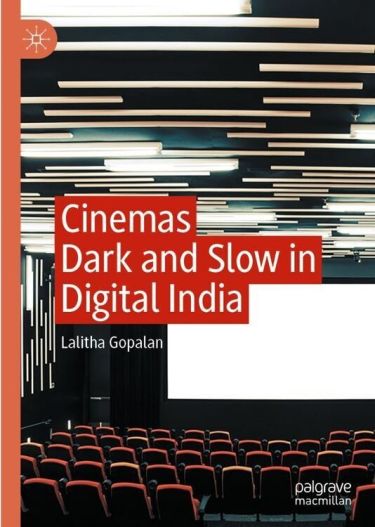
Cinemas Dark and Slow in Digital India
September 12, 2022
12:15 pm
Uris Hall, G08
Talk by Dr. Lalitha Gopalan
Cinemas Dark and Slow in Digital India provides a sustained engagement with contemporary Indian feature films from outside the mainstream, including Aaranaya Kaandam, I.D., Kaul, Chauthi Koot, Cosmic Sex, and Gaali Beeja, to undercut the dominance of Bollywood-focused film studies. Gopalan assembles films from Bangalore, Chennai, Delhi, Kolkata, and Trivandrum, in addition to independent productions in Bombay cinema, as a way of privileging understudied works that deserve critical attention. The book uses close readings of films and a deep investigation of film style to draw attention to the advent of digital technologies while remaining fully cognizant of ‘the digital’ as a cryptic formulation for considering the sea change in the global circulation of film and finance. This dual focus on both the techno-material conditions of Indian cinema and the film narrative offers a fulsome picture of changing narratives and shifting genres and styles. The book presentation will include a sequence of clips from a few select films considered in the book.
Lalitha Gopalan is an associate professor in the Department of Radio-Television-Film and affiliate faculty in the Department of Asian Studies and South Asia Institute. Her research and teaching interests are in the areas of Film Theory, Feminist Film Theory, Contemporary World Cinemas, Indian Cinemas, Genre Films, and Experimental Film and Video. Essays and books written by her include Cinemas Dark and Slow in Digital India (Palgrave Macmillan, 2021; Orient Blackswan 2021), Cinema of Interruptions: Action Genres in Contemporary Indian Cinema (London: BFI Publishing, 2002), and Bombay (London: BFI Modern Classics, 2005); and the edited volume The Cinema of India (London: Wallflower Press, 2010). Her current book project explores various experimental film and video practices across different locations globally. She has published essays in journals including Screen, Journal of Moving Image, Film Quarterly, New Cinemas: Journal of Contemporary Film, and many landmark anthologies. She has been a recipient of several grants including a Senior Fellowship from the Polish Institute of Advanced Study in Warsaw (PIAST); Provost’s Author’s Fellowship from the University of Texas at Austin; Tagore Fellowship from the Ministry of Culture, Government of India; Senior Long-Term Fellowship, American Institute of Indian Studies; and Fulbright Hays-Nehru Fellowship. Long interested in curatorial practices her recent co-curated projects with Anuj Vaidya include Cruel Cinema: New Directions in Tamil Cinema (2011-12) and Other Species, Other Times: New Video Art from India’ (2015-16). Lalitha Gopalan currently serves on the editorial board of Camera Obscura: Feminism, Culture, and Media Studies. She has served on several film festival juries and is currently on the advisory board of the 3rd Film Festival, San Francisco.
Additional Information
Program
Einaudi Center for International Studies
South Asia Program
Pelosi’s Taiwan Trip Spurs New Military Activity in Pacific

Allen Carlson, CMSP/EAP/SAP/SEAP
“In the end, one would hope that the Speaker has made her point and will be restrained in speaking directly about independence while in Taiwan… while China will not go beyond previous shows of force,” says Allen Carlson, associate professor of government.
Additional Information
Why and How Gandhi Civilized Disobedience

October 20, 2022
11:25 am
Many contemporary theorists and practitioners of disobedience have questioned whether civility and nonviolence ought to be requisite components of legitimate dissent. While sharing their skepticism of overly narrow, prescriptive formulations of a moral or legal right to disobedience, Professor Karuna Mantena considers broader practices of civility and explores their purpose and function in terms of the political logic of nonviolent protest. She does so by way of a historical and conceptual analysis of why and how Gandhi introduced civility into the theory and practice of nonviolent disobedience. The emphasis on civility in disobedience marks a significant departure from Thoreau’s understanding, in which the term “civil” designated the object of resistance (namely, civil government or the state) and not its character.
Gandhi began to insist on civility in nonviolent protest as a remedy to the violence that accompanied his first attempts at mass satyagraha in India (1919-1922). He diagnosed this violence as stemming in part from the unmasterable character of political action. Civility as a form of self-discipline was devised to manage and mitigate action’s inherent hazards. The speaker will highlight two novel aspects of this formulation: the ways in which civility was to be formalized, performed, and dramatized in satyagraha and how such practices served to make protest more persuasive.
Please join us for this virtual conversation. Register here.
About the Speaker
Karuna Mantena is a Professor of Political Science at Columbia University and co-director of the International Conference for the Study of Political Thought (CSPT). She is the author of Alibis of Empire: Henry Maine and the Ends of Liberal Imperialism (2010), which analyzed the transformation of nineteenth-century British imperial ideology.
***
Presented by the Reppy Institute for Peace and Conflict Studies. Co-sponsored by the Department of History and the Gender and Security Sector Lab.
Additional Information
Program
Einaudi Center for International Studies
Reppy Institute for Peace and Conflict Studies
South Asia Program
Afghanistan One Year Later: Reflections on Life Under the Taliban

August 25, 2022
5:30 pm
Uris hall, Terrace
One year ago, on August 15, 2021, the Taliban entered the Arg (Presidential palace) in Kabul, completing their astonishingly rapid takeover of Afghanistan. At the end of that same month, US forces completed withdrawal from Afghanistan – marking an end to the longest war in American history. One year later, our speakers reflect on Afghanistan’s recent history, life under the Taliban regime, and what we might expect in the near future as the Taliban engages with the international community. We welcome attendees to join us for a fireside conversation about this critical geopolitical topic.
Speakers
Zinab Zhra Attai, Reppy Institute Director’s Fellow, Ph.D. student in Comparative Politics, Cornell University
Sharif Hozoori, Visiting Scholar, South Asia Program & IIE-SRF Fellow
Maryam Amini, Global Development, Cornell CALS
Moderator
Sabrina Karim, Hardis Family Assistant Professor for Teaching Excellence, Associate Director, Reppy Institute for Peace and Conflict Studies
***
Presented by the Reppy Institute for Peace and Conflict Studies. Co-sponsored by the South Asia Program and the Gender and Security Sector Lab.
Additional Information
Program
Einaudi Center for International Studies
Reppy Institute for Peace and Conflict Studies
South Asia Program
Mother Ocean, Father Nation

October 12, 2022
4:45 pm
Physical Sciences Building, 401
A conversation with Nishant Batsha and Durba Ghosh (History, Cornell University).
On a small Pacific island, a brother and sister tune in to a breaking news radio bulletin. It is 1985, and an Indian grocer has just been attacked by nativists aligned with the recent military coup. Now, fear and shock are rippling through the island’s deeply-rooted Indian community as racial tensions rise to the brink. Bhumi hears this news from her locked-down dorm room in the capital city. She is the ambitious, intellectual standout of the family—the one destined for success. But when her friendship with the daughter of a prominent government official becomes a liability, she must flee her unstable home for California. Jaipal feels like the unnoticed, unremarkable sibling, always left to fend for himself. He is stuck working in the family store, avoiding their father’s wrath, with nothing but his hidden desires to distract him. Desperate for money and connection, he seizes a sudden opportunity to take his life into his own hands for the first time. But his decision leaves him at the mercy of an increasingly volatile country. Spanning from the lush terrain of the South Pacific to the golden hills of San Francisco, Mother Ocean Father Nation is an entrancing debut about how one family, at the mercy of a nation broken by legacies of power and oppression, forges a path to find a home once again.
Nishant Batsha is a writer of fiction and histories. He is the author of the 2022 novel Mother Ocean Father Nation (Ecco/HarperCollins). He is currently at work on A Bomb Placed Close to the Heart (Ecco/HarperCollins, February 2025), a novel set between California and New York at the dawn of World War I. He holds a PhD in history from Columbia University, as well as a master's from the University of Oxford (on a Doctorow Fellowship and ESU-SF Scholarship) and an undergraduate degree from Columbia. His academic research focused on Indian indentured labor in Trinidad and Fiji. Nishant's writing has been supported by the Headlands Center for the Arts and the Prelinger Library, as well as fellowships such as the Paul & Daisy Soros Fellowship for New Americans.
Books will be available for sale, and signing, after the conversation.
Additional Information
Program
Einaudi Center for International Studies
South Asia Program
Life After Death: Ritual and Placemaking in Old Delhi
October 24, 2022
12:15 pm
Uris Hall, G08
Talk by Kalyani Devaki Menon
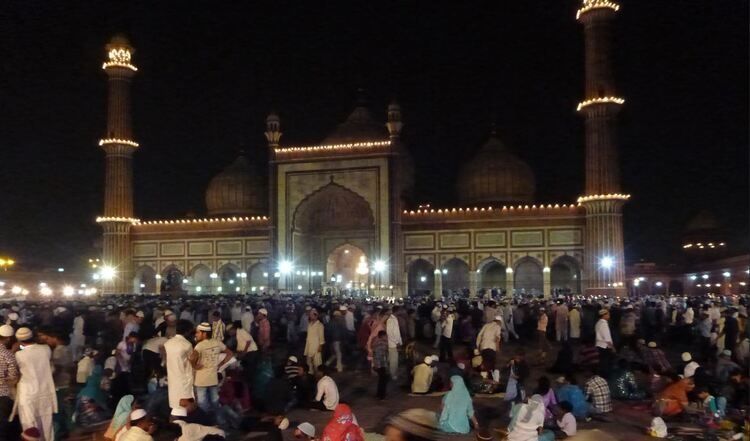
In today’s India where we see the ascendance of Hindu supremacy, the increasing hegemony of upper-caste Hindu norms, escalating violence against religious minorities, and rising authoritarianism, the place for Muslims is shrinking. However, while these forces marginalize Muslims and threaten their place in contemporary India, they are not totalizing. Drawing on ethnographic fieldwork with diverse groups of Muslims in Old Delhi, I examine how religion provides one arena for Muslims to intervene in the political and counter the revanchist politics of the Hindu Right in India. The religious practices of Old Delhi’s Muslims imbue localities with particular cultural inflections and can be seen as modes of making place. Focusing on tensions that emerged between different groups of Muslim women over mourning rituals in Old Delhi, I explore how they not only index diverse constructions of ideal religious subjectivity, but also illustrate how Old Delhi’s diverse Muslim communities negotiate difference and construct belonging in contemporary India. In so doing, I analyze how rituals of death are also very much about life, providing an arena for Old Delhi’s Muslims to variously make place for themselves in India today.
Kalyani Devaki Menon is a Professor in the Department of Religious Studies at DePaul University. Her research focuses on religious politics in contemporary India. Her first book, Everyday Nationalism: Women of the Hindu Right in India, was published by the University of Pennsylvania Press in 2010. Her new book, Making Place for Muslims in Contemporary India, was published by Cornell University Press in 2022.
Additional Information
Program
Einaudi Center for International Studies
South Asia Program
Rare and Distinctive Language Fellowships

Details
If you love languages, our newest summer funding opportunity is for you!
Rare and distinctive (RAD) languages set Cornell apart. Cornell offers over 50 languages, including some of the world's least frequently taught—from Ukrainian to Quechua, Urdu to Burmese.
With the help of a RAD Language Fellowship, you can achieve fluency in your choice of these languages. Learning RAD languages offers insight into vibrant cultural identities and traditions and gives you the ability to work effectively in places around the globe.
Cornell Chronicle: Einaudi Fellowships Support Students Learning Uncommon Languages
Amount
For summer study at any level (graduate or undergraduate): $3,500 stipend, plus a fees and tuition allowance of up to $5,000.
Eligibility
All currently enrolled Cornell graduate and undergraduate students are eligible for RAD fellowships. You do not need to be a citizen or permanent resident of the United States or complete a FAFSA, which FLAS requires.
You must be planning to study a modern language among the least commonly taught languages offered at Cornell (see sidebar).
To be a successful applicant, you need to show potential for high academic achievement and agree to pursue full-time study of a language in accordance with the university’s requirements. You do not need to have previous experience or coursework in the language you plan to study. Lowest priority will be given a candidate who is a native speaker of the language.
How to Apply
In your application, you will be asked to provide information on your proposed study location. You must identify your own preferred program.
We recommend the following U.S. summer intensive language programs, although we will consider any programs—domestic or overseas—that meet the minimum requirements.
- African Summer Language Institute (ASLI)
- Indiana University Summer Language Workshop
- South Asia Summer Language Institute (SASLI)
- Southeast Asian Studies Summer Institute (SEASSI)
- YIVO-Bard Summer Program
Your program must be at least six weeks in duration and offer at least 120 student contact hours. Please indicate the language level you intend to study during the award period.
Requirements
- Be a currently enrolled Cornell student.
- Plan to attend an approved summer intensive language acquisition program.
- Use the online application to submit your materials, including:
- Two letters of recommendation from faculty members.
- An official transcript of one full academic year of coursework.
- An optional third letter of recommendation from a language instructor.
Additional Information
Built to Fail: How Bureaucratic and Institutional Origins Undermined State Building in Afghanistan
September 8, 2022
11:25 am
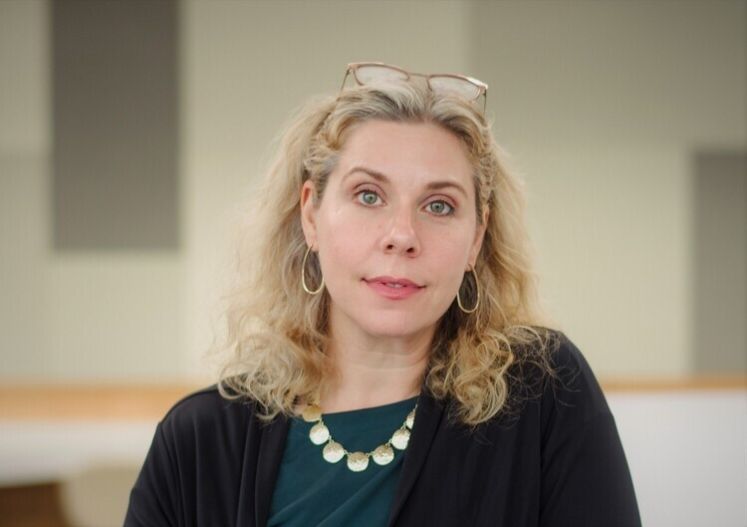
Jennifer Brick Murtazashvili presents evidence from Afghanistan to illustrate how failure to break from Soviet-era centralized public administration undermined the massive state-building project and perpetuated a wedge between Afghan civil society and a state that failed to deliver on its promise.
Liberal state building continues to fall short of its promise of political order and economic development. The persistence of bureaucratic legacies in states seeking to recover from conflict, especially the persistence of centralized administrative structures, help explain these failures. These institutions are often the source of state collapse yet are often reinforced by the international community once the dust of war settles. This leads to a vicious cycle of centralization that reinforces rigidity through influxes of foreign aid. Elections often serve as a smokescreen that detract from meaningful administrative reform. The desire to concentrate power is at odds with societies that have governed without the state, or have become deeply distrustful of it, during conflict.
Please join us for this virtual conversation. Register here.
About the Speaker
Jennifer Brick Murtazashvili is an Associate Professor of Public and International Affairs, at the University of Pittsburgh.
***
Presented by the Reppy Institute for Peace and Conflict Studies. Co-sponsored by the South Asia Program and the Gender and Security Sector Lab.
Additional Information
Program
Einaudi Center for International Studies
Reppy Institute for Peace and Conflict Studies
South Asia Program