
South Asia Program
The Future of Tech in India: Leveraging Digitalization for Inclusive Growth

April 22, 2021
12:00 pm
Over the last decade, India has become the fifth-biggest economy in the world, taking an innovative approach to digitalization with the unique combination of large-scale diffusion of bank accounts for the unbanked, a nationwide biometric database for 1.3 billion citizens, and the widespread adoption of mobile technology — now second largest in the world with over 600 million subscribers.
Despite being hit hard by the pandemic, India’s digital success is now enabling the economy to rebound sharply while also ushering in new business models across a range of sectors, such as financial payments and healthcare.
The Emerging Market Webinar Series, organised by Cornell's Emerging Markets Institute, invites a distinguished panel of experts to discuss how digital transformation is a key enabler for sustainable and inclusive growth in India.
Speakers
Lourdes Casanova, Senior Lecturer, Cornell SC Johnson College of BusinessSaurabh Agrawal, Executive Director and Group CFO, Tata SonsShobana Kamenini, Executive Vice Chairperson, Apollo Hospitals Enterprises Ltd.Soumitra Dutta, Professor of Management and Former Founding Dean, Cornell SC Johnson College of BusinessModerator: Vinit KR Khicha, EMI Fellow and FT MBA '21
Additional Information
Program
Einaudi Center for International Studies
Latin American and Caribbean Studies
South Asia Program
Verdant Views: Global Climate Stories
April 22, 2021
3:00 pm
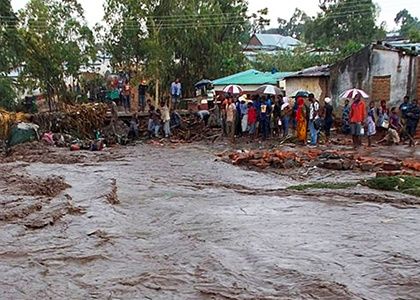
Our changing climate poses great challenges for humanity around the world: extreme weather events, sea level rise, flooding, drought, wildfires and more. How are countries in areas most affected by climate change responding to these and other challenges? In honor of Earth Day 2021, this special edition of Verdant Views will feature current Fellows in Cornell’s Hubert H. Humphrey Fellowship Program, sharing stories of the challenges and choices they face in their home countries, and actions being taken in response to this global crisis. Presented in partnership with the Hubert H. Humphrey Fellowship Program and the CALS Department of Global Development.
Participating Humphrey Fellows:
Husnain Afzal, Executive Engineer (Civil) at Pakistan Water & Power Development Authority (WAPDA)
Saukira Banda, Former Communication and Knowledge Management Officer for 'Pilot Program for Climate Resilience Project' in Environmental Affairs Department, Ministry of Forestry and Natural Resources, Malawi
Natalya Minchenko, Sustainable Development Goals advisor, UNDP/UNICEF/UNFPA project on 2030 Agenda, Minsk, Belarus
Alma Perez, Agricultural Production Manager, La Paz Department, Project ACS USAID at FINTRAC, Honduras
This live webinar is free but pre-registration is required. Please register through the "Register" button on this page, or the following link: https://cornell.zoom.us/webinar/register/WN_qPWPrfsYRHuT34O4o5rCDw
After registering, you will receive a confirmation email containing information about joining the webinar. The webinar will be recorded and available for viewing online after the live broadcast. Participants in the live presentation will have the opportunity to pose questions.
Verdant Views is a monthly webinar series hosted by Kevin Moss of Cornell Botanic Gardens. Each episode focuses on a different topic related to plants, gardens, conservation, sustainability, and the vital connections between plants and peoples around the world.
Earth Day is an international event held annually on April 22 to raise awareness and demonstrate support for environmental protection, with a major focus on climate action. First held on April 22, 1970, it now includes a wide range of events coordinated globally by EARTHDAY.ORG (formerly Earth Day Network).
Additional Information
Program
Einaudi Center for International Studies
Latin American and Caribbean Studies
Institute for African Development
Institute for European Studies
South Asia Program
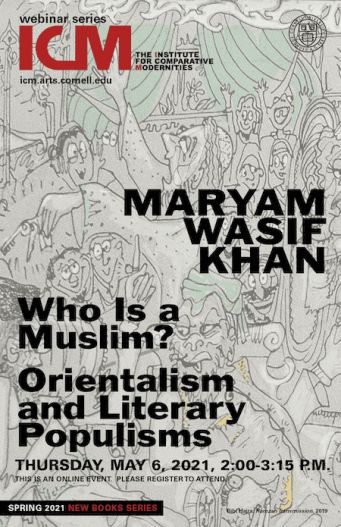
Maryam Wasif Khan, "Who Is a Muslim: Orientalism and Literary Populisms"
May 6, 2021
2:00 pm
This conversation with Maryam Wasif Khan is part of ICM's Spring 2021 New Books Series. Who Is a Muslim? argues that modern Urdu literature, from its inception in colonial institutions such as Fort William College, Calcutta, to its dominant iterations in contemporary Pakistan—popular novels, short stories, television serials—is formed around a question that is and historically has been at the core of early modern and modern Western literatures. The question “Who is a Muslim?,” a constant concern within eighteenth-century literary and scholarly orientalist texts, the English oriental tale chief among them, takes on new and dangerous meanings once it travels to the North-Indian colony, and later to the newly formed Pakistan. A literary-historical study spanning some three centuries, this book argues that the idea of an Urdu canon, far from secular or progressive, has been shaped as the authority designate around the intertwined questions of piety, national identity, and citizenship.
Additional Information
Program
Einaudi Center for International Studies
South Asia Program
A Conversation on the Plantationocene

April 16, 2021
9:00 am
This virtual conference, sponsored by the Mario Einaudi Center for International Studies and Migrations: A Global Grand Challenge, brings together a diverse group of scholars, activists, and practitioners to discuss the role that plantations and plantation agriculture have played in shaping the nature, structure, and dynamics of the modern era.
Although plantations have long been the subject of study, the Plantationocene as a concept emerged only in the past few years to describe the role of racialized, large-scale plantation agriculture in establishing a world system that to this day lives with the legacy and continuation of slavery, forced migration, dispossession and mono-crop extractive agriculture intended for export production. The article below serves as a frame for the conversation:
Wolford, Wendy, 2021 “The Plantationocene: A Lusotropical Contribution to the Theory,” Annals of the American Association of Geographers, early view online.
Over two days of roundtable discussions (April 15-16), scholars and activists from a variety of disciplines of critical social theory and practice, including agrarian studies, political ecology, development studies, black geographies and feminist theory, will discuss the Plantationocene and to what extent this conceptional framework may be useful—not just for analytical purposes, but also for activism and practice.
Explore the schedule and presentersRegister nowThe conference is available in Portuguese through simultaneous interpretation on the same Zoom channel. All sessions will be recorded.
Moderator:
Wendy Wolford, Robert A. and Ruth E. Polson Professor, Department of Global Development, Cornell University
Panelists:
Gerard Aching, Professor of Africana and Romance Studies, Cornell UniversityYasmine Ahmed, Postdoctoral teaching fellow, The American University in CairoSarah Besky, Associate Professor of Industrial and Labor Relations, Cornell UniversityRachel Bezner-Kerr, Professor of Global Development, Cornell UniversityJun Borras, Professor of Agrarian Studies, Institute of Social Studies, Erasmus University, the HagueNatacha Bruna, PhD candidate, International Institute of Social Studies (ISS), Erasmus University, the Hague Judith Carney, Professor of Geography, University of California, Los AngelesSophie Chao, Postdoctoral Research Associate, University of SydneySharad Chari, Associate Professor of Geography, University of California, BerkeleyYoujin Chung, Assistant Professor of Energy and Resources Group and Environmental Science, Policy, and Management, University of California, BerkeleyAndrew Curley, Assistant Professor of Geography, University of ArizonaMary Jo Dudley, Director of the Cornell Farmworker Program, Cornell UniversityChristopher Dunn, Elizabeth Newman Wilds Executive Director of Cornell Botanic Gardens, Cornell UniversityDivya Dutta, Researcher, Oxfam America and Oxfam Great BritainJennifer Franco, Activist and Researcher at the Transnational Institute (TNI), the HagueShannon Gleeson, Professor of Labor Relations, Law, and History, Cornell UniversityJenny Goldstein, Assistant Professor of Global Development, Cornell UniversityEuclides Gonçalves, Director and Researcher, Kaleidoscopio, Research in Public Policy, MozambiqueCarla Gras, Researcher and Professor of Sociology, University of Buenos AiresJulie Guthman, Professor of Social Sciences, University of California, Santa CruzShalmali Guttal, Executive Director, Focus on the Global South, BangkokTania Murray Li, Professor of Anthropology, University of TorontoJuliet Lu, Postdoctoral Research Fellow, Cornell Atkinson Center for SustainabilityFouad Makki, Associate Professor of Global Development, Cornell UniversityPriscilla McCutcheon, Assistant Professor of Geography, University of KentuckyPhilip McMichael, Professor of Global Development, Cornell UniversityGregg Mitman, Vilas Research and William Coleman Professor of History of Science, Medical History, and Environmental Studies, University of Wisconsin, MadisonSharlene Mollett, Distinguished Professor in Feminist Cultural Geography, Nature and Society and Associate Professor of Geography, University of TorontoJoão Mosca, Director, Observatório do Meio Rural, Maputo Andrew Ofstehage, Postdoctoral Associate, Cornell UniversityKasia Paprocki, Assistant Professor of Geography and Environment, London School of Economics and Political ScienceDeniz Pelek, Postdoctoral Researcher in the MIGRADEMO Project, Universitat Autònoma de BarcelonaNancy Peluso, Professor of Society and Environment and Chair of the Center for Southeast Asian Studies, University of California, BerkeleyPrabhu Pingali, Professor of Applied Economics and Policy, Cornell UniversityRachel Beatty Riedl, John S. Knight Professor of International Studies and Director of the Einaudi Center, Cornell UniversityCaitlin Rosenthal, Associate Professor, History, University of California, BerkeleySergio Sauer, Professor in the Center for Sustainable Development, University of BrasíliaJudite Stronzake, Activist in the Movement of Landless Workers (MST), Brazil and Professor of Education, Universidade Federal da Grande DouradosEric Tagliacozzo, John Stamburgh Professor, Department of History, Cornell UniversityAnna Tsing, Professor of Anthropology, University of California, Santa CruzMichael Watts, Chancellor’s Professor of Geography Emeritus, and Co-Director of Development Studies, University of California, BerkeleyWendy Wolford, Robert A. and Ruth E. Polson Professor of Global Development, Cornell UniversityYunan Xu, Post-doctoral researcher, International Institute of Social Studies (ISS), Erasmus University RotterdamJohn Aloysius Zinda, Assistant Professor, Global Development, Cornell University
Additional Information
Program
Einaudi Center for International Studies
Latin American and Caribbean Studies
Institute for African Development
Institute for European Studies
South Asia Program
Race and Racism Across Borders
April 12, 2021
11:00 am
Keynote Speaker: Nanjala Nyabola
Cornell Students: Critical Reflections
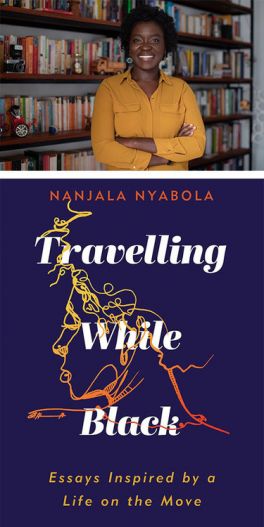
Nanjala Nyabola, author of Travelling While Black-Essays Inspired by a Life on the Move, will be in conversation with professors Rachel Beatty Riedl, Kim Yi Dionne, and postdoc Eleanor Paynter.
Nanjala Nyabola is a writer, political analyst, and activist based in Nairobi, Kenya. Nyabola writes extensively about African society and politics, technology, international law, and feminism for academic and non-academic publications. Her first book, Digital Democracy, Analogue Politics: How the Internet Era is Transforming Politics in Kenya (Zed Books, 2018), was described as "a must-read for all researchers and journalists writing about Kenya today." Nyabola's ground-breaking work opens up new ways of understanding the current global online era, reframing digital democracy from the African perspective.
Nyabola’s latest book, the critically acclaimed Travelling While Black; Essays Inspired by a Life on the Move, (available electronically from the Cornell Library) is a stark reminder that the world needs to be seen through the lens of others. Her work has featured in publications including African Arguments, Al Jazeera, Financial Times, Foreign Affairs, Foreign Policy (magazine), The Guardian, New African, The New Humanitarian, The New Inquiry, New Internationalist, and World Policy Journal.
Nyabola holds a BA in African studies and political science from the University of Birmingham, an MSc in forced migration and an MSc in African studies from the University of Oxford, which she attended as a Rhodes Scholar, and a JD from Harvard Law School.
Following the dialogue, students will present select prose, poems, and visual art published as part of Global Cornell's Race and Racism Across Borders, a call that asked students and alumni to reflect on the new knowledge gained about racial dynamics when they crossed a literal or figurative border.
Register Now
Additional Information
Program
Einaudi Center for International Studies
Reppy Institute for Peace and Conflict Studies
East Asia Program
Southeast Asia Program
Latin American and Caribbean Studies
Institute for African Development
Institute for European Studies
South Asia Program
Why The Casting of An Indian British Lead in 'Bridgerton' Is Historically Accurate

Durba Ghosh, SAP
“The short answer is yes, it’s historically accurate — especially during the era in which ‘Bridgerton’ is set,” says historian Durba Ghosh, professor of history. The piece syndicated to Yahoo! News.
Additional Information
Post-screening Q&A with Director Nila Madhab Panda

April 16, 2021
10:30 am
Post-Screening Q & A with director Nila Madhab Panda, moderated by Professor Neema Kudva (City & Regional Planning, Cornell University).
National award-winning director Nila Madhab Panda’s first Odia film, Kalira Atita (Yesterday’s Past), is based on true events and was shot on location in Satavaya, a cluster of seven villages on India’s east coast that have been engulfed by the sea as a result of climate change and rising sea levels. The film follows Gunu, a disillusioned young man from Satavaya village, who travels restlessly towards death, memories of a past cyclone propelling him into the eye of one that is coming. Hoping to reunite with his lost family, he returns to his village, five days before the cyclone, to find that it is now under water. Gunu’s struggle to survive the fury of nature is a portrayal of emotional trauma and human triumph. Kalira Atita was selected by the 51st International Film Festival of India (IFFI) for its prestigious Panorama section. .
Nila Madhab Panda is an Indian filmmaker and producer with over 70 films and documentaries to his credit. He is known for making films on the issues of climate change, child labour, sanitation, water issues, etc. He is known for the film I Am Kalam which won a National Film Award and also 34 international awards. His film Jalpari received the MIP Junior award at the Cannes Film Festival. He has also received a Padma Shree Award in 2016 for his contribution to the Indian cinema. Kalira Atita had its international premiere at the 28th Prague International Film Festival (Febiofest), was selected for the 51st International Film Festival of India (IFFI), Goa, for its prestigious Panorama section, and was the recipient of Best Odia film, National Award, 2021.
Kalira Atita (Yesterday’s Past) is screening virtually through Cornell Cinema April 9-15. Reservations for screening open on April 2. The Q&A is free and open to the public.
Cosponsored by Cornell Cinema and the Tata Cornell Institute.
Additional Information
Program
Einaudi Center for International Studies
South Asia Program
EU to Bosnia: Refuge, Reparations, and Global Apartheid
April 19, 2021
11:00 am
The foreclosure of asylum in the European Union and the militarization of the EU borders have resulted in EU pushbacks of refugees and migrants from the Middle East, North Africa, and South Asia to European countries that do not belong to the EU, such as Bosnia. This panel critically examines the foreclosure of asylum at the EU/Bosnia border as a case study of the global apartheid regime that produces humanitarian crises while denying refugees mobility and safety. What might accountability for the damages wrought by global apartheid look like? And what kinds of futures can we imagine and fight for?
Panelists:
Nidžara Ahmetašević is an independent scholar, journalist, and activist and the author of many articles, essays, and reports, including The Dark Side of Europeanisation: Serbia, Bosnia and Herzegovina and the European Border Regime and People on the Move in Bosnia and Herzegovina in 2018: Stuck in the corridors to the EU.
Catherine L. Besteman is the Francis F. Bartlett and Ruth K. Bartlett Professor of Anthropology at Colby College and the author of four books, including Militarized Global Apartheid.
Azra Hromadžić is an O’Hanley Faculty Scholar and Associate Professor of Anthropology at Syracuse University and the author of Citizens of an Empty Nation: Youth and State-making in Postwar Bosnia and Herzegovina.
Moderated by Saida Hodžić, Associate Professor of Anthropology and Feminist, Gender, and Sexuality Studies at Cornell University.
This panel is organized as part of the Institute for European Studies’ Migration Series for its AY 2020-21 theme Repair and Reparations and sponsored by the Migrations Forum. It is co-sponsored by the American Studies Program, Feminist, Gender, and Sexuality Studies, Near Eastern Studies, the Society for the Humanities, and the South Asia Program. You may find information about past events and video recordings at https://einaudi.cornell.edu/programs/institute-european-studies/events/….
Additional Information
Program
Einaudi Center for International Studies
Institute for European Studies
South Asia Program
Looking back, looking forward: supporting India's nutrition journey with data and evidence | Purnima Menon, Ph.D.
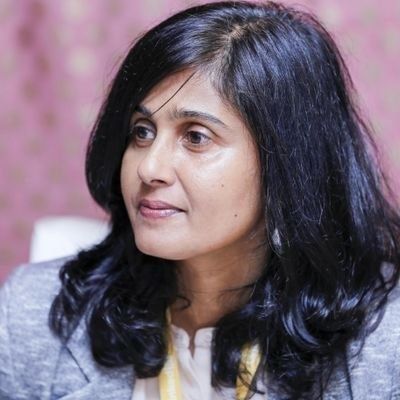
March 25, 2021
12:25 pm
The Program in International Nutrition in the Division of Nutritional Sciences is pleased to host guest speaker Purnima Menon, Ph.D.; Senior Research Fellow: Poverty, Health and Nutrition Division; Office of the Director, Nutrition and Food Safety at the International Food Policy Research Institute (IFPRI). Her talk is titled "Looking back, looking forward: supporting India's nutrition journey with data and evidence”
Register via EventBrite
Additional Information
Program
South Asia Program
Chinese Economy: Beijing's War on the Credit Boom

Eswar Prasad, SAP
“Squeezing P2P lenders and the shadow banking sector does constrain lending to the private sector,” says Eswar Prasad, professor of economics and international trade policy. “China seems to take the path of giving innovators a lot of room and then cracking down hard when they grow too powerful or the risks become too large to ignore.”