
Anthropology Colloquium: Austin Lord
April 15, 2022
3:00 pm
Herding in the Wake: Afterlives and Material Ethics Within Unsettled Moral Ecologies
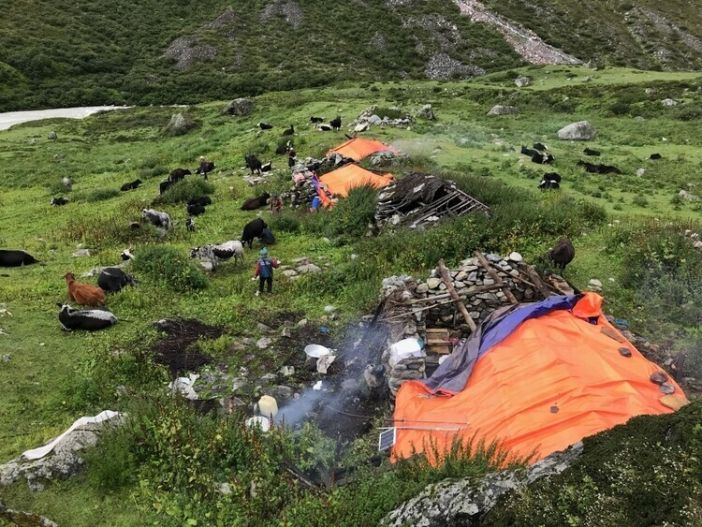
Herding was still a vibrant aspect of life in the Langtang Valley at the moment the Gorkha Earthquake struck Nepal on April 25, 2015, triggering a series of co-seismic avalanches and landslides that killed nearly half of the herding community and over four hundred yak and yak hybrids. As the aftermath continued to unfold, more and more herders sold their animals and left herding, and five years later as the COVID-19 pandemic began to unfold, only twelve herders remained. Many Langtangpas speak of herding as a lifeway at risk, since most of those who remain in the gorey (herding hut) are elders and the younger generations have no interest in carrying on this work - they fear that the potential ‘end’ of herding is just a few years away.
In this talk, based on a chapter of my forthcoming dissertation, I offer an ethnographic portrait of “living in the gorey” (herding hut) which examines the seven year period in the the disaster - a critical moment in the history of Langtangpa herding suffused with the losses of 2015, historically constituted precarities, the struggles of post-disaster recovery, nostalgia for herding pasts, and even feelings of anticipatory grief. The current crisis in herding, as many Langtangpas see it, is an ethical one that reflects broader concerns about the erosion of traditional lifeways and deteriorating social relations. By contextualizing current concerns within the historical morphologies of herding in Langtang and ongoing debates about the social and material impacts of the tourism economy, I show how the remaining goreypa are herding in the wake of many different events still taking their toll within unsettled moral ecologies. How do people conceptualize and anticipate the uncertain futures of herding amid broader patterns of development, vulnerability, and intergenerational change?
Austin Lord is a PhD Candidate in the Department of Anthropology whose research focuses on lived experiences of disaster and aftermath, questions of time and temporality, political ecologies of the water-energy nexus, infrastructural politics, the impacts of climate change and climate science, and the construction of environmental knowledge in the Himalayan region. Austin's dissertation research focuses on the afterlives of disaster in the Langtang Valley of Nepal – where a massive co-seismic avalanche occurred during the 2015 Gorkha earthquake. Drawing from over five years of research and volunteer work, his work carefully examines the ways that the Langtangpas conceptualize recovery, resilience, and uncertainty as they seek to rebuild their lives in the wake of an unthinkable disaster.
This event is co-sponsored by the South Asia Program. Thank you.
Additional Information
Program
Einaudi Center for International Studies
South Asia Program