
Anthropology Colloquium: David Carballo
October 2, 2026
3:00 pm
120 Mary Ann Wood Drive, B21
Urbanism, Economy, and Governance at Teotihuacan, Mexico
The early Mexican metropolis of Teotihuacan was the largest city in the Americas of its day (ca. 100 BCE – 600 CE) and is one of the most visited archaeological sites in the hemisphere today. Although it has undergone over a century of investigations, much of the city’s urban social organization has come into focus over only the last few decades and major questions remain unresolved concerning its political economy and system of governance. In this presentation I draw from my own research at four parts of the city—the Moon Pyramid, Tlajinga district, Plaza of the Columns, and Great Compound—and synthesize work of other colleagues to provide a perspective on Teotihuacan’s unique apartment living, modular social organization, and mix of commercial and institutional economies.
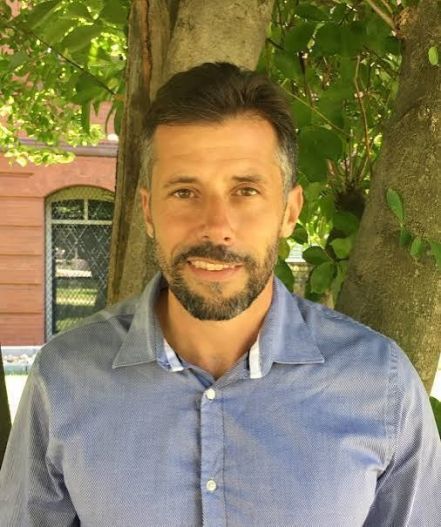
David Carballo is Professor of Anthropology, Archaeology, and Latin American Studies at Boston University. He earned his BA in Political Science from Colgate University (1995) and his PhD in Anthropology from UCLA (2005). Carballo specializes in the archaeology of Latin America, especially central Mexico, but has also conducted research in Honduras, Belize, Peru, and the US, with topical interests in households, urbanism, religion, social inequality, and working with contemporary communities in understanding ancient ones. Current investigations focus on Teotihuacan’s Tlajinga district, a cluster of non-elite neighborhoods on the periphery of the city, and the Great Compound, hypothesized to have served as its central marketplace or as an administrative complex. Recent books include Urbanization and Religion in Ancient Central Mexico (2016), Teotihuacan: The World Beyond the City (ed., 2020), Collision of Worlds: A Deep History of the Fall of Aztec Mexico and the Forging of New Spain (2020), Collective Action and the Reframing of Early Mesoamerica (2024), and Teotihuacan: A Social History of a Sacred City (2027).
Co-sponsored by Cornell Institute of Archaeology & Material Studies and Latin American and Caribbean Studies. Thank you!
Additional Information
Program
Latin American and Caribbean Studies