
Anthropology Colloquium: Laurian Bowles
November 13, 2026
3:00 pm
120 Mary Ann Wood Drive, B21
Aluminum’s Past, Contemporary Coloniality and Porter Labor in Ghana
Reading aluminum’s infrastructural history alongside Accra’s contemporary market porters, this talk argues that women porters’ embodied labor extends and exposes the same extractive logics, revealing enduring coloniality within Ghana’s built and human infrastructures. Centering the everyday use of aluminum pans and the scientific history of aluminum, Bowles traces how an ordinary object mediates power relationships between traders and the state, facilitate modes of protection and mutuality among workers, and animates racial capitalism and uneven accumulation in a contemporary African city. In addition, this work explores intimacy and fugitivity as ethnographic methods that uncover porter work as a prototype of the global gig economy and the improvisational strategies of precarious workers.
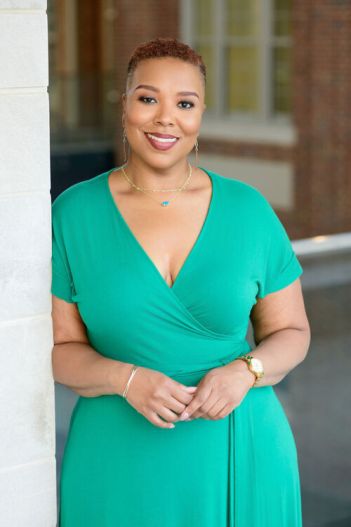
Laurian Bowles is Vann Professor of Racial Justice; Associate Professor & Chair in the Department of Anthropology; and Director of the Davidson in Ghana Program at Davidson College.
Bio:
I am a cultural and visual anthropologist who researches, writes and teaches about social mobility and the visual economies of women’s labor in Ghana and the African Diaspora. My research attends to the way women’s activism take shape through ordinary forms of mobilization and refusals in public and intimate spaces. I am especially interested in the haptic nature of photographs, the circulation of pictures as material artifacts, and the way race, class, and queerness are formed through visual storytelling.
I have published articles in Feminist Anthropology, Visual Anthropology Review, The Journal of African History and African Arts.
My book, Headstrong: Women Porters, Blackness and Modernity in Accra (Penn Press, 2025) draws on a decade of fieldwork with women porters in Ghana to illustrates how antiblackness, queer sexual politics, and feminized labor inform state and social sensibilities about what constitutes progress and modernity in Accra.
Co-sponsored by the Institute for African Development; the Feminist, Gender & Sexuality Studies Program; the Africana Studies and Research Center; and the Department of Communication. Thank you!
Additional Information
Program
Institute for African Development