
CCCI: Men, Masculinity, and Childbirth in Early Twentieth-Century China
February 13, 2023
4:45 pm
Goldwin Smith Hall, GSH 64 Kaufman Auditorium
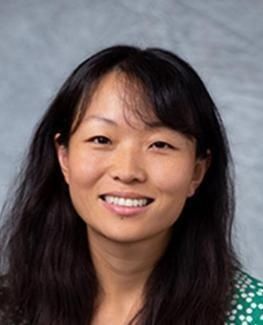
Ling Ma (History, SUNY, Geneseo) kicks off this semester's Cornell Contemporary China Initiative (CCCI) lecture series with a talk on "Men, Masculinity, and Childbirth in Early Twentieth-Century China."
What roles did ordinary men historically play in events such as childbirth and abortion? How and why did their involvement change over time? And what can the lens of everyday reproduction tell us about the moving fault lines of masculinity? Historians of reproduction have long placed women and the female body at the center of inquiries about pregnancy, childbirth, abortion, and maternal illnesses and death. Such narratives often focus on women’s negotiation with patriarchal demands, collective interests, gender norms, reproductive technologies, and politics. Men did leave their imprints, usually as theorists, reformers, doctors, or policymakers, who commanded institutions of childbirth and maternal care from a privileged and distant position. Rarely did they come to us as gendered everyday agents—for example, as flawed, confused, but caring partners and fathers—who were deeply involved in and impacted by seemingly feminine reproductive events.
This study makes a deliberate intervention by exploring childbirth and labor pains as a “his-tory.” It argues that childbirth served as a key site for defining and differentiating masculinity and male identity in early twentieth-century China. Individual fathers and partners, far from being uniformly absent or aloof, demonstrated varied enthusiasm and attitudes and performed a diversity of responsibilities and roles during times of pregnancy, childbirth, and reproductive loss. Some of them, defying religious and gender taboos against men’s presence during childbirth, personally assisted their partners in labor and handled the afterbirth. Some litigated, mourned, or chronicled reproductive complications and losses that occurred in their lives. Some openly and unabashedly displayed their disinterest and irritation towards fatherhood and the nitty-gritty of reproduction, while others questioned male sexual and gender privileges and considered their ability to empathize and to share reproductive chores an enlightened masculine strength. By highlighting the plurality and vibrancy of gender innovations and masculine performances surrounding childbirth in early twentieth-century China, this presentation hopes to both enrich our understanding of the recent Chinese past and hearten students of contemporary China with a wider range of gender precedents.
Engendering China is the spring '23 CCCI lecture series hosted by faculty member, Yue (Mara) Du (History, Cornell), and the series corresponds to the course of the same name that she is teaching (Engendering China: CAPS2932, ASIAN 2291, FGSS 2932, HIST 2932).
In contemporary China, as in many other places of the world, the ideology and social reality of gender relations are highly paradoxical. Women are flattered for their power as consumers and commitment to the family while they are also expected to engage in wage-earning employment. Men, on the other hand, face the constant pressure of being tough and social problems such as skewed gender ratio and costly betrothal gifts as unintended consequences of a gender regime that is supposedly male-oriented. Are these paradoxes a betrayal of the socialist experiment of erasing gender differences? Are they remnants of China’s long imperial tradition? The series and course explore the power dynamics of gender relations in China from ancient times to the present.
Along with the East Asia Program, this lecture series is co-sponsored by the Department of Asian Studies, Cornell Center for Social Sciences, Feminist, Gender and Sexuality Studies, the Department of History, ILR School's Global Labor Institute, The Levinson China and Asia Pacific Studies Program, and Cornell's Society for the Humanities.
This event is primarily in person. If you need to attend virtually, please register in advance.
Additional Information
Program
Einaudi Center for International Studies
East Asia Program