
China's Strategic Intervention in Post-Coup Myanmar
April 28, 2026
12:00 pm
Rockefeller Hall, 374, Asian Studies Lounge
Join us for a talk by Southeast Asia Program Visiting Scholar, Aung Thura Ko Ko.
This talk will take place at Rockefeller Hall 374, Asian Studies Lounge. Lunch will be served.
For questions, contact seap@cornell.edu.
Abstract: Since the February 2021 military coup in Myanmar, the country has plunged into a deep political, economic, humanitarian, and security crisis. China’s engagement with post-coup Myanmar is multifaceted. While officially adhering to a policy of non-interference, Beijing has pursued a pragmatic approach to safeguard its interests, including investments under the Belt and Road Initiative (BRI), border security and access to the Indian Ocean. China has been maintaining ties with both the junta and select ethnic armed groups to ensure leverage across all fronts. Myanmar’s strategic value to China is further heightened by its role as a critical supplier of raw minerals including rare-earth and tin ore, both essential to high-technology and defense manufacturing. China’s cooperation with the military regime has deepened through new mechanisms, including the establishment of a joint security company to protect Chinese investments, as well as the deployment of a ceasefire monitoring team and border operations. At the same time, the China-Myanmar border has emerged as a major hub for cyber scam centers, many operated by transnational criminal networks and protected by regime-aligned border guard forces. China’s strategic intervention in post-coup Myanmar presents a complex mix of geopolitical ambition, economic necessity, and security entanglement. This makes Myanmar a critical case for understanding how Beijing engages with fragile states to advance its regional influence in the Indo-Pacific.
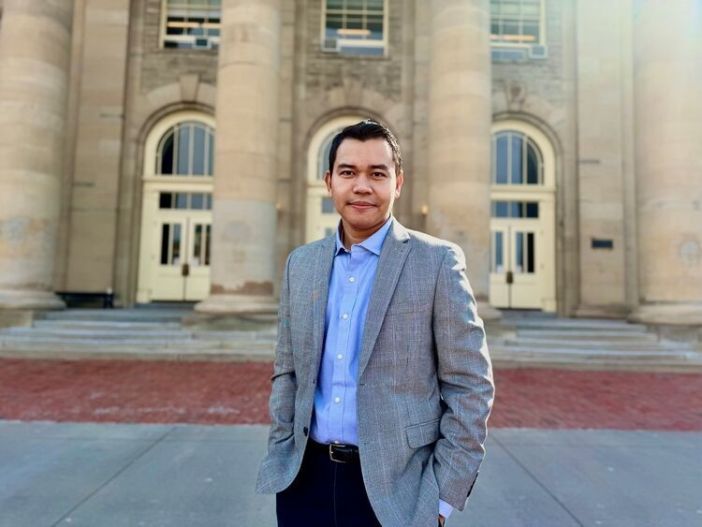
About the Speaker: Aung Thura Ko Ko is a visiting scholar at the Southeast Asia Program (SEAP) for the spring semester. He was previously a research fellow at the Pacific Forum, a U.S. policy think tank based in Honolulu, Hawaiʻi, and an affiliate scholar at the East-West Center from 2024 to 2026. Aung previously worked at the University of Oxford’s Global Security Programme, and his research focuses on wartime and postwar governance, China–Myanmar relations, and Indo-Pacific regional security issues. He has over 15 years of professional experience, including six years with USAID, and has worked with a range of international and local organizations across policy, governance, humanitarian & development assistance, and peacebuilding in Myanmar. Aung has been actively engaged in international advocacy efforts supporting Myanmar’s democracy movement since the 2021 military coup.
Additional Information
Program
Einaudi Center for International Studies
Reppy Institute for Peace and Conflict Studies
East Asia Program
Southeast Asia Program