
Exploring Turkish Language and Culture series: Discovering Turkey
September 11, 2024
5:00 pm
White Hall, B14
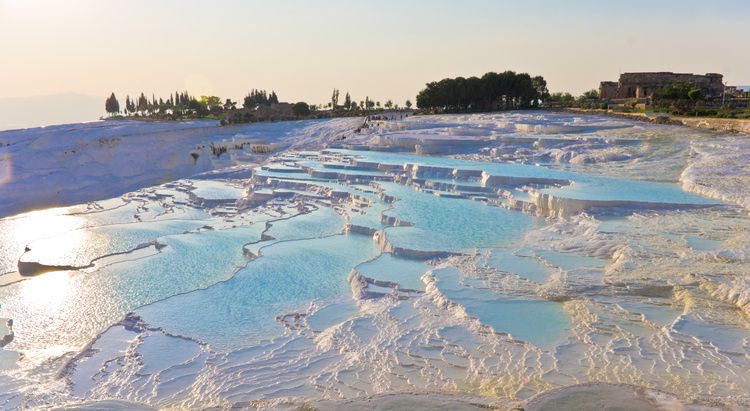
Turkish culture is a vibrant and diverse mosaic shaped by centuries of history, blending influences from the Middle East, Central Asia, and the Mediterranean. This presentation will present a general overview concerning the rich culinary traditions of Turkish culture, the beauty of the Turkish language, and the deeply engraved customs of the country. Turkish cuisine, known for its rich flavors and variety, is a reflection of the nation's cultural diversity, with dishes ranging from savory kebabs to sweet baklava. The structure of the Turkish language is unique and melodiously streams in to form a basic part of the nation's identity, carrying with itself the history and tradition of the people. That journey of exploration will be supplemented by a set of photos and short videos featuring some of the most iconic and historic sites in Türkiye-from Hagia Sophia in İstanbul to the city of Ephesus-with virtual tours into the very heart of this fascinating country.
Dr. Pelin Kumbet is currently a visiting researcher in the department of English and a Turkish language instructor at Language Resource Center at Cornell University. She is an Associate Professor in the department of Western Languages and Literatures at Kocaeli University, Turkiye. During her Ph.D. studies at Hacettepe University, Turkiye, she conducted her doctoral dissertation at the University of California, Riverside. Her dissertation discusses the cruciality of enacting dynamic, evolving, and living posthuman(ist) ethics, which embodies the acknowledgment of inherent and intrinsic values of all beings through different posthuman body representations, which was published as a book titled as Critical Posthumanism: Cloned, Toxic and Cyborg Bodies in Fiction. Dr. Kumbet’s general research interests include posthuman theory and ethics, posthuman bodies, transhumanism, medical and environmental humanities, ecocriticism in particular, the intersections between posthumanism, environmental humanities, gender issues, and science fiction. Her recent publications are “Toxic Agentic Legacy in Turkish Waters: From Sacrosanct Bodies to Toxic Bodies of Water,” “Invisible Agencies: Toxic Repercussions of Chernobyl and Bhopal,” “A Posthuman Quest for Establishing Self-Image Through Nature in Virginia Woolf’s The Waves” and “Reclaiming the ethno-divided land, identity and legacy in Elif Shafak’s The Island of Missing Trees.” She has also been teaching Turkish as second language and has been working on the intersections between Blue humanities, Turkish waters and trauma, eco-psychology and displacement.
Additional Information
Program
Einaudi Center for International Studies