
Fighting Yesterday's War: Soviet Influences in Putin's Foreign Policy
October 6, 2022
11:25 am
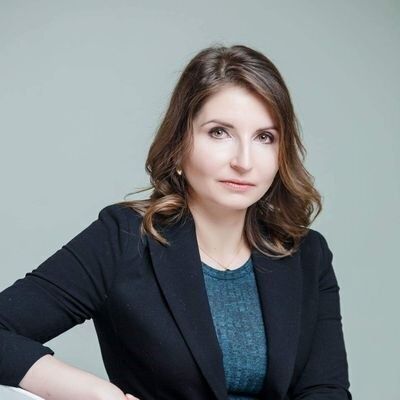
Dr. Maria Snegovaya examines the drivers of Russian revanchism. Russia’s behavior has thrown into doubt the purported strength of international norms regarding territorial integrity, not least because Putin himself has spoken of seeking to ‘re-gather’ adjacent territory deemed ‘lost’—as they had been once under possession by Imperial Russia or the Soviet Union—through military means.
While recognizing that decisions to go to war and to reclaim lost territory are complex and multifaceted, the speaker argues that many analyses overlook—ironically—the nature of the political regime that rules Russia. If domestic political variables do matter for observers of Russia, the emphasis is on how Russia is institutionally autocratic such that it will pursue a foreign policy more aggressive than what would have been the case if it were democratic.
Maria Snegovaya and her co-author define a political regime in both institutional and behavioral terms to acknowledge the structural organization of power as well as the qualities of the elites that exercise influence. They show a strictly institutional definition of political regimes neglects the elite continuity that ties together the Soviet and the Russian leadership. This elite continuity across the two systems matter because the political regime still privileged particular beliefs about the use of force to settle international disputes, the intentions of the United States, and the relationship that certain nations should have vis-à-vis Russia. These beliefs, which they show to hold sway, had their Soviet antecedents.
Please join us for this virtual conversation. Register here.
About Speaker
Maria Snegovaya is a Postdoctoral Fellow in Political Science at Georgetown University's Walsh School of Foreign Service, a Visiting Scholar at the Institute for European, Russian, and Eurasian Studies at George Washington University, and Adjunct Senior Fellow at the Center for New American Security. She is a comparative politics, international relations, and statistical methods specialist. The key focus of her research is democratic backsliding in Central and Eastern Europe, as well as Russia’s domestic and foreign policy.
***
Presented by the Reppy Institute for Peace and Conflict Studies. Co-sponsored by the Institute for European Studies and the Gender and Security Sector Lab.
Additional Information
Program
Einaudi Center for International Studies
Reppy Institute for Peace and Conflict Studies
Institute for European Studies