
Hakem Al-Rustom - Armenian Genocide Commemoration Lecture
April 23, 2026
4:45 pm
Goldwin Smith Hall, 142
Hakem Al-Rustom, Assistant Professor at University of Michigan, will give this year's Armenian Genocide Commemoration Lecture, "What Remains: Afterlives of Genocide and the Persistence of the Unfinished."
This lecture begins from a simple but unsettling premise: genocide does not end. It exceeds the event that names it, extending into the present through forms of erasure, displacement, and the normalization of loss. Rather than treating genocide as a closed historical episode, this talk develops afterlives as both object and method—a way of reading the present as structured by violences that remain ongoing, though not always visible.
Drawing on ethnographic and historical research, the lecture traces how these afterlives take shape through processes of denativization: the systematic rendering of populations as foreign to the lands they inhabit. Through legal, spatial, and affective transformations, denativization sustains the conditions of disappearance while making them appear natural.
Yet something persists. Not as recovery or return, but as a fragile presence—in refusals, in stories, in the partial transmission of memory. Here, refusal emerges not as declaration, but as practice: a refusal to disappear, to be fully absorbed into the terms that negate one’s existence. To think in terms of afterlives, then, is to confront the unfinishedness of genocide—not as past, but as a condition of the present.
Speaker Bio:
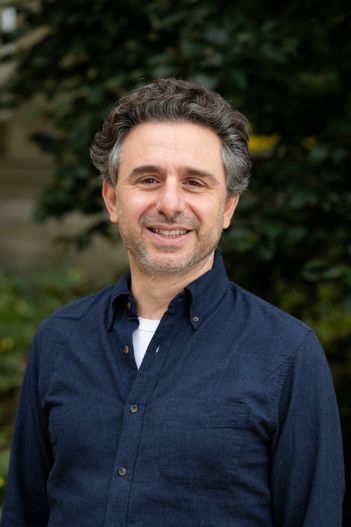
Hakem Amer Al-Rustom is the Alex Manoogian Professor of Modern Armenian History, Assistant Professor of History, and Assistant Professor of Anthropology at the University of Michigan. A historical anthropologist, his work explores the afterlives of violence, with a particular focus on Armenians in Turkey and the post-Ottoman Middle East. His book, Enduring Erasures: Afterlives of the Armenian Genocide (2026), brings together ethnography and history to examine how genocide persists through erasure, displacement, and the reshaping of belonging. He is coeditor of Edward Said: A Legacy of Emancipation and Representation (2010).
Additional Information
Program
Einaudi Center for International Studies
Southwest Asia and North Africa Program