
Health Sector Contestation in Cold War Laos, 1950-1975
November 6, 2020
8:00 pm
Part of the Ronald and Janette Gatty series
Kathryn Sweet, Social Development Advisor and Independent Scholar, Vientiane, Lao PDR
The presentation will explore the reasons for and the results of contestation within the Lao health sector during the initial decades of the Cold War from the early 1950s to 1975.
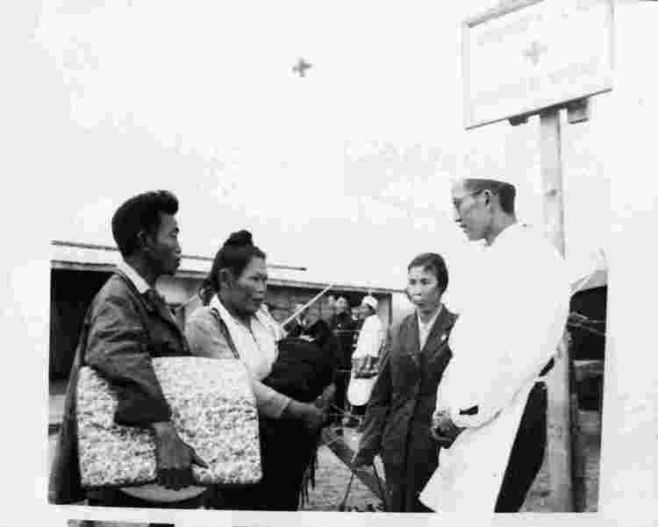
Laos’ small health sector diverged rapidly after the colonial health service transferred to the Royal Lao Government in April 1950. At least three civilian services and two military services, and a modest private sector, emerged in place of the colonial health service. The various new health services resulted not only from Laos’ post-colonial status but also from the nation’s position in the Cold War politics of Southeast Asia. In the Royal Lao Government’s zone, under the administration of the RLG and supported by the United States and other capitalist nations, civilian and military healthcare services separated by the late 1950s, and were supported by a US-funded, parallel and predominantly rural health network run by Filipino NGO, Operation Brotherhood. In the ‘Liberated Zone’, administered by the Lao Patriotic Front (often referred to as the Pathet Lao) and supported by its North Vietnamese neighbor, the Soviet Union, and other socialist nations, a civilian health service under the Central Health Committee split from its military counterpart in the mid-1960s. These various health services were motivated by different priorities, supported by different international donors, and employed different technical languages and standards of training and operation.
The presentation will provide much-needed context for the diverse health infrastructure, staffing, and professional and technical standardization inherited by the Lao PDR regime and the Ministry of Health’s challenges when confronted with the task of uniting these divergent health services into a uniform national healthcare system.
Additional Information
Program
Einaudi Center for International Studies
Southeast Asia Program