
Mano Dura: An Experimental Evaluation of Military Policing in Cali, Colombia by Robert A. Blair and Michael Weintraub, LASP Seminar Series
March 8, 2021
12:00 pm
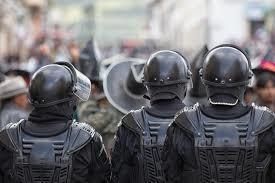
Governments across the developing world rely on their armed forces for domestic policing operations. Advocates of these “mano dura” (iron fist) policies view them as necessary to control crime, while detractors claim they undermine human rights. We experimentally evaluate a military policing intervention in Cali, Colombia, the country’s third largest city and among its most violent. The intervention involved recurring, intensive military patrols targeting crime hot spots, randomly assigned at the city block level. Using administrative crime and human rights data, surveys, a conjoint survey experiment, a costly behavioral measure, qualitative interviews, and firsthand observations from civilian monitors, we find some suggestive evidence that military policing reduces crime, but only on days and times when soldiers are physically present on the streets. Despite these weak or null effects, we find strong evidence of increased demand for more aggressive military involvement in policing and other aspects of governance, including increased support for military coups. We also find some suggestive evidence of increased human rights abuses committed by police officers in particular a large, significant, and lasting increase in citizens’ reports of witnessing crime, and a correspondingly large, significant, and lasting increase in their willingness to report crimes to the authorities. We interpret this as evidence of increased vigilance by citizens and increased coproduction of security not just between the military and the police, but between civilians and the authorities as well.
Register to attend: https://bit.ly/3kLlHCT
Michael Weintraub is an Associate Professor in the Escuela de Gobierno Alberto Lleras Camargo at Universidad de los Andes in Bogotá, Colombia; Director of the Security and Violence Area of the Center for the Study of Security and Drugs (CESED) at the same university; and Senior Researcher at Peace Research Institute Oslo (PRIO). His research agenda focuses on crime and political violence in Latin America, particularly in Colombia, Central America, and Mexico. He is also interested in historical legacies of violence and how they affect contemporary outcomes. To study these and other topics he uses a combination of experimental and quasi-experimental methods, as well as qualitative case studies. While he wrote my dissertation on Colombia, and live in Bogotá, he also studies Mexico and the three countries in the so-called "Northern Triangle" of Central America: El Salvador, Guatemala, and Honduras. Prior to graduate school,heI worked for three years on human rights and development, primarily in East and Southern Africa. In May 2014 he received my Ph.D. in Government from Georgetown University and has been a Predoctoral Fellow at Yale University’s Program on Order, Conflict, and Violence (2013-2014) and a Jennings Randolph Peace Scholar at the United States Institute of Peace (2012-2013). He was an Assistant Professor of Political Science at Binghamton University (SUNY) from 2014-2016. His articles have been published or are forthcoming in the Journal of Politics, Journal of Conflict Resolution, Journal of Peace Research, Conflict Management and Peace Science, Terrorism and Political Violence, Research & Politics, Journal of Theoretical Politics, and Critical Review.
Robert A. Blair is an Assistant Professor of Political Science and International and Public Affairs at Brown University. His research focuses on international intervention and the consolidation of state authority after civil war, with an emphasis on rule of law and security institutions. He also coordinates the Democratic Erosion consortium, which spans over 50 universities in the US, UK, Ireland, Israel, Turkey, Romania, South Korea, Australia, and the Philippines. The consortium combines research, teaching, and civic and policy engagement to address threats to democracy in the US and around the world.
Additional Information
Program
Einaudi Center for International Studies
Latin American and Caribbean Studies