
The Patron’s Dilemma: Recklessness and Restraint Under Nuclear Umbrellas
October 15, 2026
12:00 pm
Uris Hall, G08
Despite an ongoing policy debate within the United States about the value of alliances, research suggests that the complex network of security relationships that the United States and other major patrons have established since the end of World War II have important and understudied implications for a wide range of bargaining and cooperation dynamics. To tackle this pressing policy problem, this project delves into the strategic behavior of states in alliances with nuclear security guarantors or patrons. It asks two main questions. First, how do nuclear umbrellas produce risky security outcomes – namely, moral hazard – that can potentially entrap nuclear patrons into military engagement with adversaries? And second, how can alliances be designed to prevent these risky outcomes and yield positive dividends for the international system? To explore these questions, we pursue three lines of inquiry. First, we develop a new theoretical framework that explores the duality of nuclear umbrellas – their benefits and burdens. Second, we employ a series of large-n statistical tests exploring the United States as patron and its relationship with various treaty allies and their adversaries over time. Third, we examine this logic and mechanisms through a series of in-depth case studies, including Taiwan, the United Kingdom, and NATO. The manuscript concludes with valuable insights and recommendations for policymakers focused on grand strategy and the broad network of U.S. alliances.
About the speaker
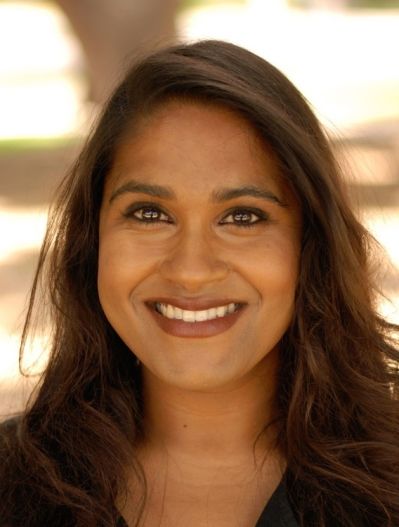
Rupal N. Mehta is Chair of Research and Postdoctoral Fellows Program, and Senior Fellow at the Center for Global Security Research at Lawrence Livermore National Laboratory. She is an Associate Professor (on leave) in the Department of Political Science at the University of Nebraska-Lincoln. Previously, she was a Stanton Nuclear Security Postdoctoral Fellow in the Belfer Center's International Security Program and Project on Managing the Atom at the Kennedy School of Government at Harvard University. Her research interests lie in international security and conflict, with a specialization in nuclear proliferation/counterproliferation, extended deterrence, emerging technologies, and elite decision-making. Her first book, Delaying Doomsday: The Politics of Nuclear Reversal (Oxford University Press, 2020) explores the conditions under which nuclear aspirants stop their pursuit. Her work has appeared in the Journal of Conflict Resolution, International Studies Quarterly, the Journal of Strategic Studies, The Washington Quarterly and her commentary has appeared in the New York Times, Washington Post, National Public Radio (NPR), BBC News, War on the Rocks, International Studies Quarterly, and the Washington Post's Monkey Cage. She received a Ph.D. and M.A. in Political Science from the University of California, San Diego, and B.A. in Political Science from the University of California, Berkeley.
Host
Reppy Institute for Peace and Conflict Studies, part of the Einaudi Center for International Studies
Additional Information
Program
Einaudi Center for International Studies
Reppy Institute for Peace and Conflict Studies