
The Persistence Question: Why Climate Tech Solutions Persist Despite Failing on Their Own Terms
October 26, 2026
12:15 pm
Uris Hall, G08
Talk by Nikhit Agrawal
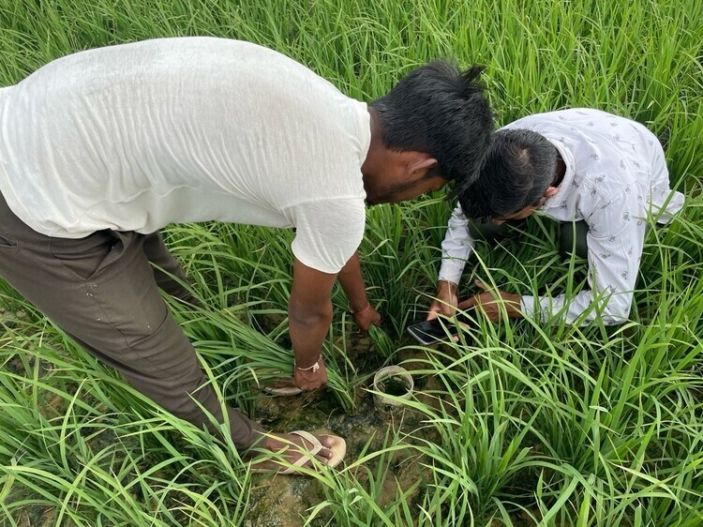
Since 2015, when the Paris Agreement was adopted, agriculture has gained prominence in global climate negotiations, both as a source of greenhouse gas emissions and as a potential contributor to reducing them through carbon storage and sequestration. In the past decade, hundreds of agriculture technology (agtech) start-ups have emerged, promising to design and scale technologically mediated sustainability solutions. India has become a significant destination for investments in these start-ups, offering a unique vantage point to examine their impacts. This talk traces how aspirations to address the ecological crisis urgently and at scale intersect with the complex environmental, social, economic, political, and cultural relationships that shape agriculture. Alternate Wetting and Drying (AWD) of rice fields, a technique aimed at mitigating emissions by killing methanogenic soil bacteria, has gained traction among tech entrepreneurs as a key sustainability program for reducing emissions. Based on institutional ethnography at an Indian agtech start-up, this talk examines why and how technological interventions like AWD consistently face challenges, often fail, and yet continue to reappear. What drives their persistence despite repeated failures on the ground? How are these tied to the financing and scaling models of climate-smart technologies? By addressing these questions, the talk highlights the tensions and contradictions at the heart of scaling tech-entrepreneurial sustainability and their implications for addressing the intertwined crises of climate change and agriculture.
Nikhit Agrawal is a postdoctoral associate working on carbon and data governance in the Natural Resources and the Environment program at Cornell University. He completed his PhD in sociocultural anthropology at UCLA in March 2026. His research examines tech-entrepreneurial promises of scaling sustainability in contemporary agriculture. Agrawal’s work has been published or forthcoming in Economic Anthropology, Critique of Anthropology, Journal of Agrarian Change, Economic & Political Weekly, Scroll.in, The Wire, India in Transition, and The Indian Express. He has received grants from the Wenner-Gren Foundation, the UCLA International Institute and the Center for India and South Asia. His awards include the Robert B. Edgerton Endowed Award and the Eric R. Wolf Award from the Society for the Anthropology of Work, American Anthropological Association. He holds a BTech in Computer Science and Engineering from IIT Delhi and an MA in Sociology from the University of Delhi.
Additional Information
Program
Einaudi Center for International Studies
South Asia Program